

Posted by Barb N.P. Team
on October 24, 2025

If you're tired of playing the guessing game with your sniffles, sneezes, or mysterious stomach aches, an allergy test at home is one of the most direct ways to get some real answers. These kits are designed to give you lab-quality insights without ever having to step foot in a clinic, making it easier than ever to figure out what's really going on with your body.
Why At-Home Allergy Tests Are Gaining Popularity
Let's be real—life is busy. Between work, family, and everything else, finding time for a doctor's appointment can feel like a huge hassle. At-home allergy tests cut through all that, letting you collect a simple sample on your own schedule and mail it off. No waiting rooms, no awkward appointment times.
This shift puts you firmly in the driver's seat of your health journey. It’s all about taking proactive steps and gathering information on your own terms.
The Trend Toward Self-Guided Health
People are increasingly looking for ways to manage their own health, and this trend is backed by some serious numbers. The global market for at-home allergy test kits was valued at around USD 2.5 billion in 2025 and is expected to grow at a rate of 12% to 15% each year through 2033.
This isn't just a fleeting fad. It reflects a major change in how we approach wellness, with more and more people wanting to identify common triggers like food, dust mites, and pollen right from their own homes. Read the full research about the at-home allergy test kits market.
Key Benefits of Testing for Allergies at Home
So, what are the biggest draws? It really boils down to a few key advantages that make at-home testing a smart choice for many.
| Feature | Description |
|---|---|
| Convenience | Test from the comfort of your own home, whenever it works for you. No need to clear your schedule for an appointment. |
| Privacy | The entire process is discreet. You collect your sample and receive your results in your own space, on your own terms. |
| Speed | You can get preliminary results back in just 1-2 weeks, which is often much faster than waiting for multiple specialist appointments. |
| Cost Savings | With a single kit, you can often sidestep the expense of multiple co-pays and specialist fees. |
These benefits make at-home testing an incredibly empowering first step. You're not just waiting for answers—you're actively seeking them out.
For instance, the Barb N.P. Comprehensive Allergy & Sensitivity Test checks for over 100 different allergens and delivers a clear, easy-to-read digital report. It’s designed to fit right into your self-care routine, giving you the power to tackle your symptoms head-on.
“Testing at home can reveal hidden triggers you never suspected,” says Barb N.P., RN.
As more people embrace this proactive approach, at-home allergy tests are becoming a go-to detective tool. They allow you to walk into a conversation with your healthcare provider already armed with valuable data.
What Are People Usually Testing For?
The most common culprits people look for with these tests include:
- Food proteins like eggs, nuts, soy, and shellfish that can cause digestive issues or skin reactions.
- Environmental irritants such as pollen, mold, and dust mites, which are often behind seasonal sniffles.
- Pet dander from cats and dogs, a frequent trigger for sneezing, congestion, and itchy eyes.
By exploring these possibilities from home, you can start turning frustrating uncertainty into actionable clarity. It’s about taking that first simple step to finally understand your body better.
How an At-Home Allergy Test Actually Works
Diving into the world of an allergy test at home can feel a bit like a science experiment, but the whole process is surprisingly simple. It all boils down to your immune system and the unique way it tries to protect you.
Think of your body's defense system like a high-tech security network. It creates these special proteins called Immunoglobulin E (IgE) antibodies, which act like tiny, specific keys. When a substance you’re allergic to—an allergen—enters your body, it's like a lock. If you have the matching IgE "key," it clicks into place and triggers an allergic reaction.
An at-home test is designed to find those exact keys.
The Simple Collection Process
The entire process kicks off with a quick, painless finger prick. Your kit comes with everything you need to collect just a few drops of blood onto a sample card. It takes only a few minutes and is way less intimidating than it sounds.
Once you’ve collected your sample and labeled it, you just pop it into the prepaid mailer and send it off to a certified laboratory. These are the same kinds of professional labs your doctor’s office uses, so you know your sample is in good hands.
This visual lays out the clear path from wondering about your symptoms to finally getting some real insights.
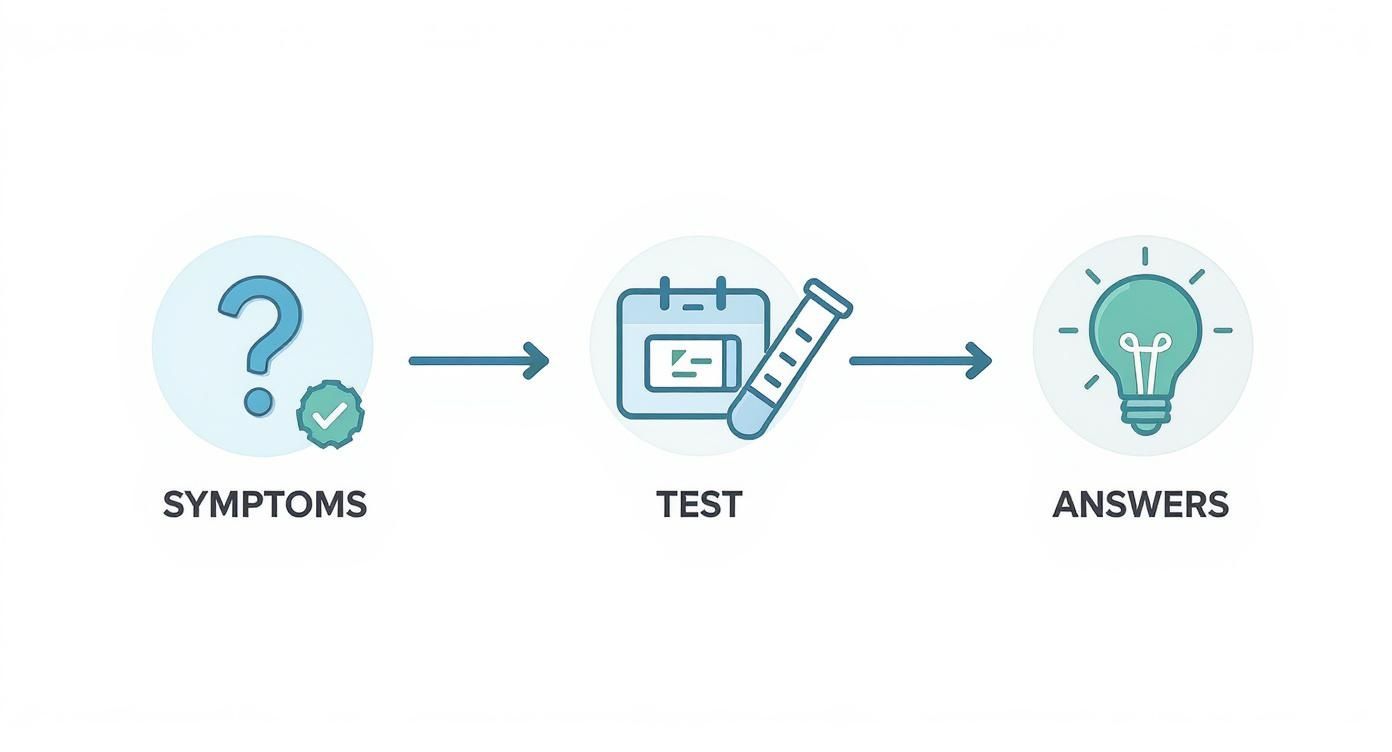
It's a straightforward, three-step journey. Your initial questions lead to testing, and the testing provides the answers you need to figure out what's next.
What Happens at the Lab
This is where the real detective work begins. Once your sample arrives, lab technicians get to work analyzing your blood, specifically looking for those IgE antibodies. They test it against a whole panel of common allergens, from different pollens and pet dander to molds and various foods.
By measuring the concentration of specific IgE antibodies in your blood, the test can map out which substances your body is sensitized to. This provides a clear, data-driven picture of your potential triggers.
The results don't just give you a "yes" or "no." They typically show a reactivity level for each allergen tested—low, moderate, or high. This detailed breakdown is incredibly helpful because it helps you understand which culprits are most likely causing your symptoms. To get a better handle on the science behind these methods, you can dig deeper into food sensitivity testing accuracy in our detailed guide. This scientific approach takes the guesswork out of the equation, giving you real confidence in your results.
Choosing The Right At-Home Allergy Test For You
Jumping online to find an at-home allergy test can feel a bit like wading into a crowded sea. Dozens of kits pop up, all promising answers. So, how do you cut through the noise and find a reliable option?
It really boils down to three core things: what allergens it tests for, where your sample is being analyzed, and how easy the results are to understand.
Consider The Allergen Range
Think of it this way: you wouldn't try to solve a puzzle with half the pieces missing. A good test gives you a comprehensive view by screening for a wide range of potential triggers.
- Food allergens: This covers the usual suspects like nuts, dairy, gluten, and shellfish, helping you spot those hidden dietary issues causing discomfort.
- Environmental allergens: Things like pollen, dust mites, and mold can trigger those frustrating seasonal or year-round reactions.
- Pet dander: A must if you suspect your furry friends are the source of your sniffles or itchy eyes.
The more ground a test covers, the better your chances of pinpointing what’s really bothering you.
“The more allergens tested, the clearer the picture,” Barb N.P. recommends.
Check Lab Certifications
This one is non-negotiable. Any trustworthy test will send your sample to a CLIA-certified laboratory for analysis.
What does that mean? CLIA certification is a seal of approval, confirming the lab adheres to strict federal standards for quality, accuracy, and reliability. It’s your assurance that the results aren’t just a random guess.
Evaluate Report Clarity
Getting a report full of scientific jargon is useless. The best tests turn complex data into a simple, actionable roadmap for your health.
You want a user-friendly digital report with clear visuals, simple wording, and personalized recommendations that tell you what to do next.
Spotting A Top Pick
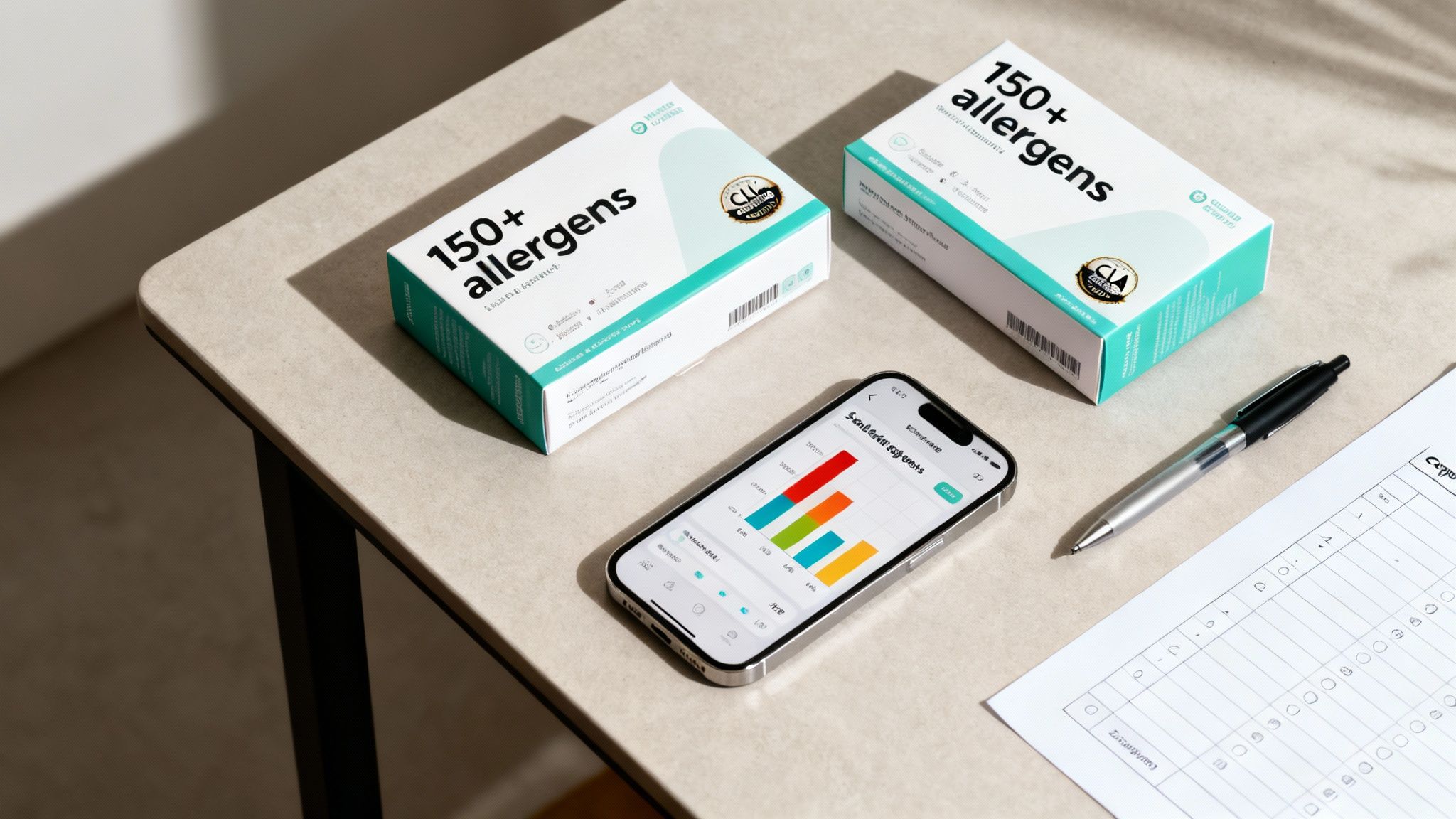
The BARB N.P. Comprehensive Allergy & Sensitivity Test is a great example of a kit that checks all these boxes. It screens for over 150 allergens, giving you that wide-angle view we talked about.
It delivers an easy-to-read digital report that flags your reactivity as low, moderate, or high, and even includes a personalized action plan to guide your next moves.
| Feature | BARB N.P. Test |
|---|---|
| Allergens Screened | 150+ |
| Lab Certification | CLIA |
| Report Format | Interactive PDF |
And remember, while you're focused on what's happening inside your body, the environment around you plays a huge role. Things like airborne allergens in your home can be a major factor. To get a complete picture, it's worth exploring a comprehensive guide to a home air quality test to identify and address those environmental triggers.
Review Turnaround Time And Support
When you’re dealing with frustrating symptoms, waiting weeks for answers is the last thing you want. Most top-tier at-home tests will get you a detailed report back within 7 to 10 days.
Also, check if the company offers dedicated customer support. Having someone to call or email with questions can make a world of difference.
Steps To Make Your Decision
Ready to choose? Here’s a simple process:
- Take stock: Jot down your most persistent symptoms and any potential triggers you already suspect.
- Compare panels: Look at each kit’s allergen list. Does it align with what you want to investigate?
- Verify the essentials: Double-check for that CLIA lab accreditation and read up on their sample stability guarantees.
Tips To Choose With Confidence
- Read reviews from real users. See what others are saying about the test's accuracy and how easy the process was.
- Look for follow-up support. Some kits include recommendations or even access to a telehealth consultation to discuss your results.
- Make sure the instructions are clear. Vague sample collection steps can lead to errors and delays.
Prioritize kits that balance cost with comprehensive testing and reliable customer service.
Compare Price And Value
You’ll see at-home allergy tests ranging anywhere from $50 to $300. While it’s tempting to grab the cheapest option, price often reflects the quality and breadth of the testing.
Cheaper kits might test for fewer allergens or skip the CLIA-certified lab altogether. Investing a bit more often gets you much broader coverage and better support.
- Budget Kits (under $75): These typically cover fewer than 30 common allergens.
- Mid-Range Kits ($75 - $150): This is the sweet spot, usually testing for 100+ allergens.
- Premium Kits (above $150): These often include the most extensive allergen panels and may come with expert consultations.
Look For Tech-Friendly Features
Some of the more modern tests integrate with mobile apps, making it super easy to access and understand your results on the go. Features like this and automated reminders for sending in your sample can really improve the whole experience.
Finally, always check the shipping timelines. You want to make sure your sample gets to the lab quickly and safely to ensure the most accurate results.
What Your Results Mean and What to Do Next
So, the envelope has arrived. You’ve taken the test, sent it off, and now you’re holding a report full of data about your body. It's a big step, but what does it all actually mean for you?
Think of your results not as a final verdict, but as a personalized roadmap. It's a set of clues pointing you toward potential triggers that might be causing your symptoms. Now, let's figure out how to read that map.
Your report will likely talk about "reactivity levels"—often broken down into low, moderate, or high. This is just a way of showing how many specific IgE antibodies your blood has for each tested substance. A "high" reactivity to peanuts, for example, signals a strong sensitization. A "low" reactivity to dust mites suggests it's a milder one.
It's also crucial to know the difference between an allergy and a sensitivity. Your test looks for IgE-mediated allergies, which can cause those immediate, sometimes severe, reactions we all dread. A sensitivity often flies under the radar with delayed symptoms like bloating or fatigue and involves different immune pathways your at-home test might not measure.
Turning Data Into Action
Here’s the most important thing to remember: your test results are a powerful tool, but they are not a substitute for a doctor's diagnosis.
A positive result confirms sensitization—meaning your immune system has flagged a substance as a potential threat. But it doesn't automatically mean you'll have an allergic reaction every single time you encounter it. Context is everything.
This is exactly why your next step should be a conversation with your doctor or an allergist. They are the experts who can help connect the dots between what your report says and what you’re actually feeling day-to-day.
To make that conversation as productive as possible, do a little prep work:
- Document Your Symptoms: Keep a simple journal for a week or two. Jot down what you eat and any symptoms that pop up, whether it's hives, an upset stomach, or a stuffy nose.
- Highlight Key Results: Circle or make a note of the allergens that showed moderate to high reactivity on your report.
- List Your Questions: Before your appointment, write down everything you want to ask. No question is too small.
This simple preparation turns your appointment from a quick check-in into a genuine strategy session for your health.
Creating a Plan With Your Doctor
Armed with your at-home test results and symptom journal, your doctor has a fantastic starting point for creating a personalized action plan.
This plan might involve simple dietary changes, tweaks to your home environment, or even further testing to confirm the findings. For example, if your results show high reactivity to several foods, your doctor might recommend a carefully managed elimination diet. You can learn more about how to approach this safely in our guide on the elimination diet for food allergies.
A positive allergy test isn't a life sentence of avoiding everything you love. It’s the beginning of a smarter relationship with your body and your environment, giving you the power to make choices that help you feel incredible.
Once you understand your triggers, the next step is often making your living space a more allergy-friendly sanctuary. For some great, practical tips, check out this guide on how to reduce allergens in your home.
Allergies are no small matter. Over 50 million Americans struggle with them every year, making allergies the sixth leading chronic illness in the U.S. In fact, 2023 data revealed that roughly 25.7% of adults and 18.9% of children have been diagnosed with seasonal allergies, eczema, or food allergies, which just goes to show how vital accessible testing has become.
Connecting Allergies to Your Skin Health
Sometimes, what’s happening inside our bodies doesn't stay hidden. Those internal sensitivities flagged by an at-home allergy test often show up on our skin as redness, persistent irritation, or even conditions like eczema. Once your test results point to potential dietary or environmental triggers, you can start taking proactive steps to manage those external symptoms and finally soothe your skin.
The link between gut health, allergies, and your complexion is well-documented. An inflammatory response to a food or environmental allergen can throw your body's balance off-kilter, leading directly to skin flare-ups. This is where combining your newfound knowledge from the test with a targeted skincare routine can make a world of difference in your skin’s appearance and comfort.
A Modern Tool for Calming Your Skin
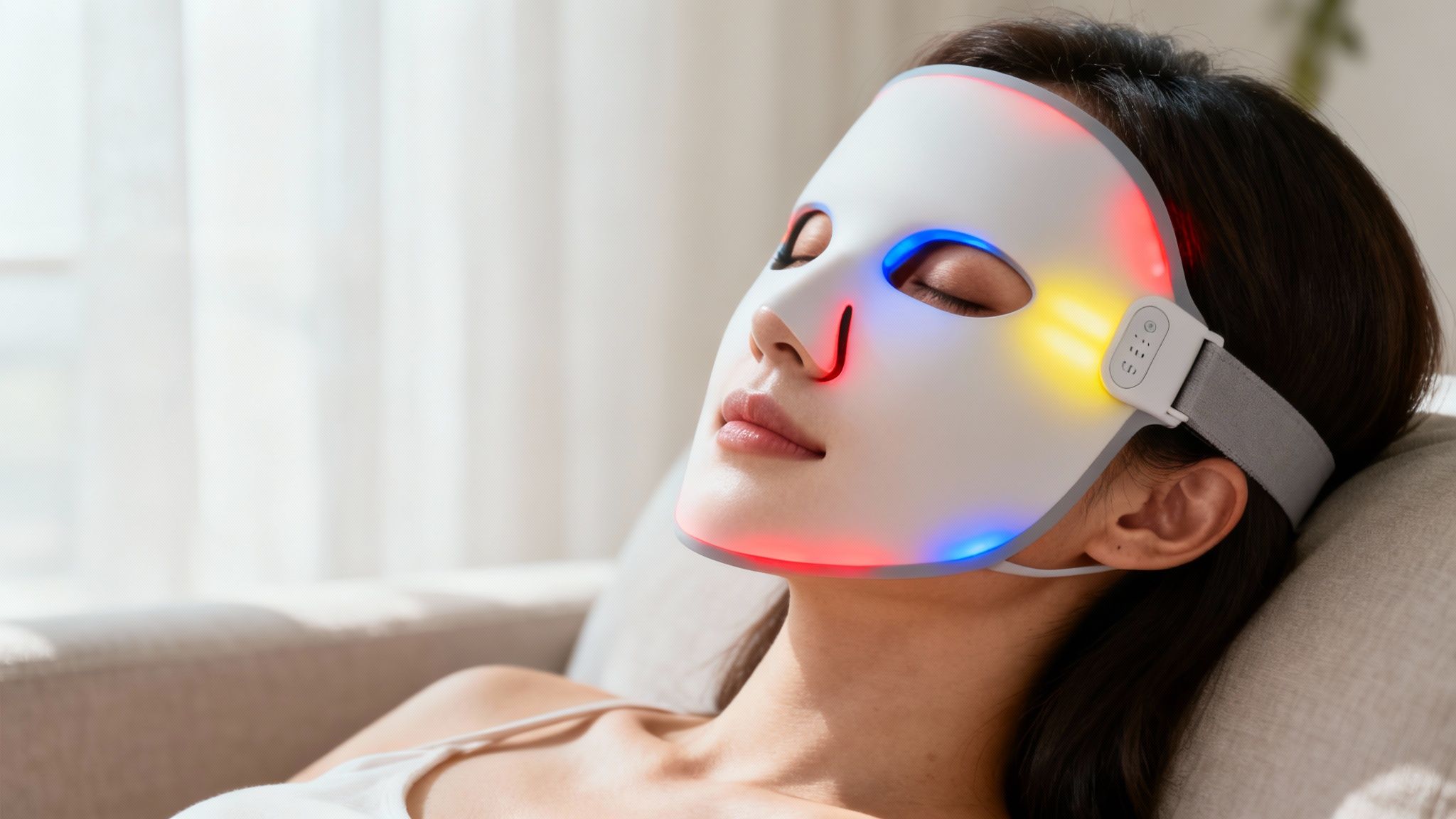
Beyond just avoiding triggers, advanced skincare technology can be a powerful ally. The Barb N.P. LED Facial Mask is a fantastic complementary tool for managing skin health right from home. It’s designed to be a seamless part of your self-care routine.
One of its best features is the completely wireless design, which lets you move freely and relax during your treatment without being tethered to a wall. The mask is also engineered for comfort, fitting securely but gently on your face so you can easily incorporate it into your daily life. It also features 3 lighting settings for different treatments, allowing you to customize your skincare.
Harnessing Light to Soothe and Rejuvenate
This device uses different wavelengths of light to offer very specific skin benefits, helping you address the visible signs of those internal sensitivities. The mask features three distinct light settings, each tailored for a different treatment.
Think of light therapy as a targeted support system for your skin. While your allergy test helps you identify and remove the internal triggers, treatments like this help manage and repair the external symptoms.
Here’s a breakdown of how each setting works to restore your skin’s balance:
- Red Light Therapy: This is your go-to for calming inflammation and promoting healing. It penetrates deep into the skin to stimulate collagen production, which helps reduce redness and repair a damaged skin barrier—often a side effect of allergic reactions.
- Blue Light Therapy: If your skin issues include acne breakouts, this setting is a game-changer. Blue light targets and eliminates acne-causing bacteria on the skin's surface, helping to clear up blemishes and prevent new ones from forming.
- Yellow Light Therapy: This gentle light is perfect for reducing overall redness and improving skin tone. It works to soothe sensitive skin, decrease the appearance of flushing, and promote a more even, radiant complexion.
By integrating a tool like the BARB N.P. LED Facial Mask into your routine, you’re taking a comprehensive approach to your health—addressing triggers from the inside out and calming symptoms from the outside in.
Lingering Questions? Let’s Clear Things Up.
Even after digging into the details, it’s totally normal to have a few questions about how an allergy test at home really works. You want to feel confident before you dive in. This final section is all about giving you clear, straightforward answers to the questions we hear most often.
Let’s get into the specifics so you feel completely ready to take the next step.
How Accurate Are These At-Home Allergy Tests?
This is the big one, and for good reason. When an at-home allergy test uses a blood sample that’s processed in a CLIA-certified lab, it’s extremely accurate at spotting IgE antibodies. This is the exact same scientific method a doctor’s office uses for allergy blood work.
But it’s important to know what "accuracy" really means here. The test accurately identifies sensitization—meaning your immune system has created antibodies in response to a substance. It doesn't diagnose a clinical allergy on its own or tell you how severe a reaction might be.
Think of it as a super-reliable first clue in your investigation, giving you the perfect starting point for a productive conversation with your doctor.
What's the Difference Between a Food Allergy and a Food Sensitivity?
Getting this right is key to making sense of your results. A true food allergy is driven by an IgE immune response. This is the reaction that can cause immediate and sometimes serious symptoms like hives, swelling, or even life-threatening anaphylaxis.
A food sensitivity, on the other hand, is often linked to IgG antibodies. The science behind IgG's role in food reactions is still debated, and most allergists don’t consider these tests a reliable diagnostic tool. That's why trusted at-home allergy kits, like those from BARB N.P., stick to the scientifically established IgE-mediated reactions to give you clear, actionable insights.
Do I Have to Stop My Allergy Meds Before Taking the Test?
Here’s one of the best parts about an IgE blood test: you generally do not have to stop taking antihistamines. Unlike a skin prick test, these medications typically don't mess with the antibody levels floating around in your blood.
That said, always, always read the specific instructions that come with your test kit. If you're on any prescription medications, especially immunosuppressants, it's smart to have a quick chat with your doctor to make sure there are no potential issues.
This makes the whole process much simpler and less disruptive to your daily life.
What if My Test Is Negative but I Still Have Symptoms?
A negative result is just as valuable as a positive one—it’s not a dead end! It gives you powerful information by helping you rule out the common allergens included in that specific test panel.
If your test comes back negative but you’re still not feeling right, it could mean a few things:
- Your trigger might be an allergen that wasn’t on the test panel you used.
- Your symptoms could be from a non-allergic intolerance, which is a digestive issue, not an immune one.
- There could be another underlying health condition causing your symptoms.
In this case, your next move is to follow up with your doctor or an allergist. They can help you investigate other possibilities and explore different paths to get to the bottom of what’s going on.
Ready to finally get some answers and take control of your well-being? The team at BARB N.P. offers a curated range of wellness solutions, from comprehensive allergy testing to advanced skincare like the BARB N.P. LED Facial Mask, designed to help you look and feel your absolute best. Explore our shop to find the tools you need for your journey to long-term health. Visit our shop to learn more.