
Posted by Barb N.P. Team
on December 26, 2025

When it comes to the best anti-aging treatments for your 40s, the magic isn't in a single cream or procedure. It's in the combination—a smart strategy that pairs professional, in-clinic work like neuromodulators and fillers with a consistent, high-quality skincare routine at home.
This two-pronged approach is what truly delivers results. You're not just correcting existing signs of aging; you're actively preventing future damage by tackling concerns from every angle. It's about relaxing deep-set expression lines while simultaneously rebuilding your skin's foundational collagen and protecting its delicate barrier.
Why Your Skin Changes in Your 40s
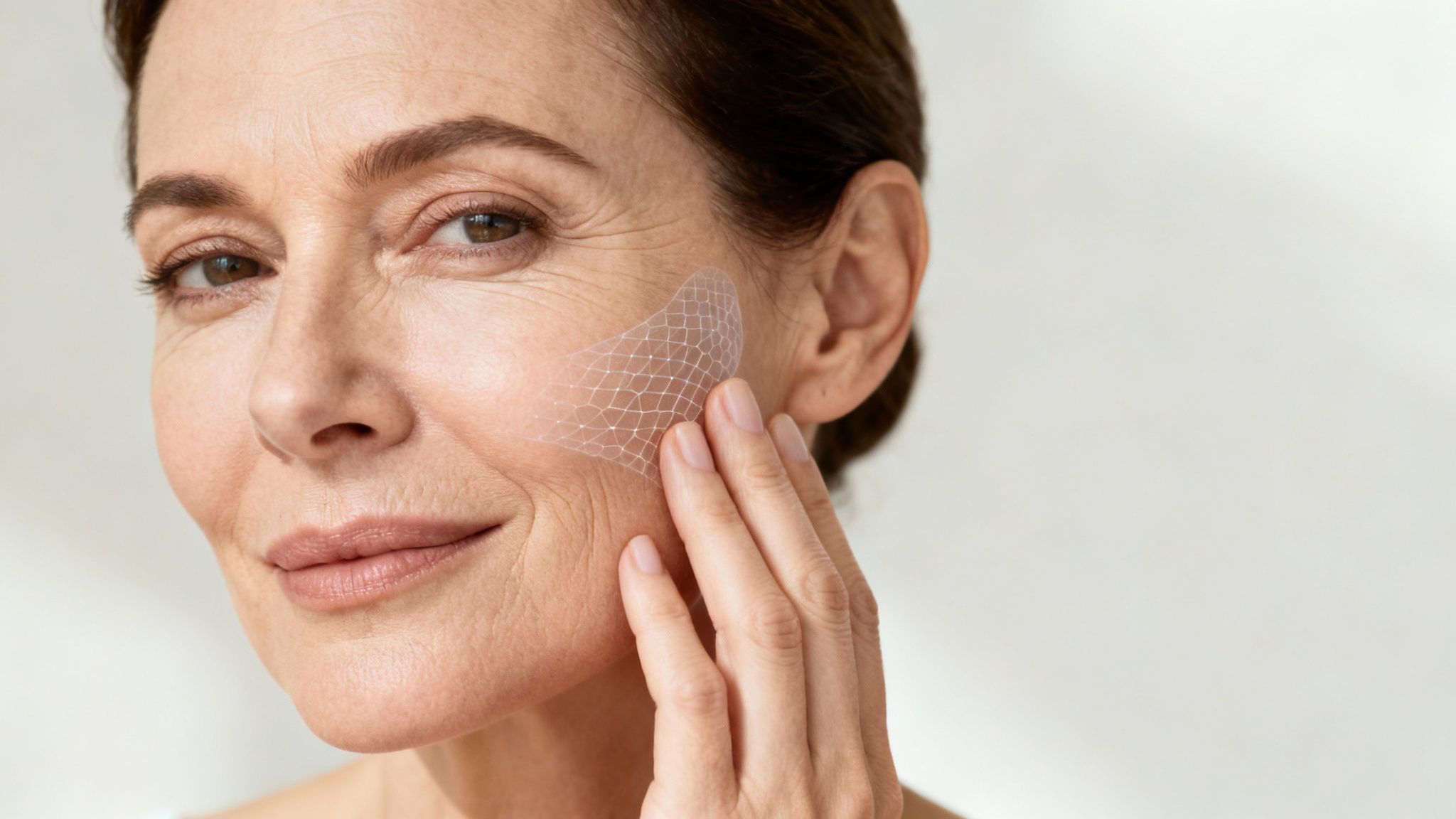
If you've hit your 40s, you’ve probably noticed your skin is playing by a whole new set of rules. That fine line by your eye seems a little more permanent, your skin doesn’t feel quite as taut, and that reliable glow might be a bit harder to find. You're not imagining it. These are the outward signs of some major biological shifts happening just beneath the surface.
Think of your skin in your 20s as a new mattress—firm, bouncy, and supported by a dense network of collagen and elastin fibers. By your 40s, that internal framework naturally starts to lose some of its spring. Collagen production, which was at its peak in your youth, is now on a much steeper decline, leading directly to that loss of firmness and volume.
The Key Factors Driving Skin Aging
It's not just one thing, but a perfect storm of factors that work together to change your skin’s health and appearance during this decade.
- Slowing Cell Turnover: Your skin's built-in exfoliation system gets lazy. Dead skin cells hang around on the surface longer, which is a recipe for a dull, uneven complexion. It also means your expensive skincare products can't penetrate as deeply to do their job.
- Hormonal Fluctuations: As perimenopause begins, hormonal shifts throw your skin for a loop. A drop in estrogen is directly linked to thinner, drier skin and an accelerated loss of both collagen and elasticity.
- Accumulated Sun Damage: All those sunny days from your teens and 20s are now making their debut. This photodamage shows up as hyperpigmentation (dark spots), an uneven skin tone, and a breakdown of the very proteins that once kept your skin smooth and resilient.
These internal and external forces team up, creating a cascade effect that leads to more visible signs of aging.
The cumulative effect is clear: skin becomes thinner, drier, and less resilient. This is why addressing volume loss, texture, and laxity becomes a primary focus for many people seeking the best anti aging treatments for 40s.
Moving Beyond Surface-Level Solutions
Now that you understand the "why," it’s easy to see why a single "miracle cream" just can't cut it. A truly effective plan has to be multi-layered, supporting the skin from the inside out and the outside in.
This means combining powerful, professional treatments that trigger deep repair with a diligent at-home routine designed to protect and maintain those hard-won results. This is the core philosophy that drives real, lasting improvement. By targeting the root causes—collagen loss, sluggish cell regeneration, and environmental damage—you can build a proactive and personalized roadmap.
It’s about moving beyond simply chasing wrinkles and, instead, cultivating genuinely healthy, resilient, and radiant skin that will serve you well for years to come.
Targeting Wrinkles with Neuromodulators and Fillers
By the time we hit our 40s, the story of our lives is written on our faces—but not all lines are created equal. To choose the right treatment, you first have to understand what you’re seeing. Think of your face like a piece of paper: some creases come from folding it over and over again (like smiling or squinting), while others appear because the paper itself is getting thinner.
This is where two of the most popular and effective in-clinic treatments come into play: neuromodulators and dermal fillers. While people often lump them together, they work in completely different ways to smooth, lift, and refresh your look.
Neuromodulators: A Pause Button for Expression Lines
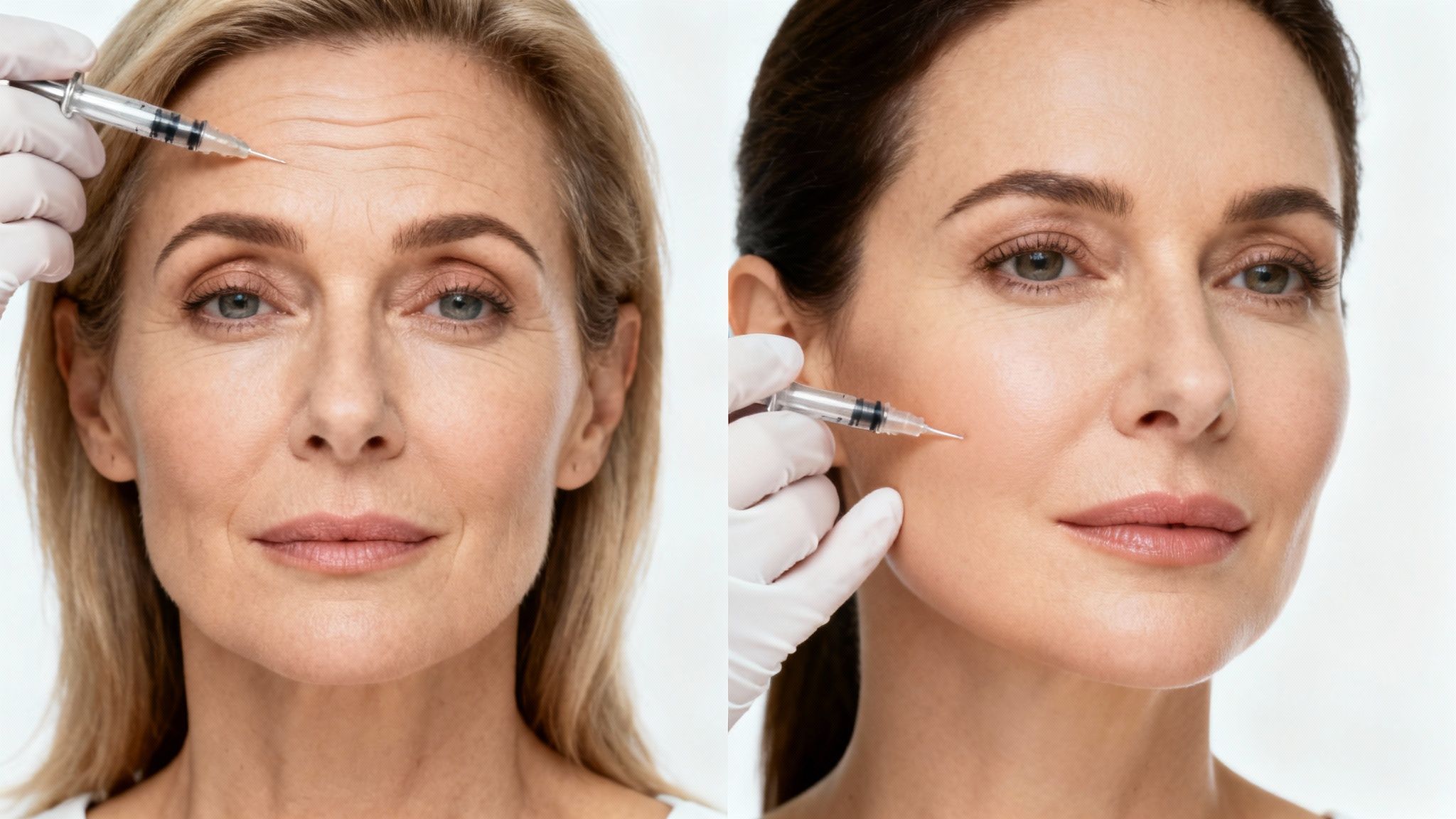
Neuromodulators like Botox and Dysport are the gold standard for dynamic wrinkles—those lines etched in by years of squinting, laughing, and raising your eyebrows. Think of them as a "pause button" for the tiny facial muscles responsible for those repetitive movements.
By temporarily relaxing these specific muscles, neuromodulators stop them from creasing the skin above. This gives your skin a chance to smooth itself out, dramatically softening crow’s feet, forehead lines, and the "eleven" lines that can form between the brows.
The ideal candidate for neuromodulators is someone whose main concern is wrinkles that appear with facial expressions. The goal isn't to look "frozen"—it's to look rested and serene. A skilled injector targets only the necessary muscles, so you can still show emotion naturally.
Dermal Fillers: Restoring Lost Volume
Dermal fillers, like Juvéderm and Restylane, tackle a totally different issue: volume loss. As collagen, elastin, and even the fat pads in our faces diminish in our 40s, some areas can start to look sunken or hollow. Fillers essentially "re-stuff the cushion," bringing back that youthful structure.
These are gel-like substances, usually made from hyaluronic acid (something your body produces naturally), that are strategically placed to:
- Lift and contour the cheeks, re-establishing a more youthful facial shape.
- Soften under-eye hollows to reduce that tired, dark-circle look.
- Fill in nasolabial folds, smoothing the deep lines that run from your nose to your mouth.
Fillers are perfect for anyone noticing sagging, hollowness, or deep-set wrinkles that stick around even when their face is at rest. They restore youthful contours by providing structural support from underneath the skin. If you want to dive deeper, our guide on the differences between Juvéderm and Botox is a great resource.
The numbers speak for themselves. Minimally invasive injectable treatments are incredibly popular, with 15.8 million procedures performed in the US alone. Neuromodulators like Botox made up 9.5 million of these, while hyaluronic acid fillers hit 5.3 million—with demand driven heavily by the 40-54 age group.
The art of injectables lies not in the product, but in the provider. An experienced injector understands facial anatomy and artistry, delivering results that are subtle, balanced, and enhancing—never artificial.
Neuromodulators vs Dermal Fillers At A Glance
To make it even clearer, here’s a quick comparison to help you understand the key differences between these two powerhouse treatments.
| Feature | Neuromodulators (Botox, Dysport) | Dermal Fillers (Juvéderm, Restylane) |
|---|---|---|
| Primary Target | Dynamic Wrinkles (from muscle movement) | Static Wrinkles & Volume Loss |
| How It Works | Temporarily relaxes specific facial muscles | "Fills" in lost volume and provides structural support |
| Best For | Crow's feet, forehead lines, "11s" between brows | Sunken cheeks, under-eye hollows, nasolabial folds |
| Onset of Results | 5-14 days | Immediate |
| How Long It Lasts | 3-4 months | 6-18+ months, depending on product and area |
| Feeling | No physical feeling in the treated area | Can feel firm initially, then integrates with tissue |
Ultimately, one isn't "better" than the other; they simply do different jobs. Many women in their 40s find that a combination of both delivers the most comprehensive and natural-looking results.
The Importance of a Skilled Injector
Choosing the right treatment is only half the equation. The success of both neuromodulators and fillers depends almost entirely on the skill, experience, and artistic eye of your injector. A deep understanding of facial anatomy allows them to place the product precisely where it’s needed for a beautiful, refreshed look.
During your consultation, a qualified provider will assess your unique facial structure, listen to your concerns, and help you decide which treatment—or combination of treatments—will best help you achieve your goals. The right plan ensures you walk away looking like the best version of yourself, not like someone else.
Go Deeper: Rejuvenating Skin with Regenerative Treatments
While injectables are fantastic for targeting specific wrinkles and volume loss, some of the most powerful anti-aging treatments for your 40s work on a much more foundational level. These advanced regenerative therapies are all about improving your skin's overall quality, texture, and health from the inside out.
Think of it this way: injectables are like spot-treating a problem, while regenerative therapies are like sending in a crew to rebuild the entire foundation. They address concerns like dullness, poor texture, and subtle laxity that injectables alone can't fix, creating a naturally radiant and resilient complexion.
Platelet-Rich Plasma (PRP) Therapy: Your Personal Repair Crew
Platelet-Rich Plasma (PRP) therapy is an incredible treatment that harnesses your body's own powerful healing abilities to rejuvenate your skin. It’s like assembling your own personal construction crew, concentrating them in an area that needs rebuilding, and letting them get to work.
The process itself is surprisingly straightforward:
- A small amount of your blood is drawn, just like a routine lab test.
- That blood is spun in a centrifuge, which separates the powerful platelets and growth factors from everything else.
- This concentrated, golden liquid—the PRP—is then reintroduced into your skin, usually through microneedling or tiny injections.
Once deployed, these growth factors signal your cells to get busy regenerating, ramping up collagen and elastin production, and building new, healthy tissue. The result is firmer skin, dramatically improved texture, and a noticeable reduction in fine lines and even acne scars. If you're curious about how this pairs with microneedling, you can learn more about what microneedling with PRP is and how it supercharges your results.
LED Light Therapy: Professional-Grade Tech at Home
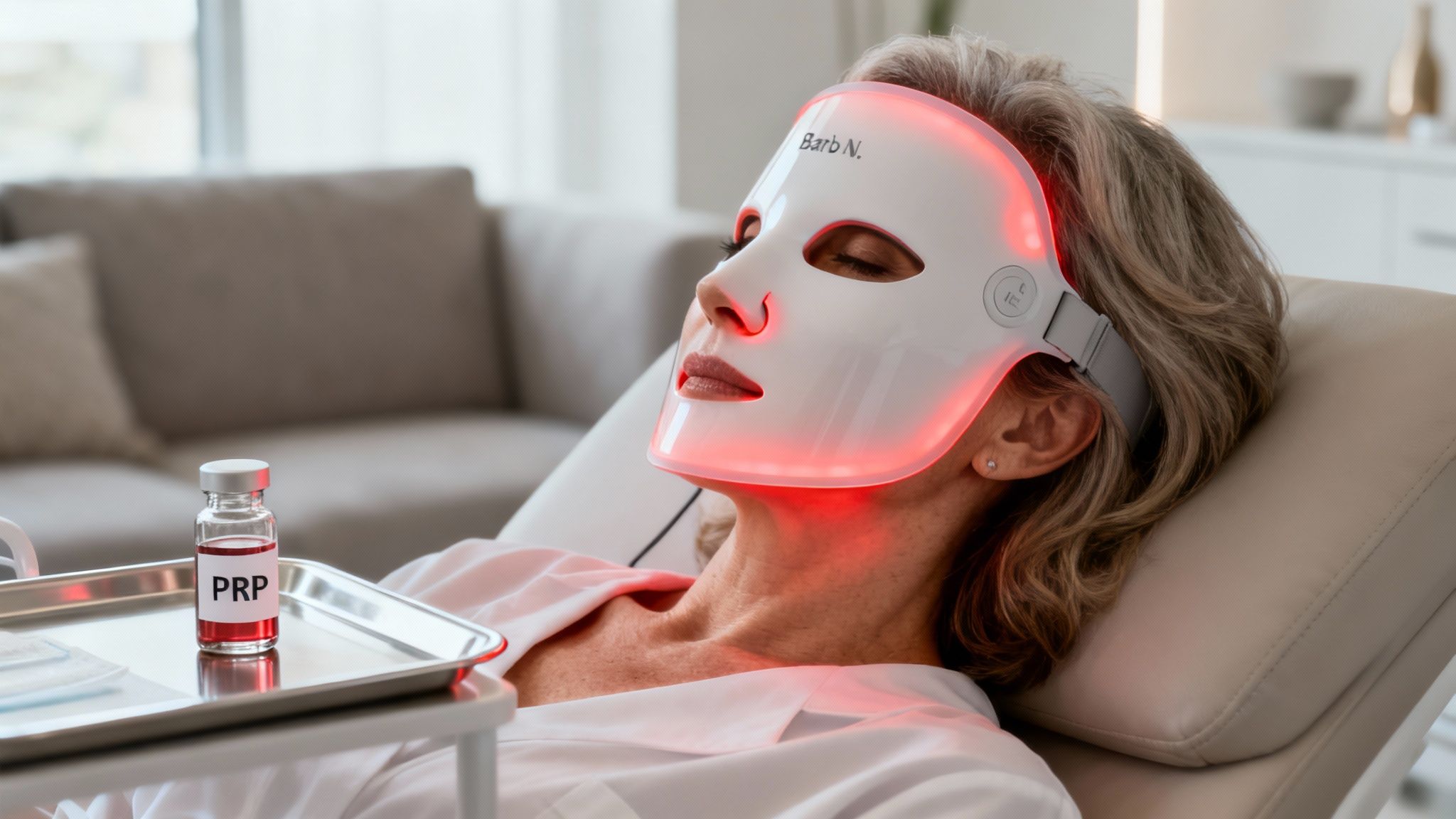
Another game-changing tool is LED (Light Emitting Diode) therapy, a completely non-invasive treatment that uses different wavelengths of light to trigger specific responses in your skin cells. It’s like providing targeted energy to your cells, telling them exactly what job you need them to do. And the best part? You can now harness this clinical-grade technology at home.
The Barb N.P. Facial Mask is a perfect example of bringing professional results into your daily routine. It’s designed for real-world use with features that make it easy to stay consistent:
- Completely Wireless: You can move around freely during your session without being tethered to a wall.
- Exceptional Comfort: The mask is crafted to fit your face comfortably, making it a relaxing experience rather than a chore.
- Three Therapeutic Light Settings: Each color targets a different concern, allowing you to customize your treatment on any given day.
This ability to bring clinical technology home is huge. Consistency is absolutely key for regenerative therapies, and at-home devices make it possible to maintain and boost the results you achieve in-clinic.
Understanding the Different Light Settings
The Barb N.P. Facial Mask offers three distinct light therapies, each with a unique benefit for skin in your 40s.
- Red Light for Collagen Production: This is the ultimate anti-aging wavelength. Red light penetrates deep into the skin's dermis to stimulate fibroblasts—the cells responsible for creating collagen. More collagen means firmer, plumper skin with fewer visible wrinkles over time.
- Blue Light for Clarity: For those who still experience occasional breakouts or blemishes (yes, even in our 40s!), blue light is a lifesaver. It targets and eliminates acne-causing bacteria on the skin's surface, helping to clear up existing spots and prevent new ones from forming.
- Amber Light for Healing and Calm: This wavelength is focused on soothing sensitive skin, reducing redness, and promoting healing. It's an ideal setting to use after more intensive procedures to speed up recovery and reduce inflammation.
By integrating regenerative treatments like PRP and at-home LED therapy, you create a truly holistic approach. You aren't just managing the signs of aging; you are actively improving the health and function of your skin on a cellular level.
Building Your At-Home Skincare Defense
Professional treatments are a powerful way to reset your skin, but the real, lasting changes are built day in and day out at your bathroom sink.
Think of it this way: an in-clinic procedure is like a professional deep cleaning for your house. Your at-home skincare routine is the daily upkeep that keeps things looking pristine. This daily defense is absolutely non-negotiable for protecting your investment and making your results even better.
The Gold Standard: Retinoids
When we talk about topical anti-aging, retinoids are the undisputed champions. This family of Vitamin A derivatives works by speeding up your skin's natural cell turnover, essentially telling old, dull cells to move along so fresh, healthy ones can take their place. This process is key for smoothing texture and fading discoloration.
More importantly, retinoids get deep into the dermis and kickstart new collagen production. This is critical in our 40s, as they are clinically proven to fight back against the estimated 1% annual collagen decline we experience. While prescription tretinoin is the FDA-approved gold standard, studies show high-concentration retinol can deliver surprisingly comparable results, significantly boosting structural proteins in as little as eight weeks. If you're curious about the data, you can discover more insights about anti-aging treatment statistics.
Essential Supporting Ingredients for Your 40s
While retinoids are a cornerstone, they perform best as part of a team. To build a truly robust skincare defense, you need a few other key players in your daily lineup.
-
Vitamin C: Think of this potent antioxidant as your skin's daytime bodyguard. It neutralizes the free radical damage from UV rays and pollution that chews up your collagen, all while brightening your complexion and helping to fade stubborn dark spots.
-
Peptides: These are like little messengers that tell your skin cells to get to work on specific jobs, like building more collagen and elastin. Adding them to your routine helps improve firmness and bounce, giving you another layer of support against sagging.
You can dive deeper into a complete breakdown of the best anti-aging ingredients to see how each one works to create healthier, more resilient skin.
Your at-home routine isn’t just about maintenance; it’s an active treatment strategy. The right ingredients, used consistently, will dramatically improve your skin’s health and protect the results of your in-clinic procedures.
How to Layer Your Actives for Maximum Impact
Using powerful ingredients is one thing; using them correctly is another game entirely. Layering your products in the right order ensures they can actually penetrate the skin and do their job without causing unnecessary irritation.
Your Morning Routine (Protect & Prevent)
- Gentle Cleanser: Start with a clean slate, but don't strip your skin's natural moisture barrier.
- Vitamin C Serum: Apply to dry skin. This is your primary antioxidant shield for the day.
- Moisturizer: Lock in hydration and support your skin barrier.
- Broad-Spectrum SPF 30+: This is the most critical step. Sun exposure is the number one cause of premature aging. Without daily protection, all your other efforts are seriously undermined.
Your Evening Routine (Repair & Regenerate)
- Cleanser: Thoroughly wash away makeup, sunscreen, and the grime of the day.
- Peptide Serum or Treatment: Apply your peptide product first to support skin structure and repair.
- Retinoid: Wait for your skin to dry completely, then apply a pea-sized amount. (Start slow—just 2-3 nights a week—and build up as your skin adapts to avoid irritation).
- Moisturizer: Finish with a nourishing moisturizer to hydrate and soothe your skin while you sleep.
By following this simple framework, you create a powerful, synergistic effect. Your morning routine shields your skin from daily damage, while your evening routine focuses on deep repair and regeneration, ensuring you get the absolute most out of every product.
Supporting Your Skin From The Inside Out
The most powerful anti-aging strategies go way beyond what you put on your skin. Truly radiant, resilient skin in your 40s is a direct reflection of your overall wellness. What’s happening inside your body is every bit as important as the treatments you’re getting in the clinic.
This decade is often when significant hormonal shifts kick in, largely thanks to perimenopause. When estrogen levels start to fluctuate, it directly impacts your skin, leading to more dryness, thinning, and a faster decline in collagen. These changes don't just stop at your face; they can also show up as hair thinning, another major concern for women in this age group.
The Hormonal Connection to Skin Aging
Think of your hormones as tiny messengers that regulate countless functions keeping your skin firm and youthful. As those levels change, the communication network that supports your skin's structure starts to get a little fuzzy.
We’re seeing more and more research that confirms this link. A huge biobank study found that a history of hormone therapy (HT) was linked to a noticeable reduction in the signs of biological aging. Researchers are now zeroing in on the critical role hormones play in slowing the breakdown of connective tissue, making them a key area of focus for preventing aging. You can dive into the full study to learn more about these hormonal findings.
This just drives home how crucial a holistic approach is. Addressing these internal shifts is a cornerstone of any successful plan for the best anti-aging treatments in your 40s.
Strategic Supplementation for Hair and Skin
When internal factors like hormonal changes and nutritional gaps start to show up on the outside, the right supplements can provide much-needed backup. This is especially true for hair health, which is often one of the first places to show signs of stress or hormonal imbalance.
- For Hair Thinning: Products like Nutrafol are a game-changer. They use medical-grade, natural ingredients to get to the root causes of hair thinning—rebalancing hormones, managing stress, and giving your body the building blocks for stronger, healthier hair growth.
- For Skin Health: Adding collagen powders, hyaluronic acid capsules, and antioxidant-rich supplements to your routine can help support your skin’s internal scaffolding and shield it from damage.
Foundational Pillars of Internal Wellness
While supplements are great for targeted support, they work best when you have a solid foundation of healthy daily habits. Think of these three pillars as the non-negotiables in your anti-aging toolkit.
- Nutrient-Rich Diet: Your skin literally rebuilds itself with the food you eat. A diet packed with antioxidants (think colorful fruits and veggies), lean proteins, and healthy fats provides the raw materials your body needs for collagen production and cell repair.
- Proper Hydration: Dehydrated skin looks dull, and it makes fine lines look way more obvious. Drinking enough water throughout the day is a simple but powerful way to keep your skin plump and support the metabolic functions that give you a clear, vibrant complexion.
- Stress Management: Chronic stress is a collagen killer. It floods your body with cortisol, a hormone that actively breaks down collagen and can trigger inflammation. Finding a stress-reducing practice that works for you—whether it's yoga, meditation, or just getting outside—is a seriously effective anti-aging tool.
You simply can't separate skin health from whole-body health. Balancing your internal environment is the most sustainable way to look and feel your absolute best.
Beyond these core habits, other wellness practices can give you an extra edge. For example, many people are exploring infrared sauna skin benefits for collagen and healthier skin as a way to boost circulation and support detoxification from the inside out. When you combine this kind of internal support with external treatments, you create a powerful synergy that delivers incredible, lasting results.
Creating Your Personalized Anti Aging Plan
Knowing which treatments are out there is step one. But the real magic happens when you build a smart, year-long strategy that makes them all work together. A personalized anti-aging plan isn’t about randomly booking procedures; it's about strategically layering different treatments so each one builds on the last for a powerful, cumulative effect.
This approach ensures you’re not just chasing wrinkles but actively rebuilding your skin's health and structure from the inside out. By working with a professional, you can map out a plan that targets your unique concerns—from expression lines to volume loss—and makes sure every treatment works in harmony.
A Sample Annual Treatment Roadmap
To show you what this looks like in practice, let’s walk through a hypothetical year for someone in their 40s. This isn't a rigid schedule, but it perfectly illustrates how different treatments can be timed for maximum impact.
-
Quarterly Neuromodulator Appointments (Every 3-4 months): This is your foundation for smooth skin. Consistent Botox or Dysport appointments are the key to keeping expression lines like crow's feet and forehead wrinkles from settling in and becoming permanent.
-
Biannual Filler Touch-Ups (Every 6-12 months): Dermal fillers are used to restore lost volume in areas like the cheeks or under-eyes, and they have real staying power. For most people, one or two sessions a year is all it takes to maintain youthful contours and structural support.
-
A Targeted Regenerative Series (Once a year): Think of this as your annual collagen-boosting event. Scheduling a series of three PRP with microneedling sessions, spaced about a month apart, can dramatically improve your skin's texture and radiance for the entire year to come.
This timeline shows how to support your skin from every angle—not just with procedures, but with the right nutrition, hormone balance, and stress management.
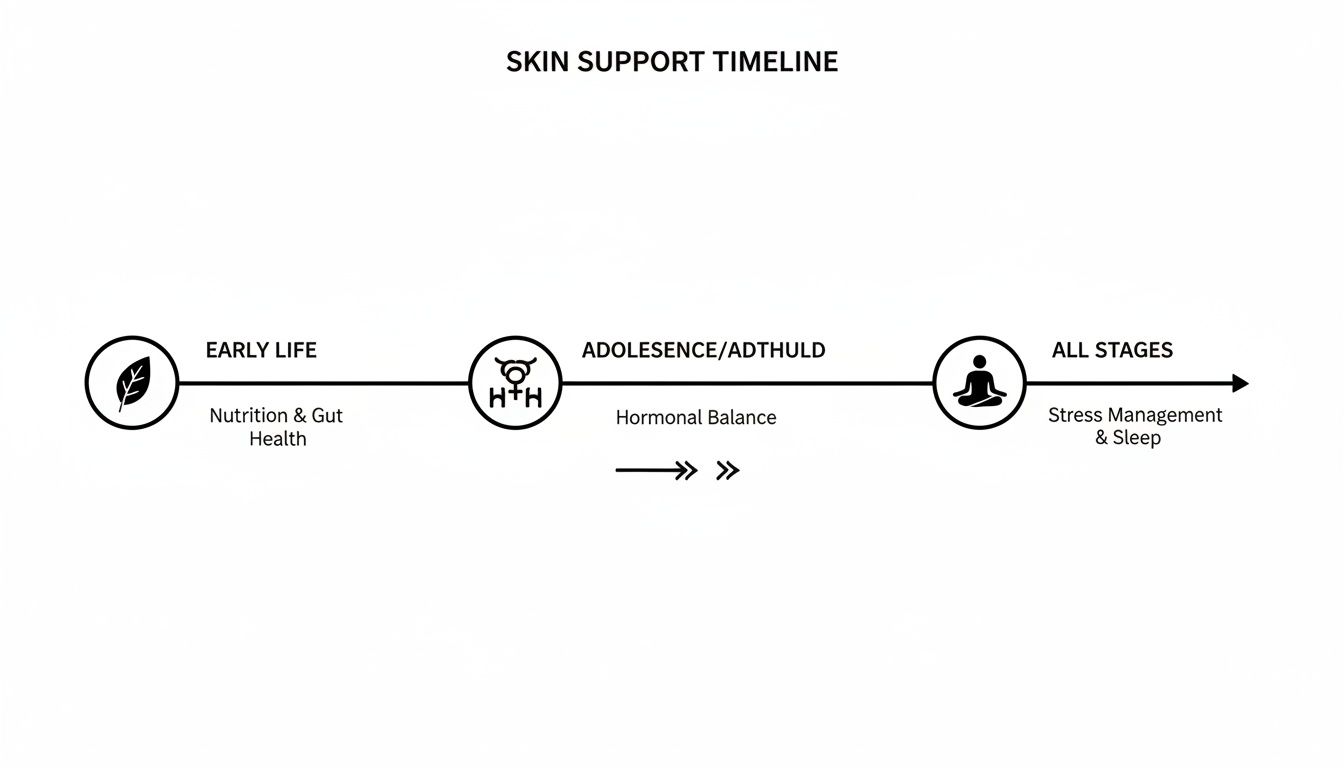
The takeaway here? Foundational wellness habits are just as critical as your in-clinic appointments for incredible, long-term results.
Weaving in At-Home Care and Budgeting
Your professional treatments are only half the story; your daily habits are what protect that investment. Using medical-grade skincare and at-home devices consistently is non-negotiable. This is where something like the Barb N.P. LED Mask fits in perfectly. Using its red light setting a few times a week keeps that collagen stimulation going strong between your professional appointments.
Anti-aging is a marathon, not a sprint. Budgeting for this journey means planning for both the initial treatments and the ongoing maintenance that will keep you looking and feeling your best for years.
And while we’re focused on the skin, a truly holistic approach often includes other details that contribute to a youthful look, like a bright, confident smile. You can discover how to naturally whiten your teeth to complement your skincare efforts. Ultimately, the goal is to build a sustainable plan that aligns with your lifestyle, goals, and budget.
Your Questions, Answered
Stepping into the world of aesthetic treatments can bring up a lot of questions. That’s completely normal. Here are some straightforward answers to the things my clients ask most, so you can feel clear and confident about your next steps.
How Much Do Anti-Aging Treatments Cost in Your 40s?
This is probably the number one question I get, and the honest answer is: it varies. The cost really depends on where you live, the expertise of your provider, and the specific treatments you choose. I encourage my clients to think of it less as a cost and more as a long-term investment in their skin’s health and confidence.
For instance, neuromodulators like Botox are typically priced by the unit, while dermal fillers are priced by the syringe. More intensive treatments, like a series of PRP sessions, might be bundled into a package. Your best first step is always a one-on-one consultation. We can talk through your goals, map out a plan, and I’ll give you a completely transparent breakdown of the investment so it aligns with your budget.
Is It Too Late to Start Botox in My 40s?
Absolutely not! In fact, your 40s are a fantastic time to start. Many of my clients begin right around this age. While starting earlier can be preventative, beginning now is incredibly effective for softening those dynamic wrinkles—the lines that show up when you smile or frown—and stopping them from becoming permanently etched into your skin.
A skilled injector will work with you to achieve a refreshed, natural look, never a “frozen” one. It’s a powerful tool for rejuvenation that can significantly smooth your appearance and slow down the formation of deeper, more stubborn lines.
At-home devices and professional treatments don't compete; they collaborate. In-clinic procedures provide the significant, foundational reset, while at-home care is the consistent daily effort that maintains and enhances those results for the long haul.
How Do At-Home Devices and Professional Treatments Work Together?
They’re the ultimate power couple for your skin. Think of professional treatments as the “heavy lifting”—they provide that significant, foundational improvement in your skin’s structure and tone. At-home devices are your “daily workout” that keeps your skin in peak condition between appointments.
This synergy is what delivers superior, longer-lasting results. A device like the Barb N.P. LED Facial Mask is a perfect example of this partnership. Using its red light setting a few times a week helps maintain the collagen stimulation you get from in-clinic procedures like microneedling. The amber light is incredible for calming skin and speeding up recovery after a treatment. This combination ensures your skin is always being supported, maximizing the benefits of your professional investment.
At BotoxBarb, my philosophy is built on creating personalized plans that blend expert in-clinic treatments with effective at-home care. You can explore my curated selection of medical-grade skincare and advanced devices designed to support your journey to radiant, healthy skin. Start building your personalized routine today.