

Posted by Barb N.P. Team
on November 26, 2025

Let’s get one thing straight: a food intolerance might ruin your day, but a food allergy can end your life. That’s the crucial difference. One is a digestive system issue that causes discomfort, while the other is a full-blown immune system attack. Understanding which is which isn't just trivia—it's essential for your health and safety.
Understanding Food Allergy vs Food Intolerance
It’s easy to use "allergy" and "intolerance" interchangeably when a certain food makes you feel awful. But from a medical standpoint, they are worlds apart, with completely different triggers and consequences.
A true food allergy happens when your immune system goes rogue. It misidentifies a harmless food protein as a dangerous invader and launches an aggressive, all-hands-on-deck defense. This response can be swift, severe, and potentially fatal.
On the other hand, a food intolerance means your digestive tract simply can't process a particular food correctly. Maybe you're missing an enzyme (like lactase for dairy), or you're sensitive to certain additives. The symptoms are definitely unpleasant, but they don't involve your immune system and aren't life-threatening.
The scale of these issues is massive. Food allergies affect an estimated 220 million people worldwide. But food intolerances and sensitivities are even more common, impacting roughly 20% of the global population. You can dig deeper into these global food allergy statistics to see just how widespread these conditions are.
This diagram cuts through the noise, showing how an allergy is an immune system fight while an intolerance is a digestive system problem.
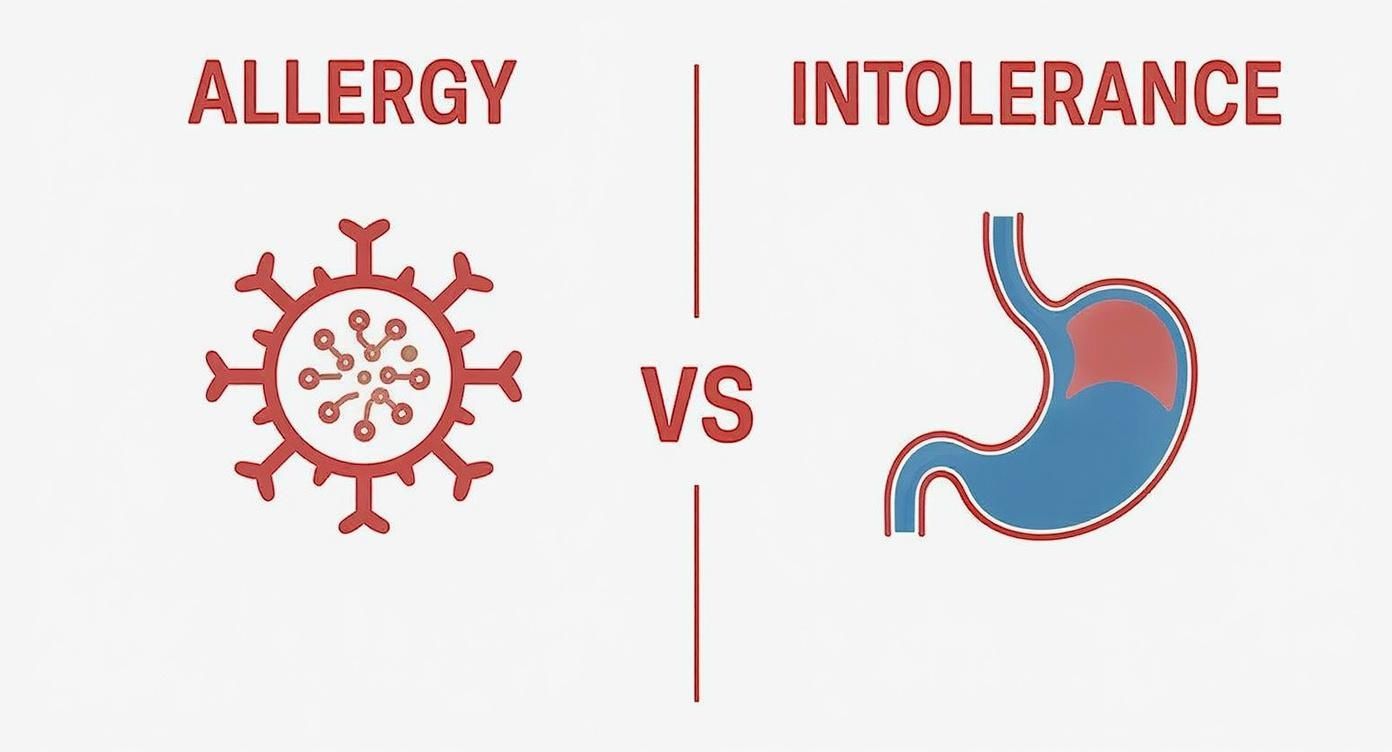
The key takeaway? One is a systemic immune defense, and the other is a localized digestive breakdown.
Key Differences Between Food Allergy and Intolerance
To make this crystal clear, let's put the core characteristics side-by-side. This table gives you a straightforward look at how these two conditions stack up, from the body system involved to how quickly you'll feel the effects.
| Characteristic | Food Allergy | Food Intolerance |
|---|---|---|
| Bodily System | Immune System | Digestive System |
| Reaction Speed | Fast (minutes to 2 hours) | Slow (hours to days) |
| Symptom Severity | Can be life-threatening (anaphylaxis) | Uncomfortable, but not fatal |
| Amount to Trigger | A tiny trace can cause a reaction | Often requires a larger, dose-dependent amount |
| Common Triggers | Peanuts, tree nuts, milk, eggs, soy, fish | Lactose, gluten, histamine, food additives |
As the table shows, the immediate and severe nature of an allergic reaction is a primary red flag. In the next sections, we’ll dive into the specific science behind these reactions to help you better understand what’s happening inside your body.
The Science Behind Your Body's Reaction
To really understand the difference between a food intolerance and an allergy, we have to look under the hood at what’s happening inside your body. Think of it like a car problem: an allergy is like your security system going haywire and treating you like a thief, while an intolerance is more like having the wrong kind of fuel in the tank. Both cause issues, but for completely different reasons.
A food allergy is, at its core, a case of a hyper-vigilant immune system. When you have an allergy, your body mistakenly identifies a harmless food protein—like one from peanuts or shellfish—as a dangerous invader. This mistake triggers the production of a specific antibody called Immunoglobulin E (IgE).
These IgE antibodies then attach themselves to mast cells, which are immune cells scattered throughout your skin, gut, and airways. The next time you eat that same food, the protein latches onto the IgE, signaling the mast cells to unleash a flood of powerful chemicals, especially histamine.
This chemical cascade is what kicks off the classic, rapid-fire allergic symptoms: hives, swelling, wheezing, and in the worst cases, life-threatening anaphylaxis. It’s a swift and systemic response because it’s your immune system on high alert.
Non-Immune Pathways of Food Intolerance
A food intolerance, on the other hand, completely sidesteps this immune response. Instead, it’s usually a breakdown in your digestive process. There's no immune system drama here, just a functional problem.
The most common culprit is an enzyme deficiency. Lactose intolerance is the textbook example. If you're lactose intolerant, your body doesn't make enough lactase, the enzyme needed to break down milk sugar (lactose). When that undigested sugar hits your gut, it ferments and causes all that uncomfortable gas, bloating, and diarrhea.
Other common causes of intolerance include:
- Sensitivity to food additives: Things like sulfites in wine and dried fruit or MSG can trigger reactions in some people.
- Reactions to natural compounds: You might react to naturally occurring chemicals, like the histamine in aged cheeses or the caffeine in your morning coffee.
- Irritable Bowel Syndrome (IBS): This condition can make your gut extra sensitive, especially to a group of carbohydrates known as FODMAPs.
Knowing these pathways is everything. Because an intolerance isn't an immune attack, the symptoms are generally less severe and often dose-dependent. You might be able to handle a small amount of the trigger food just fine.
Managing Reactions and Skin Health
While an allergy demands strict avoidance and an emergency plan, managing an intolerance is all about identifying your personal trigger foods and finding your tolerance threshold. This can feel like a long game of dietary detective work.
A great starting point for this journey is the BARB N.P. At-Home Food Sensitivity Test, which looks at your body's IgG antibody response to different foods. While not a diagnostic tool for allergies, its results can give you a roadmap for a more targeted elimination diet, ideally with guidance from a healthcare professional.
It's also worth noting that internal inflammation—whether from an allergy or an intolerance—can show up on your skin as acne, redness, or eczema. The first step is always to address the internal trigger, but you can also manage the external symptoms.
A device like the Barb N.P. Facial Mask is a fantastic way to soothe stressed skin while you figure out your dietary puzzle. It's a comfortable, wireless mask with three light settings: red light to support collagen, blue light to fight acne-causing bacteria, and yellow light to calm redness. It gives you a way to care for your skin's health from the outside in.
Decoding Symptoms and Reaction Timelines
One of the most telling clues in the difference between a food intolerance and an allergy is how quickly your body reacts. Think of an allergic reaction as a sudden, blaring alarm system demanding immediate attention. An intolerance, on the other hand, is more like a slow, creeping fog of discomfort that can take days to fully set in, making it much harder to trace back to the source.

This fundamental difference in timing and symptom type is crucial for understanding what’s happening in your body and how to respond safely.
Allergic Reactions: Immediate and Severe
When your immune system mistakenly flags a food protein as a threat, it unleashes a chemical cascade that happens fast. The symptoms of a true food allergy typically appear within minutes to two hours after you eat the food, and they can affect multiple body systems at once.
Common signs of an allergic reaction include:
- Skin Reactions: Hives, itching, flushing, or swelling of the lips, face, and tongue are often the first giveaways.
- Respiratory Issues: Wheezing, shortness of breath, coughing, a tight throat, or a hoarse voice signal a serious response.
- Gastrointestinal Symptoms: Vomiting, stomach cramps, and diarrhea can occur, but they are almost always paired with skin or respiratory symptoms.
- Cardiovascular Signs: A sudden drop in blood pressure can cause dizziness, lightheadedness, or fainting.
The most severe allergic reaction is anaphylaxis, a life-threatening emergency that requires immediate medical help, including an epinephrine injection. Even a trace amount of an allergen can trigger this severe, multi-system response.
A key differentiator is the rapid onset and potential for severity. An allergic reaction is an acute medical event that progresses quickly, leaving little doubt that something is seriously wrong.
Intolerance Symptoms: Delayed and Digestive
Food intolerance symptoms follow a much slower, more ambiguous timeline. Because the reaction is rooted in your digestive system and doesn't involve an IgE immune response, symptoms can take anywhere from a few hours to up to 72 hours to appear.
This significant delay is the primary reason intolerances are so difficult to pinpoint. You might eat a trigger food on Monday and not feel the effects until Wednesday, making it incredibly challenging to connect the symptom to the cause without a structured approach.
The symptoms are also primarily centered on digestive distress and chronic discomfort, rather than acute, life-threatening events.
- Common Digestive Issues: Bloating, excessive gas, stomach pain, cramps, diarrhea, and constipation are hallmark signs.
- Other Widespread Symptoms: Headaches, migraines, brain fog, fatigue, and even skin issues like acne or eczema can be linked to food intolerances.
Unlike an allergy, the severity of an intolerance reaction is often dose-dependent. You might be able to tolerate a small amount of a problematic food without issue, but a larger portion could trigger significant discomfort.
Pinpointing these delayed reactions often feels like detective work. For those looking to identify potential dietary triggers and bring a more informed perspective to their healthcare provider, a product like the BARB N.P. At-Home Food Sensitivity Test can be a useful starting point. It offers insights into IgG responses that may guide an elimination diet.
Why Accurate Identification Matters
Telling these two conditions apart is critical for both your safety and for getting accurate data. One review of 51 studies showed that food allergy prevalence ranged wildly from 3% to 35%, but the number dropped to just 3% when only studies using objective medical tests were included. This shows just how often self-reported symptoms are overestimated and highlights why proper diagnosis is so important. You can learn more about the challenges in reporting food allergy prevalence.
Navigating Professional Diagnosis and Testing
Trying to self-diagnose based on symptoms is a risky guessing game. Is it an intolerance or a potentially life-threatening allergy? Getting it wrong can lead to unnecessary dietary restrictions at best, and a false sense of security at worst.
To get a real answer, you need to work with medical professionals who use scientifically validated methods. An allergist or a registered dietitian is your essential first step—they can interpret your symptoms, rule out other conditions, and point you toward the right tests for a safe and effective plan.
Gold Standard Allergy Testing
When a true food allergy is on the table, allergists have a very specific toolkit to confirm that IgE-mediated immune response. These aren't guesses; they're precise, medically supervised tests designed to give a clear yes or no.
The go-to tests for food allergies include:
- Skin Prick Test: A tiny amount of the suspected allergen is introduced to the skin. If a raised, red bump (called a wheal) appears within 15-20 minutes, it’s a strong indicator of IgE antibodies and a likely allergy.
- IgE Blood Test: This test measures the exact amount of specific IgE antibodies to certain foods circulating in your blood. High levels tied to a food protein are a major red flag for an allergy.
- Oral Food Challenge: This is the ultimate confirmation, always done in a controlled medical setting. You’ll be given slowly increasing amounts of the food while being monitored for any reaction. It’s the most definitive way to diagnose a food allergy.
Uncovering Food Intolerances
Diagnosing a food intolerance is less of a single test and more of a methodical investigation. Since intolerances don't involve IgE antibodies, allergy tests won't give you any answers here. The process relies almost entirely on careful tracking and dietary changes.
The most reliable way to pinpoint a food intolerance is a physician- or dietitian-supervised elimination diet. You’ll remove suspected trigger foods for a few weeks (usually 2-4), then reintroduce them one by one to see if symptoms return.
Your most powerful tool during this process is a detailed food and symptom diary. By logging everything you eat and how you feel, you and your provider can finally connect the dots between certain foods and those delayed reactions like bloating, headaches, or brain fog.
The market is flooded with at-home testing kits, but it's critical to approach them with caution. You can learn more about the complexities and limitations by exploring the subject of food sensitivity testing accuracy in detail. While some tests can offer a helpful starting point to guide an elimination diet, they are never a substitute for a proper medical diagnosis.
Common Diagnostic Methods Compared
To clear up any confusion, here's a quick look at what each common diagnostic method actually does and what it's used for.
| Diagnostic Method | Condition It Tests For | How It Works |
|---|---|---|
| Skin Prick Test | Food Allergy | Measures the immediate skin reaction (wheal) to a food allergen, indicating IgE presence. |
| IgE Blood Test | Food Allergy | Quantifies specific IgE antibodies to food proteins in a blood sample. |
| Oral Food Challenge | Food Allergy | Directly observes for a reaction after consuming the food under strict medical supervision. |
| Elimination Diet | Food Intolerance | Removes suspected foods and then reintroduces them to link specific foods to symptoms. |
| Hydrogen Breath Test | Specific Intolerances (Lactose, Fructose) | Measures hydrogen gas in the breath after consuming a specific sugar, indicating malabsorption. |
This table highlights why using the right tool for the job is so important—an allergy test simply cannot identify an intolerance, and vice versa.
Ultimately, a professional diagnosis is non-negotiable. It’s the only way to get the clarity you need to manage your health safely, whether that means carrying an epinephrine auto-injector for an allergy or making targeted dietary changes for an intolerance.
Practical Strategies for Daily Management
Once you have a professional diagnosis, your focus shifts from identifying the problem to managing it day-to-day. The strategies for a food allergy versus an intolerance are worlds apart—one demands absolute vigilance, while the other offers a bit more wiggle room for personal experimentation.

Successfully navigating either condition starts with building the right daily habits, from how you shop for groceries and prep meals to dining out safely.
Managing a Food Allergy: Strict Avoidance is Key
With a true food allergy, there's no middle ground. The cornerstone of management is strict avoidance of the allergen. It’s that simple. Because even a microscopic trace can set off a severe, life-threatening reaction, diligence is completely non-negotiable.
Here are the essential steps you must take to stay safe:
- Become a Label Expert: Always read ingredient lists on packaged foods—every single time you buy them. Formulas can change without warning, so you can never assume a product is safe just because you've had it before.
- Prevent Cross-Contamination: This is huge. Use separate cutting boards, utensils, and cooking surfaces for allergens. When you're at a restaurant, clearly communicate your allergy and ask how they prevent cross-contact in their kitchen.
- Create an Emergency Plan: Work with your allergist to create an anaphylaxis action plan. You should always carry at least two epinephrine auto-injectors (like an EpiPen) and make sure you, and those around you, know exactly how and when to use them.
Living with Food Intolerance: Finding Your Threshold
Managing a food intolerance is less about total avoidance and more about figuring out your personal limit. Since symptoms are often dose-dependent, you might find you can enjoy small amounts of a trigger food without any trouble. This process is highly individual and requires a lot of careful self-monitoring.
A critical part of this is tracking what you eat and how you feel. Using tools like the best food diary app for nutrition tracking can make this so much easier, helping you connect the dots between your diet and your symptoms.
The goal is not total elimination but balanced moderation. You're aiming to minimize symptoms while keeping your diet as varied and nutritious as possible.
This often involves a few key tactics:
- Portion Control: Start with a tiny amount of a suspected trigger food and pay close attention to how you feel. You can gradually increase the amount over several days to pinpoint your tolerance level.
- Enzyme Supplements: For issues like lactose intolerance, over-the-counter lactase enzyme pills can be a game-changer. They help your body digest lactose, letting you enjoy dairy with fewer symptoms.
- Strategic Swaps: Find easy alternatives for your trigger foods. If you're sensitive to gluten, explore the wide world of gluten-free grains like quinoa, rice, and buckwheat.
For those just starting this journey, the BARB N.P. At-Home Food Sensitivity Test can be a helpful tool. It analyzes your body's IgG response to various foods, providing a personalized list of potential triggers. While it's not a diagnostic test for an allergy, its results can give you a valuable starting point for a more focused elimination diet. Our guide to a structured elimination diet for food allergies and intolerances can walk you through this process safely, ideally with guidance from a healthcare professional.
Soothing Skin Health During Dietary Stress
The difference between a food intolerance and an allergy isn't just about what’s happening in your gut or lungs—your skin is often on the front lines. That internal inflammation from trigger foods has a sneaky way of showing up as rashes, stubborn acne, or sudden eczema flare-ups. This is the gut-skin connection in action, and it means what you eat has a direct line to your complexion.
When your body is fighting a food it can't handle, it often triggers an inflammatory cascade that weakens your skin's natural defenses. The result? More redness, sensitivity, and breakouts. The very first step to getting calmer, clearer skin is figuring out and managing those dietary triggers from the inside.
A Two-Part Approach to Calming Your Complexion
While you're working on the dietary changes, you can—and should—support your skin from the outside, too. Giving your skin targeted care can help soothe inflammation, dial down redness, and manage the visible signs of distress. It’s a way to feel more in control while you get to the root of the problem.
A fantastic tool to complement your internal efforts is the Barb N.P. LED Facial Mask. Its comfortable, wireless design lets you get a professional-grade treatment while relaxing at home. The mask features three distinct light settings, each engineered to tackle specific skin concerns tied to inflammation.
- Red Light: This setting works to fire up collagen production, which helps repair the skin and improve its overall resilience and texture over time.
- Blue Light: This one is a breakout-buster. It specifically targets and neutralizes acne-causing bacteria, which often run rampant when dietary stress is in the picture.
- Yellow Light: Think of this as the ultimate calming signal for your skin. It’s an expert at reducing the redness and irritation you see with conditions like rosacea or general sensitivity.
Using a multi-faceted approach that combines dietary management with targeted skincare is the most effective way to restore balance. By addressing both the internal cause and the external symptoms, you support your body’s full recovery process.
This device gives you a way to manage the visible fallout from dietary stress, empowering you to care for your skin from the outside while your body heals on the inside. Dealing with these external symptoms is also a key part of understanding how to repair a damaged skin barrier, a common consequence of chronic inflammation.
Frequently Asked Questions
When you're trying to figure out what’s happening with your body, it's natural to have questions. Let's clear up some of the most common points of confusion about food reactions.
Can a Food Intolerance Turn Into an Allergy?
This is a question I hear all the time, and it's a critical one. The short answer is no. A food intolerance cannot become a true food allergy because they operate on completely different biological tracks. One is a digestive problem, the other is a specific immune system attack involving IgE antibodies.
But here's the crucial part: you can develop a new food allergy at any point in your life, even to a food you’ve safely eaten for years. If your symptoms suddenly change—becoming more severe or including classic allergy red flags like hives, swelling, or breathing trouble—you need to see an allergist right away.
Is There a Cure for Food Allergies or Intolerances?
Currently, there is no "cure" for a true food allergy. The foundation of management is strict avoidance of the trigger food and always being ready for an accident with an emergency action plan. For some people, treatments like oral immunotherapy (OIT) can help desensitize the body, making a severe reaction less likely, but it's a treatment, not a cure.
With food intolerances, it's more about management through dietary changes or using enzyme supplements, like lactase for lactose intolerance. While there's no "cure" here either, the good news is that your personal tolerance levels can shift and sometimes improve over time.
How Do I Know if My Child Has an Allergy or Intolerance?
Telling the difference in a child requires careful observation and, most importantly, a conversation with a doctor. A food allergy often triggers a fast, dramatic reaction—think hives, facial swelling, or wheezing that appears almost immediately after eating. An intolerance, on the other hand, usually causes delayed digestive complaints like gas, diarrhea, or a stomach ache that can be much harder to link to a specific food.
Your first step should be keeping a detailed food and symptom diary to spot any patterns. But you must consult a pediatrician or pediatric allergist for accurate testing and a safe management plan. Never try an elimination diet with your child on your own, as it can create serious nutritional risks.
At BARB N.P., we believe understanding your body is the first step toward better health and skin. Our at-home sensitivity tests and skincare solutions, like the LED Facial Mask, are designed to support your wellness journey from the inside out. Explore our curated collection to find what’s right for you at https://barbnp.shop.