

Posted by Barb N.P. Team
on December 30, 2025

So, you’re ready for longer, fuller lashes with Latisse? Great choice. But since it’s a real-deal medical treatment, you can’t just grab it off a shelf. The first and most important step is getting a legitimate prescription from a licensed healthcare provider.
This could be your dermatologist, an ophthalmologist (eye doctor), or a specialized aesthetic provider like a Nurse Practitioner who knows the ins and outs of cosmetic treatments.
Your Path to Getting a Latisse Prescription

Starting your Latisse journey begins with a professional consultation. This isn't just a hoop to jump through; it's a critical safety step. Latisse is a prescription for a reason—its active ingredient, bimatoprost, requires a medical green light to make sure it’s the right and safe choice for you.
Providers like me, Barb N.P., are trained to look at your complete health picture—your medical history, any eye conditions, and your aesthetic goals—to confirm you're a good candidate for the treatment.
Why Is Latisse Medically Supervised?
Latisse earned its FDA approval back in 2008 to treat hypotrichosis, which is the clinical term for having sparse or insufficient eyelashes. Its lash-growing power was actually a happy accident. Bimatoprost was first used in prescription eye drops for glaucoma, and patients started noticing their lashes were growing longer and thicker as a side effect. This discovery led to its reinvention as a targeted cosmetic treatment.
And it works. The global market for Latisse is valued at a staggering $12.56 billion and is still growing. That kind of popularity speaks volumes about its reputation as a trusted, clinically proven solution for anyone wanting to enhance their natural lashes.
How to Get Your Prescription Today
Getting that prescription is easier and more convenient than ever. You basically have two great options for your consultation. To help you decide, here’s a quick breakdown of what to expect from each.
Latisse Prescription Options at a Glance
| Consultation Method | Who Can Prescribe | Typical Process | Best For |
|---|---|---|---|
| Telehealth Appointment | Dermatologist, NP, Aesthetic Provider | Virtual video call, online questionnaire, review of photos and medical history. Prescription sent electronically. | Busy schedules, convenience, and straightforward consultations for those with no complex eye history. |
| In-Clinic Visit | Dermatologist, Ophthalmologist, Aesthetic Provider | Traditional in-person exam, face-to-face discussion of goals and health history, direct assessment of the eye area. | A hands-on assessment, discussing other aesthetic treatments, or if you have pre-existing eye conditions. |
No matter which path you choose, the end goal is the same: creating a safe, effective plan to help you get the beautiful lashes you want. The general process for obtaining eye medication prescriptions is pretty straightforward, and this guide will walk you through everything you need to know.
Finding the Right Provider to Prescribe Latisse
Once you’ve decided to try Latisse, the next crucial step is finding the right person to prescribe it. While your family doctor can write a prescription, you'll get a far better experience from a medical professional who lives and breathes aesthetics. You want someone who truly understands the art and science behind cosmetic treatments.
Your best bet is to connect with a provider who specializes in skin and hair health. This includes dermatologists, ophthalmologists, or a dedicated Aesthetic Nurse Practitioner. Someone like Barb N.P., for instance, doesn't just see a prescription—she sees your lash goals as one piece of your complete wellness and beauty picture.
Specialists Versus General Practitioners
Sure, you could ask your general practitioner for Latisse, but that conversation might feel a little flat. A GP’s world is broad, covering everything from the common cold to chronic disease management. They might not be up-to-date on the best application techniques for Latisse, how to manage potential cosmetic side effects, or what other treatments could complement your results.
An aesthetic-focused clinic, on the other hand, is a whole different world. This is their specialty. They can:
- Give You Expert Insight: These providers know exactly how Latisse interacts with other skincare. They can recommend medical-grade products, like those from SkinCeuticals, to protect the delicate skin around your eyes.
- Take a Holistic View: They often look at the bigger picture of hair health, sometimes suggesting supplements like Nutrafol to support lash growth from the inside out.
- Build a Cohesive Plan: An aesthetic expert can weave your Latisse prescription into a broader strategy for your skin and hair, making sure all your efforts work together seamlessly.
A huge part of the process is identifying the right medical professional for hair loss concerns, as different specialists bring unique expertise to the table.
What to Look for in a Provider
Choosing a provider is about more than just finding someone who can sign a prescription pad. You're looking for a partner for your aesthetic journey. A great provider will sit down with you, listen to what you want to achieve, and walk you through the pros and cons of Latisse based on your specific medical history.
The real advantage of seeing a specialist is their ability to create a synergistic plan. They connect the dots between your desire for longer lashes, the health of your skin, and your internal wellness. It’s this thoughtful, curated approach that delivers the most satisfying results.
Ultimately, whether you land on a board-certified dermatologist, an ophthalmologist, or an aesthetic Nurse Practitioner, make sure they specialize in cosmetic medicine. That focused expertise means you’re not just walking away with a prescription—you're leaving with a complete, personalized plan to get the beautiful, healthy lashes you’ve been dreaming of.
What to Expect During Your Latisse Consultation
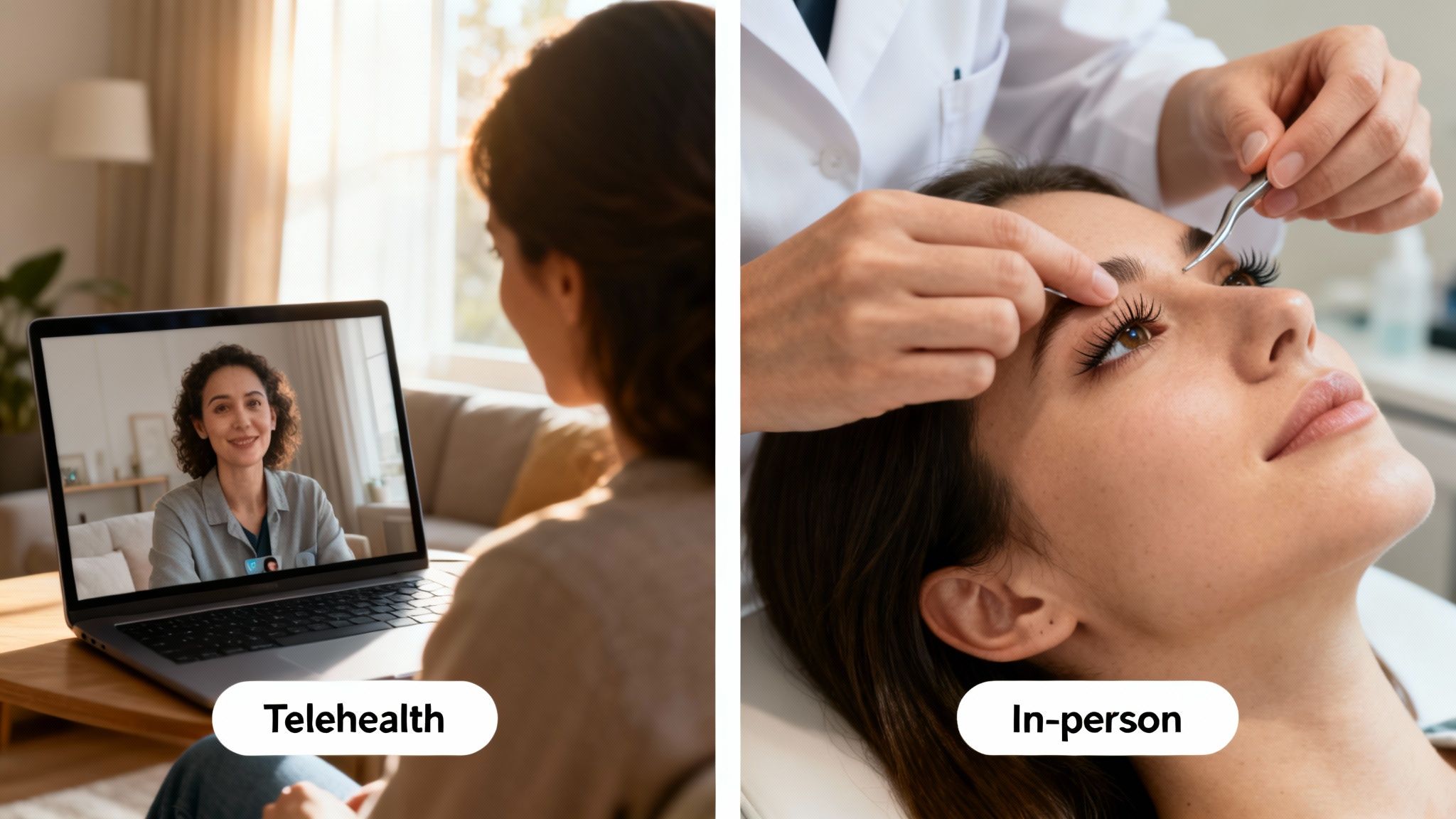
Whether you’re clicking into a video call or walking into a clinic, a little prep work goes a long way. Both telehealth and in-person consultations are designed to make sure Latisse is a safe and effective choice for you, but knowing what to expect makes the entire process smoother.
If you opt for an in-person visit, your provider will likely take a close look at your eyes and the surrounding skin. They’re checking for any redness, inflammation, or underlying conditions that might not play well with Latisse. It’s a great opportunity for a direct, face-to-face chat.
Telehealth offers amazing convenience. Just make sure you find a quiet spot with good lighting. Your provider needs to see your eye area clearly on camera to make a proper assessment. The conversation and medical review are just as thorough as an in-office appointment.
Preparing Your Medical History
No matter the format, your medical history is the centerpiece of the consultation. This is the most critical step in determining if you can get a Latisse prescription safely. Your provider needs the full picture to screen for any potential issues.
Be ready to talk about:
- Eye Health: Have you ever been diagnosed with glaucoma, uveitis, conjunctivitis, or macular edema? Mention any eye surgeries you've had, too.
- Allergies: List any known allergies, especially to medications or ingredients in other eye drops you’ve used.
- Current Medications: Make a list of everything you take—prescriptions, over-the-counter meds, and even supplements. This absolutely includes any other eye drops.
- Skin Sensitivities: If you have sensitive skin or have reacted poorly to other cosmetic products, be sure to bring it up.
Being open and honest here is non-negotiable. It allows your provider to make an informed decision and keep your health the top priority.
Asking the Right Questions
Remember, this consultation is a conversation, not an interrogation. It’s your time to get comfortable with the treatment plan and ask anything that’s on your mind.
A well-prepared patient often gets the best results because they fully understand the treatment. Your provider is your partner in this process, so use this time to learn everything you can about what to expect on your lash journey.
Don't be afraid to ask about other treatments that can complement your goals. For instance, if you're also concerned about thinning hair, you could inquire about how a PRP treatment for hair loss might fit into your overall plan. Taking an active role ensures your Latisse experience is positive, safe, and delivers the beautiful results you’re hoping for.
Breaking Down the Costs and How to Save on Latisse
Let’s talk numbers. Understanding the financial side of Latisse is key before you commit to your lash journey. The price isn't a simple, one-size-fits-all figure; it really depends on whether you opt for the well-known brand name or its generic version, bimatoprost. This gives you some flexibility to find a price point that works for you without sacrificing the results you’re after.
A one-month supply, which comes in a 3ml bottle, can run you anywhere from $35 to $165. That lower end is typically for generic bimatoprost, especially if you get savvy with pharmacy coupons or discount cards. Brand-name Latisse, on the other hand, usually sits at the higher end of that range. It’s also smart to think long-term from the get-go—it takes a full 16 weeks to see the kind of dramatic, lush results Latisse is famous for.
Smart Strategies for Saving Money
You have more control over the cost than you might think. One of the most effective ways to make your prescription more affordable is to ask your provider to prescribe the larger 5ml bottle. While it costs more upfront, the price per milliliter is significantly lower, giving you much better value over the two months it's designed to last.
Beyond just the bottle size, here are a few other practical ways to save:
- Go Generic: Bimatoprost 0.03% is the active ingredient in Latisse, and it’s available as a generic. You get the exact same clinical benefits for a fraction of the cost.
- Use Pharmacy Discounts: Don't just accept the first price you're quoted. Websites and apps like GoodRx can offer coupons that slash the price at your local pharmacy.
- Check for Rebates: Allergan, the maker of Latisse, has a fantastic rewards program called Allē. You can earn points on treatments and products that you can then use for discounts on future purchases.
Will Insurance Cover My Prescription?
This is probably the most common question I get, and the honest answer is: usually no. Because Latisse is primarily used for cosmetic lash enhancement, it’s almost always considered an out-of-pocket expense by insurance companies.
There are, however, very rare exceptions. If your hypotrichosis (the medical term for inadequate lashes) is a documented side effect of a medical condition or a treatment like chemotherapy, some plans might consider covering it. This isn’t a simple process—you’d need to work closely with your doctor to submit a pre-authorization and provide clear documentation of medical necessity. It’s always worth a quick call to your insurance provider to ask about your specific plan.
For many, Latisse is an investment in their confidence. While insurance coverage is a long shot, many aesthetic clinics recognize this and offer ways to make treatments more accessible, like bundling the product with other services or offering their own promotions.
The cost for a Latisse prescription can vary widely, with a 3ml supply ranging from $35 to $165. Generics will always be your most budget-friendly option. To get the most value during the 16-week treatment period, the 5ml bottle is the way to go. While the price of Latisse has been pretty stable, it's always worth looking into clinic-specific discounts. To make your aesthetic goals even more manageable, check out our available payment plans that can help you budget for treatments and products.
How to Apply Latisse Safely for the Best Results
You’ve got the prescription—congratulations! That’s the first hurdle. But the real secret to getting those long, lush lashes everyone talks about is all in the application.
Using Latisse correctly is simple, but it demands consistency and a little bit of precision. Nailing your nightly routine is what separates so-so results from truly stunning ones, all while keeping potential side effects at bay.
Before you even think about opening the bottle, start with a completely clean slate. That means washing your face, making sure every last bit of makeup is gone, and popping out your contact lenses. Let your skin air dry for a few minutes.
The Right Application Technique
Here’s a common mistake I see: people trying to reuse the applicators. Latisse comes with sterile, single-use applicators for a very good reason—to prevent contamination and keep things hygienic. Reusing them is an open invitation for bacteria, which can lead to irritation or even an infection. Don't do it.
Your nightly routine should look like this:
- Place just one single drop of the Latisse solution onto the tip of a fresh, sterile applicator.
- Carefully glide the applicator along the skin of your upper eyelid, right where your eyelashes begin. Think of it like applying liquid eyeliner.
- Gently blot away any excess solution that drips with a tissue.
- Toss that applicator and grab a new one for the other eye.
It's really important that you avoid applying Latisse directly to your lower lashes. The solution will naturally transfer to your lower lash line every time you blink, and that’s more than enough.
While the application is key for results, managing your supply and costs makes the whole journey smoother.
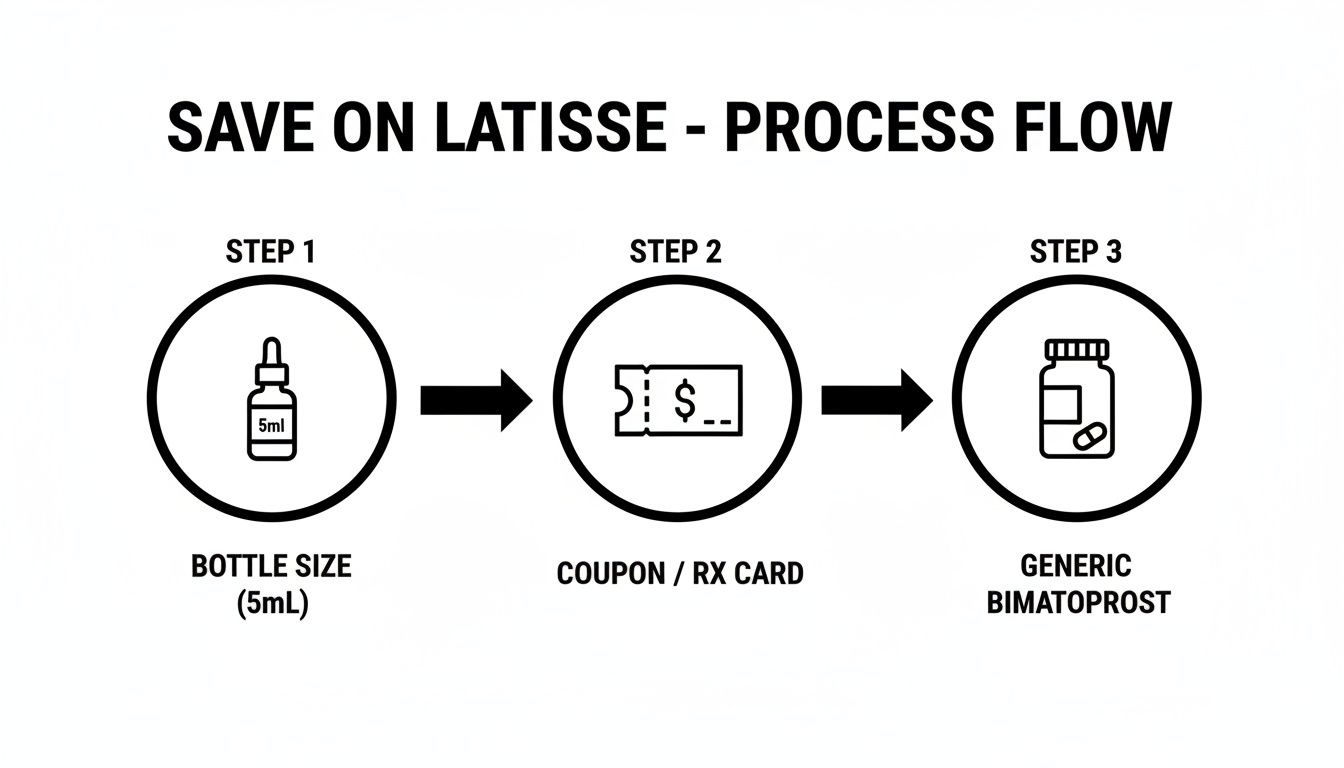
Thinking ahead about bottle sizes and looking into savings options from the start can make a big difference in your long-term budget.
Setting Realistic Expectations
Patience is everything on this lash journey. Latisse is a powerhouse product in a massive $12.56 billion market, and it’s FDA-approved for a reason—clinical trials showed an incredible 78% increase in lash length.
You'll probably notice your lashes getting a bit darker within the first 4-6 weeks. But the full, dramatic length and fullness? That takes time. You really need to stick with it every single night, because the final, jaw-dropping results typically show up around week 16.
For those curious about pairing it with other skincare, you can absolutely use eye creams to help mitigate the 2-4% risk of skin darkening around the eyes. If you want to dive deeper into the numbers, you can explore more about Latisse costs and clinicals on forhers.com.
A crucial piece of advice: more is not better. Adding extra drops or applying Latisse more than once a day won’t make your lashes grow faster. It will, however, significantly increase your risk for side effects like irritation or pigmentation. Consistency is the only thing that works.
Pairing Latisse with a Holistic Wellness Routine
Getting your Latisse prescription is a brilliant first move, but the most stunning results come when you treat it as one piece of a complete aesthetic wellness plan.
Think of it like this: Latisse is your specialist for lash growth, but the supporting players—like skincare for the delicate eye area and supplements for overall hair health—are what create that truly next-level outcome. It’s a powerful synergy that elevates your final look.
To really maximize your lash journey, consider integrating advanced treatments that support the skin around your eyes. This is where at-home LED light therapy becomes a game-changer.
Enhance Your Results with Complementary Care
The Barb N.P. Facial Mask is a high-performance device I recommend to perfectly complement your Latisse use. It's completely wireless, so you can wear it comfortably while you go about your evening routine.
It has three specific lighting modes to target different skin concerns:
- Red Light: Helps kickstart collagen production to firm up the skin.
- Blue Light: Targets acne-causing bacteria, keeping skin clear.
- Amber Light: Works to calm inflammation and boost overall rejuvenation.
Using this mask regularly helps improve the skin quality around your eyes, creating the perfect, healthy canvas to show off your new, longer lashes.
Beyond technology, supporting your hair health from the inside out is non-negotiable. Protecting the eye area with medical-grade skincare from brands like SkinCeuticals is key, but internal support can make a massive difference. You can explore the best supplements for hair growth to find powerhouse options like Nutrafol, which deliver the essential nutrients your body needs for stronger, healthier hair—and yes, that includes your lashes.
Got a Few More Questions About Latisse?
It’s completely normal to have a few last-minute questions before starting a new aesthetic treatment. Getting those final details ironed out is key to feeling confident and ready for your lash journey. Let's tackle some of the most common ones I hear from my clients.
A standard prescription for Latisse is typically valid for one year from the day your provider writes it. This is great because it means you can purchase refills as needed without booking a new consultation for every single bottle. Your provider will, however, want to schedule annual check-ins to see how you're doing, monitor your progress, and check on your overall eye health.
Eligibility and What Happens Long-Term
I often get asked, "Can I use Latisse if I have sensitive eyes or wear contacts?" The answer is usually yes, but it requires a bit of extra care and guidance from your provider. For contact lens wearers, the routine is simple: just remove your contacts before applying Latisse and wait at least 15 minutes before popping them back in. This little step helps prevent any potential irritation.
So, what happens if you decide to stop using it? Your lashes will simply and gradually return to their previous state over several weeks or months. Latisse doesn't permanently change your lash follicles; it just keeps them in their growth phase longer. Once you stop applying the serum, your lash cycle just goes back to its natural rhythm. No harm, no foul.
It's so important to understand that over-the-counter lash serums are not the same as prescription Latisse. While some might help condition your lashes, only Latisse contains the FDA-approved active ingredient, bimatoprost, which is clinically proven to grow lashes longer, fuller, and darker. They just aren't interchangeable when it comes to real, measurable results.
If you're looking to elevate your entire skincare routine to match your gorgeous new lashes, think holistically. I love recommending devices like the Barb N.P. Facial Mask to support the health of the skin around your eyes. It’s a comfortable, wireless mask with three different light settings designed to support skin rejuvenation, creating the perfect canvas for your lashes to shine.
At BotoxBarb, we believe in a complete approach to aesthetic wellness that combines proven treatments with supportive at-home care. Discover our curated selection of medical-grade products and devices by visiting our shop at https://barbnp.shop.