

Posted by Barb N.P. Team
on October 13, 2025

If you only remember one thing about layering your skincare, let it be this: always apply your products from the thinnest, most watery texture to the thickest and creamiest.
That’s it. That’s the golden rule. Following this single guideline ensures every active ingredient can actually get to your skin without being blocked by a heavier formula, which means better results and no wasted product.
Why Your Serum Order Actually Matters
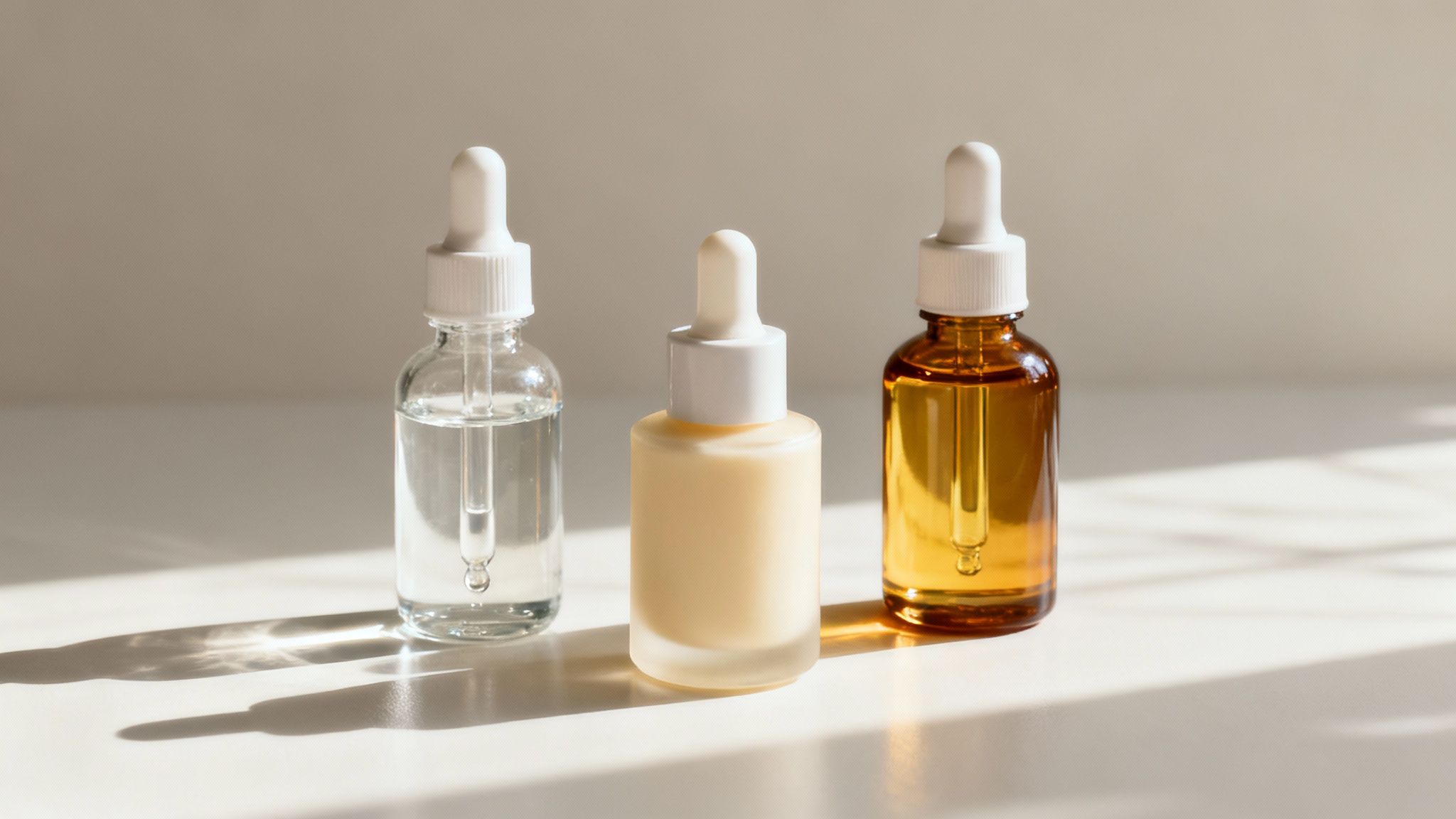
Have you ever looked at your lineup of serums and wondered if the order really makes a difference? The answer is a huge yes.
Think of your skin like a sponge—it can only absorb so much at once. If you slather on a thick, heavy cream first, you’ve essentially put a raincoat on your skin. Nothing you apply after that is getting through. The lighter, water-based serums simply can't penetrate that dense barrier.
This is exactly why texture is king. When you start with the most fluid formulas, like a slippery hyaluronic acid serum, you’re giving those smaller molecules a clear path to sink deep into the skin where they do their best work. For an excellent option, the BARB N.P. Hyaluronic Acid Serum is designed for rapid absorption to plump and hydrate the skin effectively. The thicker products you apply afterward then act as a seal, locking in all that goodness.
The Foundation of an Effective Routine
Getting the sequence right does more than just boost absorption. It’s the key to avoiding common skincare frustrations.
Have you ever had your products "pill" or ball up on your skin? That’s often a sign of incorrect layering. Even worse, applying products in the wrong order can render your expensive active ingredients completely useless. You might as well be washing them down the drain.
This thin-to-thick guideline isn't just a trend; it's a universal standard backed by dermatologists and skincare experts worldwide. Many brands also stress that less is more. For instance, most pros recommend sticking to just two serums per routine to avoid overwhelming your skin and ensure everything can absorb properly. You can find more great tips on how to layer your skincare on itcosmetics.com.
To make it even simpler, here's a quick cheat sheet covering the fundamental rules.
Quick Guide to Serum Layering Rules
This table breaks down the non-negotiable rules for applying your serums to get the absolute best results from your routine.
| Rule | Why It's Important |
|---|---|
| Thinnest to Thickest | Ensures lighter, water-based serums can penetrate the skin without being blocked by heavier creams or oils. |
| Water-Based Before Oil-Based | Oil creates a barrier that water cannot penetrate, so water-based products must always go on first. |
| Lower pH Before Higher pH | Applying products with a lower pH (more acidic) first helps maintain their stability and effectiveness. |
Think of these rules as the blueprint for your routine. Once you have them down, layering becomes second nature, and you'll start seeing a real difference in your skin's health and appearance.
Building Your Daily Serum Sequence
Let's move past the basic "thin-to-thick" rule and map out a practical sequence you can actually use every day. The real secret is to start with your water-based serums first. Their tiny molecules need a clear shot to get into the deeper layers of your skin, so think of them as the foundational layer for hydration and targeted treatment.
For example, a fantastic and super effective starting point is a hyaluronic acid serum, like the BARB N.P. Hyaluronic Acid Serum. Its main job is to pull moisture deep into the skin, which creates a plump, hydrated canvas for everything else. Once that’s had a moment to sink in, you can move on to serums with a bit more body, like a potent Vitamin C formula.
Morning vs. Evening Application
Your morning routine is all about playing defense. This is when you want to apply an antioxidant serum like Vitamin C right after cleansing to give your skin an all-day shield against environmental junk like pollution and UV rays. Follow it up with a hydrating formula to lock in moisture and keep your skin feeling supple throughout the day. A solid morning routine really does set your skin up for success.
For a deeper dive into the perfect order of operations, you can explore a complete guide on how to structure your morning skincare routine steps.
This visual breaks down a simple, three-step process for layering, including the all-important absorption times.
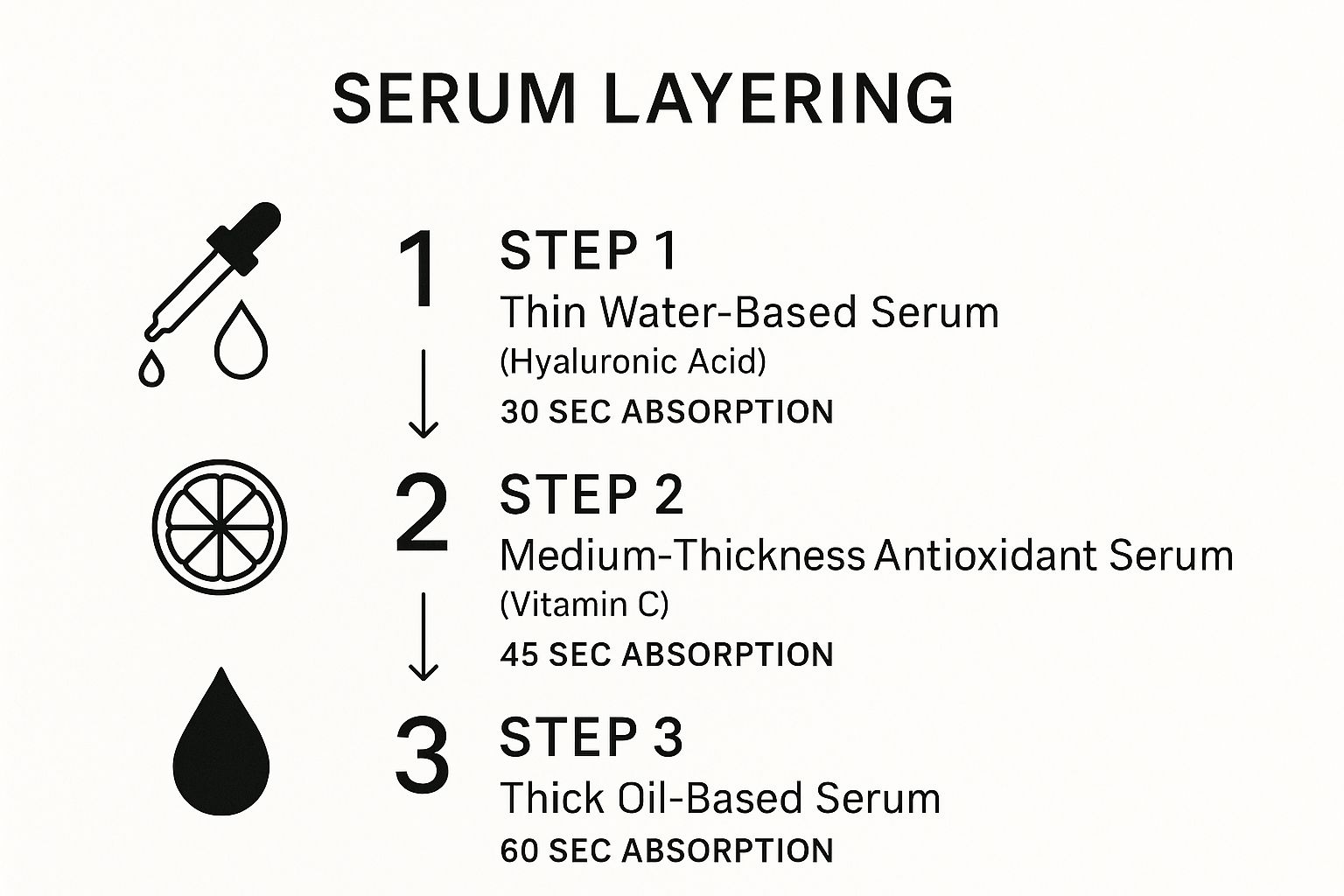
As the infographic shows, serums with a progressively thicker texture need a little more time to absorb fully. Giving each layer a minute prevents that annoying pilling and makes sure every product can do its job effectively.
The trend of using multiple serums isn't just hype; consumer data shows that around 70% of users are already following this texture-based layering method. As you build out your own serum wardrobe, it's smart to see how it fits into bigger picture skincare philosophies, like those found in advanced anti-aging rituals.
Better yet, research shows that people who follow proper layering rules report up to 40% less skin irritation. This simple sequence slots perfectly into your routine after cleansing and toning, and always comes before your moisturizer and daily SPF.
Mastering the Wait Time Between Layers

This is one of the biggest questions I get when talking about layering serums: "How long do I really have to wait between each step?" People imagine setting timers and turning their morning routine into a marathon.
Good news—it's much simpler than that. The sweet spot is just 30 to 60 seconds.
That’s all the time your skin needs to start drinking in the product. Rushing the process is what causes that sticky, tacky feeling or, even worse, the dreaded "pilling" where products ball up on your skin. Giving each serum that brief pause makes all the difference.
Why a Minute Is More Than Enough
Think of it this way: you want the serum to penetrate the top layer of your skin (the epidermis) without fully evaporating. This creates the perfect canvas for the next product, ensuring the active ingredients are getting where they need to go. You’re not waiting for your face to feel bone-dry.
A perfect real-world example is a fast-absorbing hydrator like the BARB N.P. Hyaluronic Acid Serum. It sinks in beautifully in well under a minute, instantly plumping the skin and leaving it perfectly receptive to whatever antioxidant or treatment serum you apply next.
Waiting too long can actually be counterproductive. Stretching out the time between layers doesn't necessarily boost absorption, but it does make your routine longer—and harder to stick with day after day.
This isn’t just a hunch; it’s backed by science. As top dermatologists like Dr. Sapna Palep have noted, well-formulated skincare is designed for quick absorption, typically within that 30 to 60-second window. This ensures each new layer can work effectively without disrupting the one underneath. You can find more expert advice on effective product layering on skincare.com.
So next time you're layering, just take a breath. Give each product its moment to settle in. Your skin will thank you for it.
Smart Ingredient Pairings to Boost Results
Knowing how to layer serums based on texture is half the battle. The other half is understanding which ingredients are friends—and which are total enemies.
Mixing the wrong active ingredients is more than just a waste of money; it can cause some serious skin irritation, redness, and sensitivity. The goal here is synergy, where your chosen ingredients work together to amplify each other’s benefits for faster, better results.
A classic example I see all the time is with Vitamin C. It's a fantastic antioxidant that protects your skin during the day, but its power is dramatically boosted when paired with other antioxidants like Vitamin E and Ferulic Acid. This trio is like a dream team for neutralizing free radicals and giving you superior protection against environmental damage.
Powerful Pairs for Healthy Skin
Building a routine with compatible ingredients is the secret to hitting your skin goals, whether you’re trying to brighten stubborn dark spots or smooth fine lines. One of my favorite strategies is to pair a deeply hydrating ingredient with a potentially irritating one.
For instance, using a product like the BARB N.P. Hyaluronic Acid Serum alongside a stronger treatment serum is a brilliant move. Hyaluronic acid floods the skin with moisture, which helps buffer the drying side effects of potent actives. This makes it the perfect partner for so many ingredients, letting you reap the rewards without the uncomfortable flaky aftermath.
Pro Tip: Think of your serums as a support system. A calming, barrier-strengthening ingredient like niacinamide can make your skin more resilient. This helps it tolerate powerful exfoliants or retinoids much more gracefully.
Serum Ingredient Compatibility Guide
Navigating all the combinations can feel like a chemistry class you didn't sign up for, so I've put together a straightforward guide. Use this table as a quick cheat sheet when you're deciding what to layer in your morning and evening routines.
| Ingredient | Pairs Well With | Avoid Mixing With |
|---|---|---|
| Vitamin C | Vitamin E, Ferulic Acid, SPF, Hyaluronic Acid | Retinol, AHAs/BHAs (like Glycolic & Salicylic Acid) |
| Retinol | Hyaluronic Acid, Niacinamide, Peptides | Vitamin C, Benzoyl Peroxide, AHAs/BHAs |
| AHAs/BHAs | Hyaluronic Acid, Niacamide, SPF | Retinol, Vitamin C, other exfoliating acids |
| Niacinamide | Almost everything, including Retinol, AHAs/BHAs, Hyaluronic Acid | High concentrations of Vitamin C (can cause redness in some) |
Retinol, in particular, requires a gentle touch. It's the gold standard for anti-aging, but it’s also notorious for causing irritation when you first start using it. To get a handle on managing its potential downsides, check out our guide on common retinol serum side effects.
By pairing it with soothing hydrators and keeping it away from conflicting actives, you can get those incredible, skin-smoothing results without compromising your skin barrier.
Enhancing Serum Absorption with Technology

So, you’ve mastered the art of layering your serums. You’re giving each one time to sink in, and your skin is already thanking you for it. But what if you could give those powerhouse ingredients an extra push?
This is where smart skincare tech comes in. By adding a targeted device to your routine after your serums have absorbed, you’re helping ensure those carefully chosen actives work as hard as possible. It’s the modern way to truly maximize your skincare investment.
Amplify Your Routine with LED Therapy
One of the best ways to complement your serum strategy is with a device like the BARB N.P. LED Facial Mask. Instead of just letting your serums do their thing on the surface, light therapy works right alongside them to tackle specific concerns, from aging to acne.
Like any good habit, the key to seeing real change from a device is consistency. That’s why comfort and convenience are non-negotiable, and it's where this mask really shines.
- Wireless Design: This gives you total freedom. You can pop it on while relaxing on the couch, folding laundry, or catching up on emails. No being tethered to a wall.
- Comfortable Fit: Its ergonomic shape sits comfortably on your face, making it an effortless addition to your nightly ritual instead of another chore.
- 3 Lighting Settings: The mask features three distinct light settings, so you can customize your treatment based on the serums you just applied. For instance, if you’ve layered your anti-aging peptides and growth factors, follow up with the red light setting to help support collagen production. On the other hand, the blue light is the perfect partner for your blemish-control serums to target acne-causing bacteria.
Light therapy is a non-invasive way to potentially boost the effects of your topical products. By creating a synergistic routine, you give your skin the best possible support from both the inside and out.
Integrating this kind of technology bridges the gap between a great at-home routine and the results you’d expect from a professional treatment. To dive deeper, you can learn more about the specific benefits of LED light therapy and how it can supercharge your entire skincare journey.
Common Questions on Layering Serums
Even when you think you've got the hang of layering, some questions always seem to pop up. Perfecting the little details in your routine is what really leads to that consistent, glowing skin we're all after. Let's tackle some of the most common ones I hear from clients.
Can You Use Too Many Serums at Once?
It’s tempting to pile on every powerhouse serum you own, but in skincare, more isn't always better. Layering more than two or three serums in a single routine can actually work against you.
Your skin can only absorb so much at one time. Overloading it means products can’t penetrate properly, which wastes product and can even lead to irritation or that annoying pilling effect.
A much smarter strategy? Alternate them. Use your antioxidant serums (like Vitamin C) in the morning to shield your skin from daily environmental stress. Save the heavy hitters, like retinol or exfoliating acids, for your nighttime routine. This gives each active ingredient the space it needs to work its magic without any competition.
What Should I Do if My Products Are Pilling?
Product pilling—when your skincare balls up into little flakes—is incredibly frustrating, but it's usually an easy fix. It almost always comes down to two things: you're either applying way too much product, or you're not giving each layer enough time to sink in.
First, dial back the amount. A small, pea-sized drop of each serum is plenty. After you apply one layer, just pause. Give it a good 30 to 60 seconds to fully absorb before you even think about reaching for the next bottle.
If it's still happening, you might be dealing with an ingredient clash. Some formulas just don't play well together. In that case, the simplest solution is to separate them. Use one in your AM routine and the other in your PM routine. Problem solved.
Can I Use the Same Serums Morning and Night?
You certainly can, but you'll get far better results if you customize your routine for the time of day. Think of it like this: your morning routine is all about protection, while your evening routine is for repair.
In the morning, you want to defend your skin. This is the perfect time for a Vitamin C serum to fight off damage from pollution and UV rays. Follow it up with a hydrating formula, like the BARB N.P. Hyaluronic Acid Serum, to keep your skin plump and moisturized all day long.
At night, your skin goes into repair mode. This is when you bring out the powerful actives that treat specific concerns—think retinoids to boost cell turnover or exfoliating acids to refine texture. Since these ingredients can make your skin more sensitive to the sun, using them at night is both safer and more effective.
By tailoring your serums this way, you create a strategic, 24/7 skincare plan that delivers real, visible change.
Ready to build a routine with powerful, medical-grade formulas? BARB N.P. offers a curated collection of high-performance serums designed to give you the results you deserve. Find your perfect combination at https://barbnp.shop.