
Posted by Barb N.P. Team
on December 31, 2025

When you have rosacea, navigating the world of skincare can feel like walking through a minefield. You pick up a new cream that promises miraculous results, only to find it makes the redness and irritation worse. It’s a frustrating cycle.
But here’s the truth: managing rosacea isn’t about chasing a magical cure. It’s about understanding your skin's unique needs and building a supportive, gentle routine that brings it back to a state of calm.
Finding Your Calm With Rosacea Skincare
Think of your rosacea-prone skin like a piece of delicate silk. You wouldn't scrub it with the same harsh detergents you’d use on a pair of tough denim jeans, right? Your skin requires that same level of special care—one that prioritizes soothing and protection above all else. Shifting your mindset from "fixing" your skin to "supporting" it is the first real step toward turning skin frustration into skin confidence.
The Foundation of a Soothing Routine
The most effective approach to managing rosacea is built on one core principle: consistency with calming ingredients. This isn't a quick fix; it's a long-term strategy focused on strengthening your skin's protective barrier and minimizing inflammation. And if you're struggling, know that you're not alone. The National Rosacea Society estimates that as many as 415 million people worldwide have rosacea.
A successful routine always comes down to these three things:
- Understanding Your Triggers: Identifying what causes your flare-ups is crucial. Whether it’s sun exposure, stress, certain foods, or harsh weather, knowing your triggers is the key to long-term management.
- Choosing Gentle Formulas: Always opt for fragrance-free and alcohol-free products. These are two of the most common irritants that can send sensitive skin into a tailspin.
- Building a Simple Routine: A complicated, 10-step regimen can easily overwhelm reactive skin. Sticking to the essentials—a gentle cleanser, a soothing serum, a barrier-repair moisturizer, and sunscreen—ensures your skin gets what it needs without being stressed.
The goal is to create a peaceful environment for your skin. Instead of constantly reacting to flare-ups, you proactively build a routine that maintains calm and resilience. This makes your skin far less susceptible to its triggers in the first place.
Advanced Support for Calmer Skin
Beyond your daily creams and serums, incorporating advanced tools can give your skin the extra support it needs. LED light therapy, for instance, is a fantastic non-invasive way to reduce inflammation and promote healing right from the comfort of your home.
The Barb N.P. Facial Mask is an excellent device designed for exactly this purpose. It's completely wireless, so you can move around freely during your treatment, and its comfortable design rests gently on your face without causing any pressure. With three different light settings, you can target specific concerns: red light to calm inflammation, blue light to address bacteria, and amber light to promote healing. It’s a versatile and powerful ally in your quest for calm, clear skin.
Why Your Skin Flares Up—and How to Stop It
To get a real handle on rosacea, you have to understand what’s happening just beneath the surface. It can feel like your skin is constantly betraying you, but those frustrating flare-ups are actually biological reactions that you can learn to manage. It’s about moving from a guessing game to making smart, informed choices about your rosacea skincare products, and that starts with knowing the two key players behind the redness.
Your Skin’s Protective Shield is Weakened
Think of your skin's outermost layer—the stratum corneum—as a sturdy brick wall. The bricks are your skin cells, and the mortar holding it all together is a special blend of lipids, like ceramides. When this barrier is healthy, it's perfectly sealed. It keeps precious moisture locked in and potential irritants like pollution, allergens, and harsh ingredients locked out.
But with rosacea, that brick wall is compromised. It’s like some of the mortar has crumbled away, leaving tiny, invisible gaps. These gaps allow essential hydration to escape, leading to that all-too-familiar dryness and sensitivity. Even worse, they become open doors for irritants to sneak past your defenses and wreak havoc.
An Oversensitive Alarm System Goes Off
Once those irritants breach your weakened barrier, your body’s defense system kicks into overdrive. Imagine your skin has an overly sensitive alarm system. In healthy skin, this alarm only sounds for genuine threats. But in rosacea-prone skin, that system is on high alert, mistaking harmless things—a change in temperature, a little spice in your food, or even the wrong moisturizer—as a full-blown invasion.
This overreaction triggers a massive inflammatory response. Your body rushes inflammatory cells to the area to "fix" the perceived problem, which results in the classic signs of a rosacea flare:
- Persistent Redness: Caused by the dilation of tiny blood vessels near your skin's surface.
- Bumps and Pustules: Small, inflamed bumps that can often be mistaken for acne.
- Burning or Stinging: A direct result of nerve endings becoming extra sensitive and irritated.
- Visible Blood Vessels: Also known as telangiectasias, which become more prominent with inflammation.
When you connect these biological reactions to your daily life, you start to regain control over your flare-ups. The goal isn’t just to hide the redness but to rebuild the “mortar” in your skin barrier and calm that overactive alarm system.
Understanding this is why the right skincare is non-negotiable. The demand for effective solutions is exploding, with the global market for rosacea-focused skincare projected to jump from USD 3,203.5 million in 2025 to USD 7,601.8 million by 2035. This huge growth shows a major shift toward specialized, medical-grade products that are built to address these exact issues.
Shifting from Reactive to Proactive Care
Knowing that a weakened barrier and an overactive inflammatory response are the true culprits changes everything. Instead of just reacting to flare-ups after they happen, you can start proactively strengthening your skin's natural defenses. This means choosing products specifically formulated to repair your barrier and reduce inflammation, not just cover up the symptoms.
This knowledge is the foundation for building a routine that supports your skin's health from the inside out. By focusing on gentle, barrier-repairing ingredients, you can make your skin more resilient and less reactive over time, finally breaking the cycle of frustrating flare-ups. For more ideas on supportive routines, check out our guide on how to treat rosacea naturally.
The Ultimate Ingredient Guide for Rosacea
Trying to read the ingredients on a skincare label can feel like deciphering a secret code. But when your skin is as reactive as it is with rosacea, picking the wrong product can spark a full-blown flare-up. The good news? You don’t need a degree in chemistry to become a savvy shopper—you just need to know who your skin’s friends and enemies are.
Think of your skincare like fuel for a high-performance engine. The wrong kind causes sputtering and damage, but the right stuff helps it run smoothly and efficiently. Your skin is no different. The key to finding effective rosacea skincare products is separating the calming, barrier-building heroes from the irritating villains.
This diagram breaks down the two core issues at the heart of every rosacea flare-up.
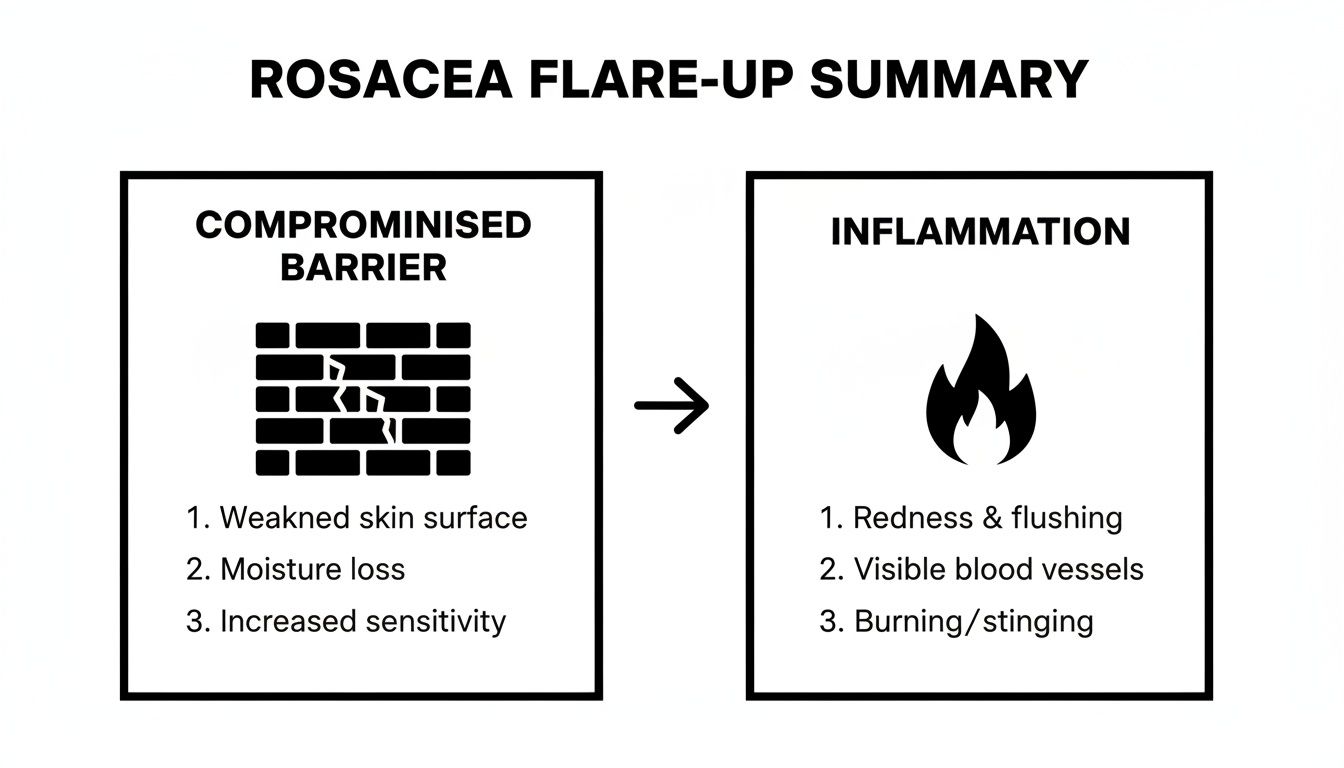
As you can see, a compromised skin barrier (the crumbling brick wall) directly leads to inflammation (the fire), which is the redness and irritation you see on the surface. Your goal is to choose ingredients that rebuild the wall and put out the fire.
Green Light Ingredients That Soothe and Strengthen
These are the powerhouse ingredients you should actively look for on a label. They work to calm inflammation, repair your skin's protective barrier, and bring everything back into balance.
- Niacinamide (Vitamin B3): A true multi-tasker for rosacea. It helps fortify your skin barrier by boosting ceramide production, dials down inflammation and redness, and can even help minimize the look of pores.
- Azelaic Acid: This is a standout for managing rosacea. It’s known for its anti-inflammatory properties that directly target redness and bumps. In fact, studies show that up to 70-80% of patients see a noticeable reduction in symptoms when using it.
- Ceramides: Think of these as the natural "mortar" holding your skin cells (the "bricks") together. When you add ceramides back into your skin with a moisturizer, you’re essentially patching up the gaps in your barrier, locking moisture in and keeping irritants out.
- Hyaluronic Acid: While it’s not a direct anti-inflammatory, this ingredient is a hydration magnet. It pulls moisture into the skin, which is absolutely essential for supporting a healthy barrier without causing more irritation.
Red Light Ingredients That Trigger Flare-Ups
Knowing what to avoid is just as critical as knowing what to look for. These common culprits are known to disrupt your skin’s delicate balance and ignite inflammation.
- Fragrance (Natural and Synthetic): This is one of the biggest triggers for skin reactions, hands down. Even "natural" fragrances from essential oils like peppermint, lavender, or eucalyptus can be extremely irritating. Always look for products clearly labeled "fragrance-free."
- Denatured Alcohol (SD Alcohol): Often found in toners and astringents, this type of alcohol is incredibly drying and strips your skin of its protective oils. This instantly weakens your barrier and can cause immediate stinging and redness.
- Witch Hazel: Though it’s often marketed as a “natural” toning solution, witch hazel is very astringent and can be harsh on rosacea-prone skin, leading to increased dryness and sensitivity.
- Harsh Exfoliants: Steer clear of physical scrubs with sharp particles (like crushed nuts or seeds) and aggressive chemical acids like glycolic acid. They can create micro-tears in the skin and kickstart a major inflammatory response.
Your Quick Reference Cheat Sheet
To make shopping a little easier, I’ve put together a simple guide comparing the ingredients that heal with those that can harm.
Rosacea Skincare Ingredients Green Light vs Red Light
| Ingredient Category | Green Light (Look For) | Red Light (Avoid) |
|---|---|---|
| Soothing Agents | Azelaic Acid, Niacinamide, Green Tea Extract | Fragrance, Menthol, Eucalyptus Oil |
| Moisturizers | Ceramides, Hyaluronic Acid, Squalane | Denatured Alcohol, Isopropyl Alcohol |
| Cleansing Agents | Gentle, non-foaming surfactants | Sodium Lauryl Sulfate (SLS) |
| Exfoliants | Polyhydroxy Acids (PHAs) - used sparingly | Glycolic Acid, Harsh physical scrubs |
| Botanicals | Chamomile, Feverfew, Colloidal Oatmeal | Witch Hazel, Peppermint, Camphor |
Keep this list handy when you're looking at products, and you'll be well on your way to building a routine that calms and strengthens your skin instead of stressing it out.
Building Your Daily Rosacea Skincare Routine
Once you’ve figured out which ingredients your skin loves and which ones send it into a tailspin, it's time to put that knowledge into practice. A skincare routine for rosacea isn’t about piling on more products; it’s about a few carefully chosen essentials, used consistently, to calm, protect, and strengthen your skin barrier.
Simplicity is your best friend here. A complicated, 10-step routine can easily overwhelm reactive skin and trigger the very inflammation you're trying to soothe. We’re going to focus on a core four-step framework that gets the job done without any fuss: Cleanse, Treat, Moisturize, and Protect. This approach gives your skin everything it needs to heal and become more resilient.
Step 1 Cleanse Gently
Every morning and evening starts with washing away impurities without stripping your skin’s precious natural oils. Remember, a compromised skin barrier is already struggling to hold onto moisture, and a harsh, sudsy cleanser will only make things worse. Think of this step as gently rinsing a delicate silk scarf—not scrubbing a dirty pot.
You’ll want to find a cleanser that is:
- pH-Balanced: This helps keep your skin’s natural acidity in check, which is a must for a healthy barrier.
- Sulfate-Free: Ingredients like Sodium Lauryl Sulfate (SLS) create a satisfying foam but are notoriously stripping and irritating for sensitive skin.
- Non-Foaming or Creamy: Look for cream, milk, or gel cleansers. They're much gentler and won't leave your skin feeling tight, dry, or angry.
Always use lukewarm—never hot—water, and gently pat your face dry with a soft towel. No rubbing! That friction can instantly provoke redness. For a gentle yet effective option, the Barb N.P. Skin Revitalizing Cleanser is a great choice as it cleanses without stripping, leaving skin calm and prepared for the next steps.
Step 2 Treat with Purpose
This is where you bring in the targeted ingredients to tackle specific rosacea symptoms like redness and inflammation. A well-made serum can be a game-changer for calming your skin, and this is the perfect spot to incorporate actives like Niacinamide or Azelaic Acid.
When choosing a serum, look for formulas built to soothe and repair. The Epicutis Lipid Serum, a favorite at Barb N.P., is a fantastic choice for rosacea-prone skin. It’s a lightweight, calming serum that uses novel ingredients to dial down inflammation and support your skin’s natural healing. Best of all, its minimalist formula is free from common irritants, making it a safe and effective way to go after redness and sensitivity.
A great treatment product works proactively. It doesn't just soothe existing irritation; it helps fortify your skin's defenses over time, making it less susceptible to future flare-ups.
If you’re looking to explore more options, knowing which ingredients work is key. You can find more targeted advice in our guide to the best serums for sensitive skin, which breaks down formulas designed to calm and restore.
Step 3 Moisturize to Rebuild
For anyone with rosacea, moisturizing is completely non-negotiable. Its main job is to replenish the "mortar" holding your skin barrier together—those crucial lipids like ceramides that keep moisture in and irritants out. A good moisturizer is your protective shield, hydrating your skin while helping it repair its own defenses.
Look for a moisturizer packed with barrier-loving ingredients:
- Ceramides: These directly replenish your skin's natural building blocks.
- Hyaluronic Acid: This powerhouse humectant draws hydration deep into the skin.
- Squalane: A lightweight, non-irritating oil that mimics the skin's own sebum.
Apply your moisturizer morning and night to clean, slightly damp skin. This helps lock in hydration and supports the active ingredients from your treatment serum. For deep, soothing hydration, the Barb N.P. Vita Soothe moisturizer is specifically formulated with calming agents to repair the barrier without feeling heavy.
Step 4 Protect from the Sun
If you do only one thing for your rosacea every morning, let it be this: apply sunscreen. Sun exposure is the number one reported trigger for rosacea flare-ups, period. UV radiation ignites inflammation and weakens your already fragile skin barrier, making daily protection an absolute necessity.
Mineral sunscreens are the gold standard for rosacea. Unlike chemical sunscreens, which absorb UV rays and can generate heat (a trigger in itself), mineral formulas create a physical shield on top of your skin to reflect them away. Look for active ingredients like Zinc Oxide and Titanium Dioxide.
Choose a broad-spectrum formula with an SPF of 30 or higher and apply it generously as the final step in your morning routine. Every. Single. Day. Rain or shine. This one habit can make the biggest difference in managing your rosacea long-term.
Enhancing Your Routine With LED Light Therapy
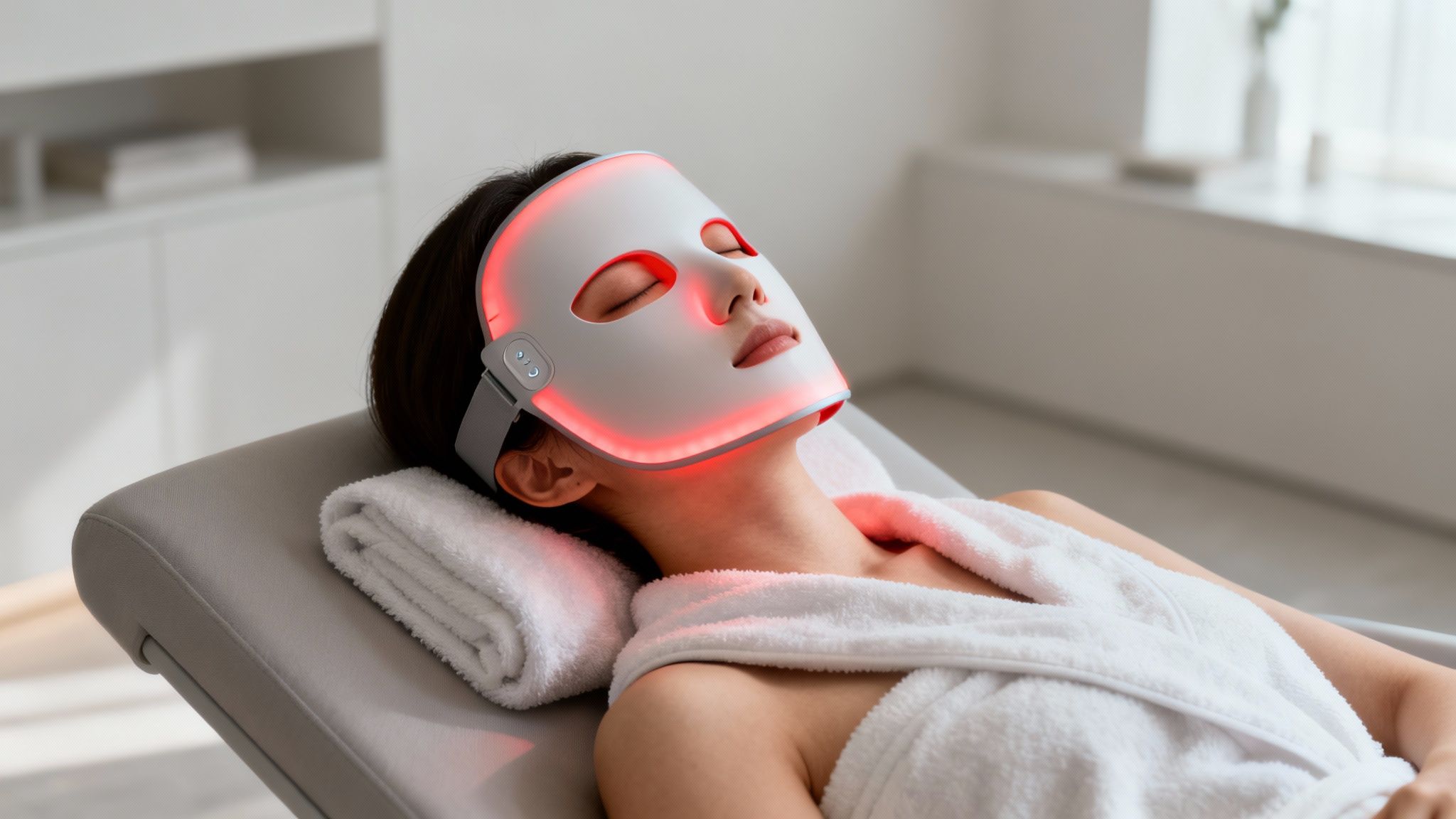
Your daily routine—cleansing, treating, and moisturizing—is the foundation for keeping rosacea in check. But sometimes, even the most diligent routine needs a helping hand to keep skin truly calm and happy. This is where advanced, non-invasive treatments can make a huge difference, complementing your carefully chosen rosacea skincare products.
LED (Light Emitting Diode) therapy is one of the most powerful ways to support sensitive skin, and you can do it right from the comfort of your own home. It works by sending specific wavelengths of light energy deep into your skin. Think of it like photosynthesis for your skin cells; the light gives them the energy they need to function better, reduce inflammation, and heal—all without heat or irritation.
How Light Therapy Soothes Rosacea
For rosacea, red light therapy is a game-changer. This particular wavelength is known for its ability to penetrate the skin and work at a cellular level, calming the inflammatory responses that are behind all that redness and sensitivity.
It’s like a gentle signal telling your overactive skin cells to take a breath and focus on repair.
The main benefits you'll see are:
- Reduced Inflammation: Red light helps dial down the production of inflammatory molecules, tackling one of the root causes of rosacea flare-ups head-on.
- Accelerated Healing: It gets your circulation moving and boosts cellular energy, which helps your compromised skin barrier repair itself much faster.
- Calmer Skin Tone: By soothing all that underlying irritation, you’ll start to see a real reduction in persistent facial redness over time.
Incorporating LED therapy isn't about replacing your skincare; it's about amplifying its effects. Your serums and moisturizers work on the surface to rebuild the barrier, while light therapy works from within to quiet the inflammation.
The BARB N.P. Facial Mask An At-Home Solution
Bringing professional-grade treatments into your home has never been easier. The BARB N.P. Facial Mask is a smart investment for anyone who's serious about getting their rosacea under control. It’s designed to make advanced light therapy accessible, effective, and incredibly convenient.
One of its standout features is the completely wireless design. This means you have the freedom to move around during your session. You can catch up on a book, fold laundry, or just relax without being stuck next to a power outlet. Its soft, flexible material also ensures a comfortable fit that rests gently on your face, avoiding any pressure points that could aggravate sensitive skin.
Even better, the mask includes three distinct light settings, so you can provide targeted treatments for different skin concerns. You can use the red light specifically to combat rosacea-related inflammation, making it a versatile tool in your long-term skin health strategy. If you want to dive deeper into the science, you can explore our detailed guide on what is LED light therapy.
While at-home devices offer fantastic daily support, professional treatments can deliver more powerful results. For more intensive approaches to tackle stubborn redness and visible blood vessels, it’s worth exploring options like Lumecca IPL treatments. Combining consistent at-home care with occasional in-office procedures is a powerful, multi-faceted strategy for keeping rosacea under control for good.
When It's Time to Call in a Professional
A consistent, gentle at-home routine is your absolute best defense against rosacea flare-ups. But let's be honest—sometimes, even the most carefully chosen rosacea skincare products from the shelf just can't calm a truly persistent flare.
Knowing when to raise the white flag and call in a professional is a critical step toward getting real, long-term control over your skin.
If you’re dealing with stubborn redness that never seems to fade, bumps that won't clear up, or symptoms that are starting to affect your eyes (ocular rosacea), that’s a clear sign you need an expert guide. The world of skincare is overwhelming, and a professional can cut through the noise to give you the clarity and direction you need to finally make progress.
Getting a Truly Personalized Regimen
This is where a consultation with an expert like Barb N.P. makes all the difference. Instead of playing a frustrating guessing game with products, you get a regimen built with medical-grade skincare specifically chosen for your unique skin, triggers, and goals. This targeted approach saves you time, money, and the emotional toll of trial and error.
Think of it this way: partnering with a professional elevates your strategy from just managing symptoms to fundamentally improving your skin's health. It’s about creating a safe, effective, and tailored plan that sets you up for success.
A professional can also introduce solutions and treatments that simply aren’t available over the counter, creating a much more powerful and effective routine.
Your Partner in Skin Health
At BotoxBarb, we’re not just here to sell you products. The goal is to be your partner on this journey. It’s about providing the expert guidance and clinical treatments you need for complete rosacea management—from curating the perfect at-home regimen to offering advanced in-clinic options. You get support every step of the way.
And you're not alone in seeking help. The demand for professional dermatological care is exploding worldwide. The Asia-Pacific region, for instance, has become the fastest-growing market for rosacea treatments, with a projected annual growth rate of 10.32% through 2030. This boom is driven by people just like you who are seeking expert advice, plus the rise of telehealth platforms that make professional care more accessible than ever. You can discover more about rosacea treatment trends on Mordor Intelligence to see the full picture.
When your skin’s needs have outgrown your current routine, reaching out for professional help isn’t a sign of failure—it's the smartest next step you can take.
Your Rosacea Skincare Questions, Answered
When you're dealing with reactive skin, it's natural to have questions. You want to make smart choices without triggering a flare-up. Here are some of the most common concerns I hear from clients, with clear, straightforward answers.
Can I Still Use Anti-Aging Products with Rosacea?
Absolutely, but you have to be selective. Potent ingredients like high-concentration retinoids can be way too harsh for skin that's already compromised. It’s like sending in a demolition crew when you just need a gentle renovation.
Instead, look for smarter, gentler alternatives. Ingredients like bakuchiol or peptide serums are fantastic because they encourage skin renewal without causing that dreaded irritation. A real superstar here is Niacinamide—it tackles signs of aging while also delivering powerful anti-inflammatory benefits. It's a perfect double-duty ingredient for any rosacea-friendly routine. Just remember to patch-test anything new first!
How Long Does It Really Take for a New Routine to Work?
Patience is probably the hardest part of managing rosacea, but it’s non-negotiable. You might start to see a subtle drop in redness and feel a bit less irritation within 4 to 6 weeks, but the real magic takes longer.
Think of it like this: you're not just calming the surface, you're rebuilding your skin's entire defense system. It can take up to three months of consistent use for that skin barrier to truly strengthen and become more resilient. Consistency will always beat speed, so stick with your gentle routine and give your skin the time it needs to heal.
Mineral vs. Chemical Sunscreen: Which One Is Better for Rosacea?
This one is easy: mineral sunscreen, hands down. Its active ingredients, Zinc Oxide and Titanium Dioxide, create a physical barrier on top of your skin to block UV rays. They are far less likely to cause a reaction because they don't get absorbed.
Chemical sunscreens work differently. They absorb into the skin and convert UV radiation into heat. For rosacea-prone skin, that heat is a major trigger for flushing and redness.
Think of mineral sunscreen as a protective shield and chemical sunscreen as a sponge. For rosacea, a shield is always the safer, more reliable choice to prevent irritation before it starts.
Ready to build a routine that truly calms and supports your skin? The Barb N.P. collection features medical-grade skincare curated for sensitive skin, helping you find the perfect products to manage rosacea with confidence. Explore our gentle solutions and start your journey to calmer skin today.