

Posted by Barb N.P. Team
on December 25, 2025

Ever had that frustrating experience of feeling unwell after a meal and not knowing why? Hives, an upset stomach, or just a general feeling of off—it’s a common story, and the guesswork can be exhausting. This is where a food allergy panel test comes in.
Think of it as an investigative roadmap for your body. Instead of randomly cutting out foods, a panel test uses a single sample to screen your immune system’s reaction to a wide range of common triggers, helping you pinpoint exactly what might be causing the problem.
What Exactly Is a Food Allergy Panel Test?
For millions of people, a simple meal can trigger an uncomfortable and sometimes dangerous reaction. A food allergy panel is the crucial first step toward moving from confusion to a clear, data-driven understanding of how your body works. It’s designed to help you figure out if you're dealing with a true food allergy or something else, like a food intolerance.
Making that distinction is everything. A true food allergy is a full-blown immune system response. Your body incorrectly flags a food protein as a harmful invader and launches an attack, releasing chemicals like histamine. This internal battle is what causes symptoms that can range from a mild itchy throat to severe, life-threatening anaphylaxis.
On the other hand, a food intolerance is usually a digestive issue. It often means your body doesn't have the right enzyme to break down a specific food, leading to discomfort like bloating, gas, or an upset stomach. It's unpleasant but not life-threatening.
Why Pinpointing Your Triggers Is a Game-Changer
Knowing your specific triggers is empowering. It means you can stop vaguely suspecting culprits and start making informed choices based on real data. This clarity is the bedrock of a proactive wellness strategy. For so many people, nagging issues like chronic skin problems or unexplained digestive upset are directly tied to an undiagnosed food allergy.
This kind of diagnostic insight is more important than ever. In the United States alone, an estimated 20 million people have food allergies. That includes about 16 million adults (that's 6.2% of all adults) and 4 million children (5.8% of all kids), according to recent data. It’s a widespread issue, and tests are a key tool in managing it. You can learn more about the growing need for food allergy detection from Archive Market Research.
A food allergy panel doesn't just hand you a "do not eat" list. It gives you the knowledge to build a healthier, more trusting relationship with food and your body. It turns confusion into clear, actionable steps toward feeling your best.
Once you’ve identified potential culprits, you can take a targeted approach. This might mean trying an elimination diet with professional guidance or seeking a referral to a specialist. Plus, knowing what’s causing inflammation on the inside is often the first step to achieving radiance on the outside—your skin is a direct reflection of your internal health.
To learn more about the most frequent triggers, check out our guide on what are common food allergies.
Navigating the Different Types of Food Allergy Tests
When you start digging into food allergies, you quickly realize not all tests are created equal. The right choice really hinges on your specific symptoms, your health history, and what you’re trying to figure out. Think of the options as a team of specialized detectives, each with a unique method for uncovering clues about how your body is reacting to food.
Before we dive in, this visual helps frame the first big question: are we dealing with a true allergy or an intolerance?
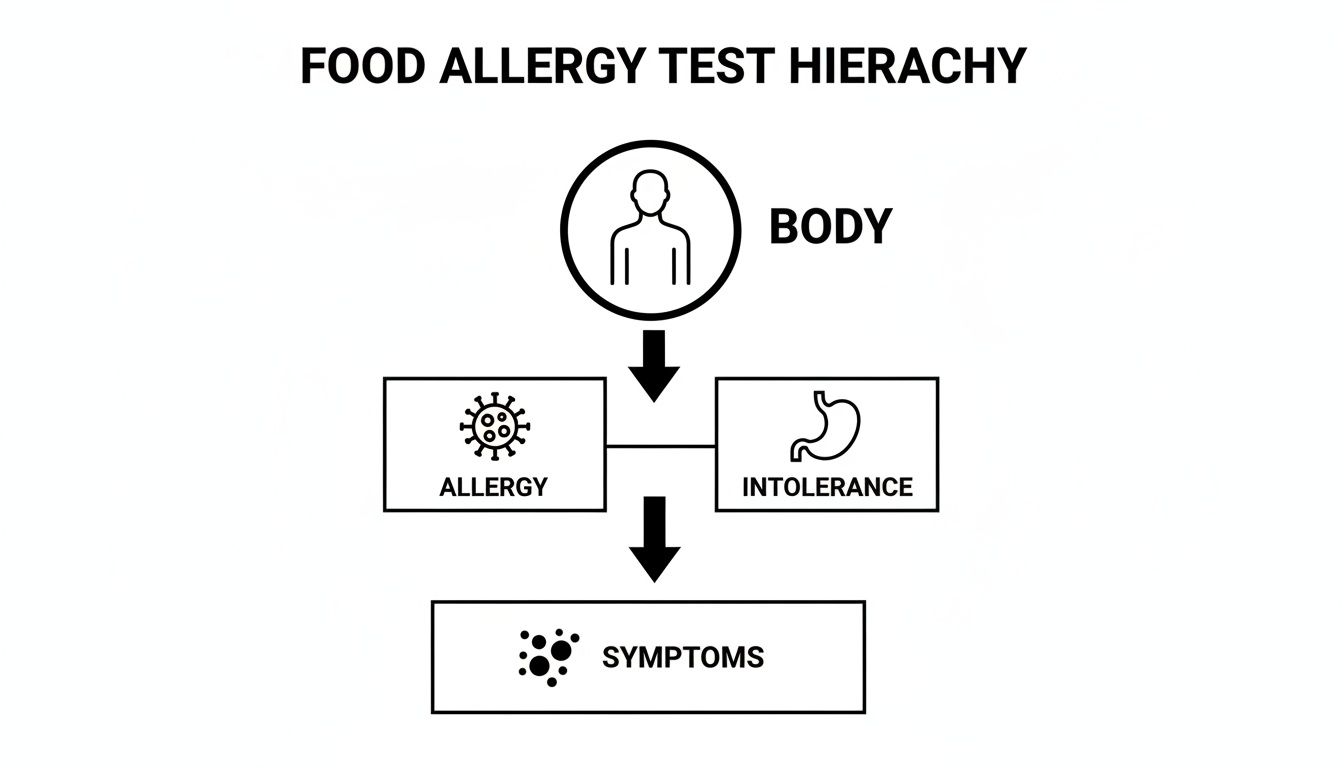
This shows how your body’s reaction can go down two very different paths—an immune-based allergy or a digestive intolerance. Both can cause frustrating symptoms, but they need to be managed differently.
IgE Blood Test: The Blood Detective
One of the most common starting points is the serum-specific IgE blood test. This test is like a blood detective, analyzing a small sample to hunt for specific Immunoglobulin E (IgE) antibodies. Your immune system creates these antibodies when it mistakenly flags a food protein as a major threat.
High levels of IgE antibodies to something like peanuts or shellfish are a strong clue that you have a true allergy. The big plus? It requires just one simple blood draw and isn't thrown off by medications like antihistamines, making it super convenient.
A blood test gives us a quantitative snapshot of your immune system's memory. It tells you which "allergen files" your body is keeping, but it doesn't always predict how severe a real-life reaction might be.
Skin Prick Test: The Live Reactivity Test
Another trusted method is the skin prick test (SPT). You can think of this as a live reactivity test performed right on your skin, usually on your forearm or back. An allergist places a tiny drop of liquid containing a food allergen on your skin and then gently pricks the surface.
If you’re allergic, a small, raised, reddish bump called a wheal—it looks a lot like a mosquito bite—will pop up within 15-20 minutes. This immediate, visible reaction provides a clear, real-time indicator of sensitivity.
Advanced Molecular Fingerprinting
For more complicated or ambiguous cases, specialists might bring out the heavy hitter: Component-Resolved Diagnostics (CRD). This is a highly advanced blood test that goes a level deeper than a standard IgE test. Instead of just identifying an allergy to a whole food (like a peanut), it acts like molecular fingerprinting, pinpointing the exact proteins within that food that are causing the reaction.
This level of detail is a game-changer. For example, it can help distinguish between a severe allergy to a heat-stable peanut protein (high risk) and a milder allergy to a pollen-related protein that might only cause an itchy mouth (low risk). This helps predict the likelihood of a severe reaction with much greater accuracy.
To help you see how these options stack up, here’s a quick breakdown of the key differences.
A Quick Comparison of Food Allergy Panel Tests
This table compares key features of the most common food allergy testing methods to help you understand the differences.
| Test Type | Method | What It Measures | Pros | Cons |
|---|---|---|---|---|
| Serum IgE Blood Test | A blood sample is analyzed for specific antibodies in a lab. | The quantity of IgE antibodies your immune system has created against certain foods. | Convenient (one blood draw), unaffected by antihistamines, good for people with severe skin conditions. | Can sometimes show sensitization without a true allergy (false positive); results need expert interpretation. |
| Skin Prick Test (SPT) | A tiny amount of allergen is introduced into the skin's surface. | An immediate, visible allergic reaction (a raised bump called a wheal). | Fast results (in 15-20 minutes), highly sensitive for detecting immediate-type allergies. | Requires stopping antihistamines beforehand; not suitable for those with severe eczema or a history of anaphylaxis. |
| Component-Resolved Diagnostics (CRD) | An advanced blood test breaks down an allergen into its individual protein components. | IgE antibodies to specific allergenic molecules within a single food source. | Excellent for assessing the risk of severe reactions and clarifying cross-reactivity. | More expensive and typically reserved for complex or unclear cases; may not be necessary for everyone. |
Each of these tests provides a different piece of the puzzle. An IgE blood test tells us what your immune system is sensitized to, a skin prick test shows what your body reacts to in real-time, and component testing reveals the "why" behind the reaction with incredible precision.
Who Should Consider Taking a Food Allergy Test?
Figuring out if a food allergy panel is your next right step can feel a little overwhelming, but certain signs make it a clear, logical choice. If you’ve been playing detective with your diet, trying to connect mysterious symptoms to specific meals, this test can finally give you the data-driven answers you need.
It’s not just for people with dramatic, life-threatening reactions. While anyone experiencing classic allergy symptoms like hives, swelling, or difficulty breathing after eating is a prime candidate, many others can benefit, too. Think about testing if you're dealing with nagging, unexplained issues that just won't go away.
These less obvious symptoms might look like:
- Chronic skin conditions: Persistent eczema, rosacea, or acne that doesn’t seem to respond to any of your usual treatments.
- Ongoing digestive upset: Things like bloating, gas, or stomach cramps that you can’t quite trace back to one specific cause.
- Unexplained symptoms: Vague but disruptive problems like recurring headaches, brain fog, or a sense of fatigue that messes with your daily life.
Finding Clarity for Your Health Goals
Everyone comes to allergy testing for a different reason. Take "The Wellness Optimizer," for example. They might not have severe symptoms, but they want to fine-tune their diet for peak performance and vitality, getting rid of any low-grade inflammation that could be holding them back.
Then there's "The Concerned Parent," who is trying to solve their child's recurring skin rashes or stomach aches. For them, a food allergy panel test offers a structured way to investigate potential triggers without resorting to restrictive—and often frustrating—guesswork.
A food allergy test is more than just a diagnostic tool. It’s a data point that empowers you to take back control, turning vague suspicions into a clear, actionable starting point for improving your health.
But a test result on its own is just raw data. The real value comes from professional interpretation. This is where consulting with an expert like Barb N.P. is essential—she can help you understand what the results mean in the context of your personal health history. Barb will help you create a safe, effective action plan, ensuring you don’t needlessly cut out foods and can move forward with confidence.
Preparing for Your Test and What to Expect
Feeling a little nervous before your food allergy panel test is perfectly normal. But knowing exactly what to expect can make the whole process feel much more straightforward and less intimidating. Think of this as your practical guide to feeling prepared and confident, whether you're heading to a clinic or using a convenient at-home kit.
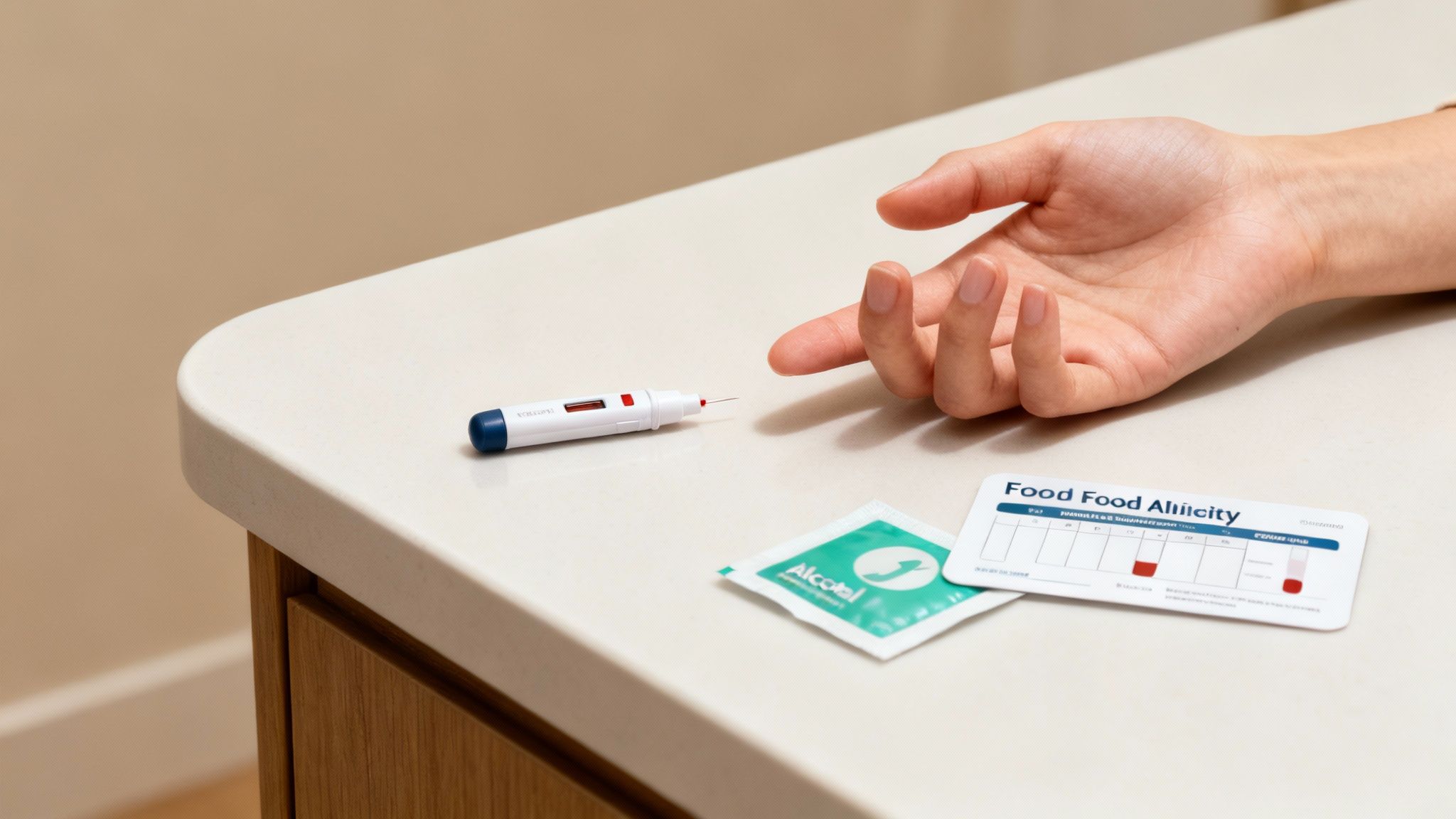
Honestly, the most important step happens before you even take the test. To make sure your results are as accurate as possible, you’ll likely need to make a few temporary adjustments to your routine.
Your Pre-Test Checklist
Proper prep is everything when it comes to getting a reliable outcome. Why? Because certain medications can actually mask your body’s true allergic response, which could lead to a false negative—meaning a real allergy goes completely undetected.
While you should always follow the specific instructions from your healthcare provider or test kit, here are a few general guidelines you can expect:
- Pausing Antihistamines: You’ll probably need to stop taking medications like Zyrtec, Claritin, or Benadryl for several days before a skin prick test. These drugs work by blocking histamine, which is the exact chemical reaction the test is trying to measure.
- Discussing Other Medications: Be sure to tell your provider about all the medications and supplements you take. Some antidepressants and even certain heartburn medications can interfere with your results.
- Fasting (If Required): Some blood tests might ask you to fast for a few hours beforehand. This just helps ensure your blood sample is clear and provides the most accurate data possible.
What Happens on Test Day
The actual procedure is quick, minimally invasive, and designed to be as comfortable as possible. What you'll experience really just depends on which type of food allergy panel test you’re taking.
If you’re getting a serum-specific IgE blood test in a clinic, a healthcare professional will do a simple blood draw from a vein in your arm. It's the same exact process as any other routine blood work you’ve had, and it’s typically over in just a few minutes.
For many, the convenience of at-home testing is a major plus. These kits usually involve a simple finger-prick to collect a small blood sample, making the process quick and easy to complete from anywhere.
For anyone getting a skin prick test at an allergist's office, the procedure is also surprisingly fast. The allergist places tiny droplets of liquid containing different food allergens on your forearm or back, then makes a tiny prick in the skin under each one. It's a very superficial scratch, not an injection, and feels more like a light poke. The whole process, from application to reading the results, usually takes less than 30 minutes.
Understanding what’s coming makes the whole day feel much less intimidating. For a deeper dive into the convenience and process of at-home options, check out our complete guide on allergy testing at home.
Making Sense of Your Test Results
Getting a report filled with scientific terms and numbers can feel like trying to read another language. Once your food allergy panel is done, the real work begins: turning that data into a smart, actionable plan for your health. This is where you go from just testing to truly understanding.
First off, a positive result means your immune system has created IgE antibodies to a certain food—this is called sensitization. A negative result means no significant level of these antibodies was found. But here's where things get interesting, and where professional guidance is key.
The Importance of Clinical Correlation
The single most important concept to grasp is clinical correlation. In simple terms, this means a positive test result only really matters if it lines up with symptoms you actually experience in your daily life. It’s entirely possible to be sensitized to a food (meaning you have the antibodies) but eat it without any reaction at all.
For instance, your panel might flag a moderate reaction to almonds, but you’ve been snacking on them for years without so much as a sniffle. In that case, cutting them out would be pointless. The test is a guide, not a final verdict.
A positive food allergy panel test is a clue, not a conviction. Its value comes from pairing the data with your personal health story to uncover the real triggers affecting your daily life.
This is exactly why working with an expert is so crucial. They can help you connect the dots between the lab report and your real-world experiences, preventing you from making unnecessary diet changes while zeroing in on the true culprits behind your symptoms. For a more detailed look, check out our guide on how to start interpreting allergy test results.
Mapping Out Your Next Steps
So, you have your results and understand the context. What now? This is where we build your action plan.
Your next steps will likely involve one or more of the following strategies:
- A Guided Elimination Diet: Based on your results, a practitioner might suggest temporarily removing a suspected trigger food to see if your symptoms get better. This is one of the most powerful ways to confirm the test's findings.
- Oral Food Challenge: This is considered the gold standard for diagnosis. Under strict medical supervision, you'll eat a small, measured amount of a potential allergen to see if it causes a reaction.
- Specialist Referral: For complex cases or severe allergies, a follow-up with a board-certified allergist is often the smartest and safest course of action.
The world of food allergy testing is growing fast, thanks to rising allergy rates and better technology. Modern lab methods like ELISA and PCR can detect even tiny traces of allergens. Plus, new AI-powered analysis is helping to improve accuracy and deliver results faster than ever. This commitment to accuracy ensures that the results you receive provide a solid foundation for your health strategy. You can learn more about these market trends in food allergen testing from Future Market Insights.
Tying Allergy Insights to Your Holistic Wellness Journey
True, lasting radiance starts from the inside out. A food allergy panel test gives you a rare glimpse into your body's internal landscape, revealing the hidden triggers that might be sabotaging your skin goals.
There's a powerful link between what you eat and how you look and feel. Internal inflammation, often sparked by a food you don't even realize is a problem, frequently shows up on your skin. We see it all the time—persistent acne, rosacea flare-ups, or just a dull, tired-looking complexion that no amount of serum can seem to fix.
Pinpointing and removing that one hidden allergen can be the final piece of your skincare puzzle. When your system isn't constantly in "fight mode" against dietary triggers, the high-performance treatments you're already using can finally do their job properly.

Synergizing Your Diet with Advanced Skincare
To amplify this inside-out approach, we often recommend the BARB N.P. Facial Mask. Its comfortable, wireless design makes it an effortless addition to your self-care routine, letting you move around freely while you treat your skin. This powerful device works hand-in-hand with your newly informed diet to deliver comprehensive results. Its targeted light settings are designed to address the very skin concerns that inflammation makes worse:
- Red Light: Fires up collagen production to improve skin firmness and soften fine lines.
- Blue Light: Zaps acne-causing bacteria for a visibly clearer complexion.
- Yellow Light: Calms redness and soothes sensitive, irritated skin.
Think of it this way: An allergen-aware diet clears the internal "static," giving your advanced skincare tools a clearer, more receptive canvas to work on. The results? Truly luminous.
Of course, a truly holistic approach looks beyond just food. Environmental factors can play a huge role, too. For those interested in a deeper dive, understanding the impact of indoor air quality on overall health is a great next step.
By pairing the dietary knowledge from a food allergy panel test with advanced, targeted skincare, you're not just treating symptoms—you're building a powerful, proactive strategy for lasting wellness and radiant skin.
Common Questions About Food Allergy Panels
To wrap things up, let's tackle some of the most common questions that come up around food allergy testing. Think of this as your quick-reference guide to clear up any lingering confusion.
How Accurate Is a Food Allergy Panel Test?
This is a great question, and the answer really comes down to which test you’re talking about. For true, immediate allergies, the kinds that cause hives or worse, IgE blood tests and skin prick tests are the gold standard. They're generally very reliable.
However, it's important to know they can sometimes show a "false positive." This means the test might flag a food that you eat all the time with absolutely no problem. That’s exactly why you need an expert to connect the dots between your results, your medical history, and what you’re actually experiencing day-to-day. A test result is just one piece of the puzzle.
Does Insurance Cover Food Allergy Panel Tests?
Coverage can be all over the map, depending on your specific insurance plan. Generally, insurance is more likely to cover a test if it's deemed medically necessary by a healthcare provider to diagnose a specific medical issue.
On the other hand, those convenient at-home test kits you see online are almost always an out-of-pocket expense. Your best bet? Always call your insurance provider beforehand to get a clear picture of what your policy covers so there are no surprises.
What Is the Difference Between a Food Allergy and a Sensitivity Test?
This is probably the most crucial distinction to understand. A food allergy panel test is specifically looking for an IgE immune response. This is the reaction behind those immediate, sometimes severe, symptoms like hives, swelling, or even life-threatening anaphylaxis. This is the test for a true allergy.
Food sensitivity tests, however, are usually measuring IgG antibodies. These are often linked to more delayed and less severe symptoms like bloating, brain fog, headaches, or fatigue. While IgE testing is the established medical standard for diagnosing allergies, the real-world usefulness of IgG testing is still a hot topic of debate in the medical community.
At BotoxBarb, we believe that true wellness starts with understanding your body on a deeper level. The insights you can gain from a food allergy panel can be a powerful tool on your journey to radiant health and feeling your absolute best.
Explore our curated wellness solutions and book your consultation today. You can also learn more and shop our products at https://barbnp.shop.