

Posted by Barb N.P. Team
on December 22, 2025

When you get an allergy test report back, it’s easy to get lost in the numbers and medical terms. But here's the most important thing to understand right off the bat: a positive test result points to sensitization, not necessarily a true, clinical allergy.
Think of it this way: the numbers on your report simply measure your immune system's potential to react to something. They don't guarantee you'll actually get hives, a stuffy nose, or worse when you're exposed.
What Your Allergy Test Report Really Means
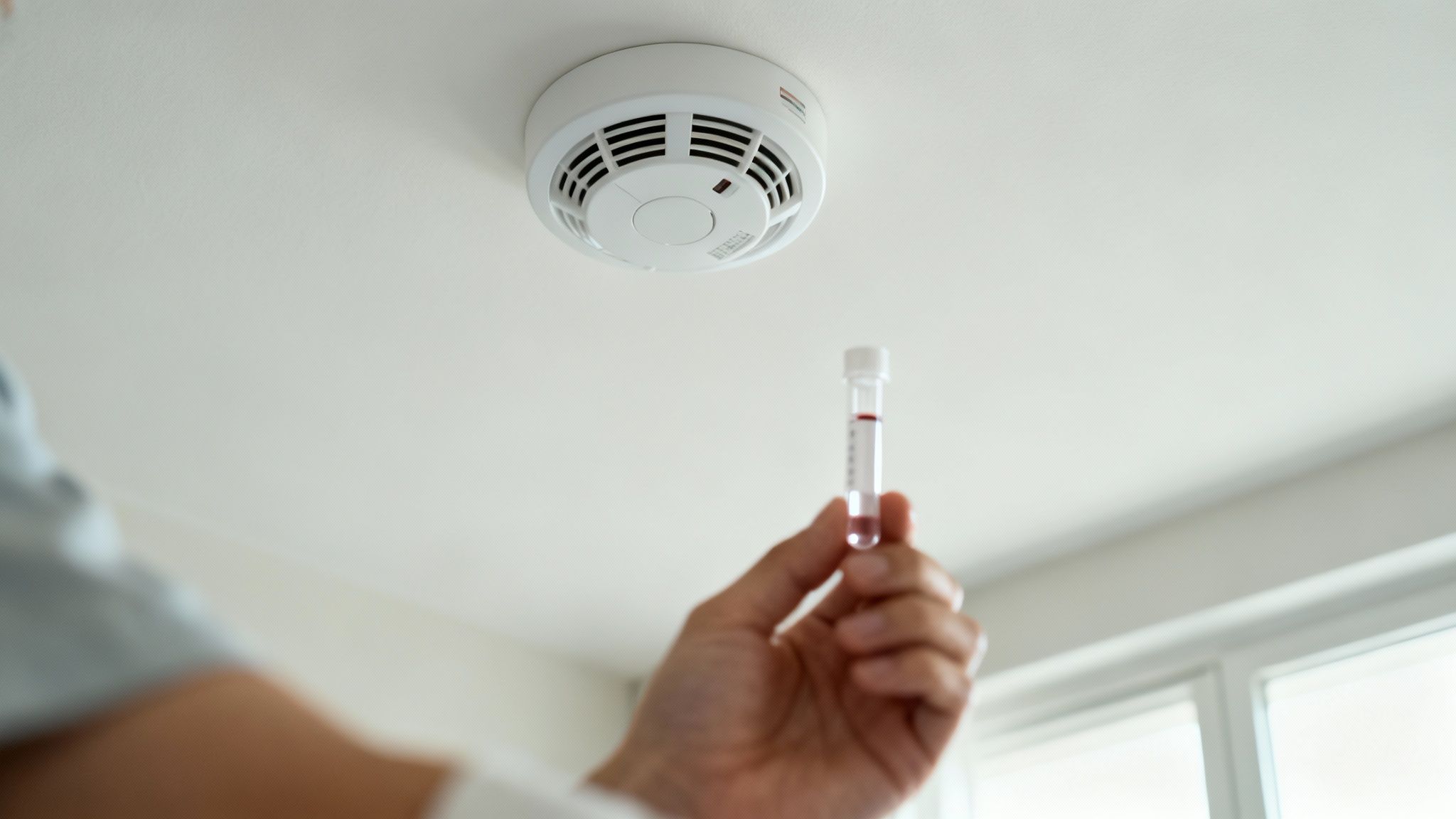
That report is just one piece of a much larger diagnostic puzzle. It gives us crucial data, but it doesn't tell the whole story on its own.
I often tell my patients to think of their IgE antibody levels like a smoke detector. A very loud, persistent alarm strongly suggests there's a fire. In the same way, very high IgE levels for a specific allergen signal a high probability of a true allergy.
But you wouldn't call the fire department just because the alarm went off—you’d look for smoke and flames first. Your clinical history—what actually happens to your body when you eat that peanut or pet that cat—is the smoke and flames. We need that to confirm the "fire" of a clinical allergy.
Key Takeaway: A positive test shows your immune system has created antibodies against a substance (this is sensitization). A true clinical allergy only exists if that sensitization leads to actual physical symptoms when you're exposed.
From Numbers to Likelihood
The numbers on your report, whether from a skin prick test (SPT) or a blood test, quantify your degree of sensitization. Generally, higher numbers correlate with a greater chance of a real-world reaction.
To get a clearer picture, let's look at how different tests report their findings.
Quick Guide to Common Allergy Test Metrics
This table breaks down the most common tests and what their numbers are telling us about sensitization.
| Test Type | Metric Reported | What It Measures |
|---|---|---|
| Skin Prick Test (SPT) | Wheal diameter in millimeters (mm) | The size of the hive-like bump that forms on the skin after being pricked with an allergen. |
| Intradermal Test | Wheal diameter in millimeters (mm) | Similar to SPT but more sensitive; measures the reaction size after injecting a tiny amount of allergen under the skin. |
| Serum-Specific IgE (ImmunoCAP) | Kilounits of antibody per liter (kU/L) | The concentration of specific IgE antibodies to a particular allergen circulating in your blood. |
| Component Resolved Diagnostics | Kilounits of antibody per liter (kU/L) | The concentration of IgE antibodies to specific proteins within an allergen (e.g., Ara h 2 in peanuts). |
For example, when it comes to a potential peanut allergy, a skin test wheal of 8 mm or a specific IgE level of 5 kU/L gives us a 95% positive predictive value. That means most people with those results will, in fact, react to peanuts. You can learn more about what these diagnostics measure in our guide on allergy test accuracy.
Actionable Steps and Further Testing
This initial data is the perfect starting point for a deeper conversation with your healthcare provider. Understanding the difference between sensitization and allergy is what keeps us from making unnecessary—and often stressful—dietary or lifestyle changes.
For those looking for a clear place to start, BARB N.P. offers convenient at-home allergy testing kits. These tests provide a solid foundation of data to bring to a specialist, helping guide the next steps. The ultimate goal is always to connect the dots between what the test says and what your body actually experiences.
A Deep Dive Into Common Allergy Testing Methods
To really understand what an allergy report is telling you, you first need to know how that data was collected. Each testing method gives us a different peek into the immune system's playbook. Getting a handle on the mechanics behind these common tests is the first step to moving from abstract numbers on a page to a practical understanding of what they mean for a patient.
Let’s break down the most common methods, how they work, and what kind of information you can expect from each.
The Skin Prick Test (SPT)
The Skin Prick Test (SPT) is usually the first stop for allergy investigations, mainly because it's fast and incredibly sensitive. During an SPT, a clinician places a tiny drop of a suspected allergen extract on the skin, typically the forearm or back. Then, they gently prick the skin's surface right through that drop.
If you’re sensitized to that substance, your body’s mast cells—the immune system's first responders, loaded with IgE antibodies—spring into action. They release histamine and other chemicals in a process called degranulation, creating a small, localized allergic reaction.
What you see is a small, raised, itchy bump called a wheal, often surrounded by a reddish area known as a flare. After about 15-20 minutes, the size of that wheal is measured in millimeters. Generally speaking, a larger wheal suggests a stronger degree of sensitization.
This physical reaction is a direct, visible demonstration of the immune response happening in real-time. It’s a fast and effective way to screen for multiple environmental and food allergens at once.
Serum-Specific IgE Blood Tests
If a skin test isn't the right fit, a blood test is the next best thing. The most common is a Serum-Specific IgE (sIgE) test, like the ImmunoCAP system. Instead of putting allergens on the skin, this method measures the exact amount of specific IgE antibodies floating around in your bloodstream.
A blood sample is sent off to a lab, where it’s exposed to various allergen proteins. The test then quantifies how many of your IgE antibodies latch onto each specific allergen. The results come back as a number, reported in kilounits of antibody per liter (kU/L).
- Pros: This is the go-to for patients who can't stop taking antihistamines, have a skin condition like severe eczema that would interfere with an SPT, or have a history of anaphylaxis where skin testing might be too risky.
- Cons: You have to wait for the lab to process the results, and in some cases, blood tests can be a bit less sensitive than skin tests for certain allergens.
For anyone looking into this route, there are now convenient at-home allergy testing kits that use this same blood-based method. They can give you some initial data to bring to a specialist for a more informed conversation.
Intradermal Testing
Sometimes, you need a test with even higher sensitivity. Intradermal Testing is like a high-definition version of the SPT. It's typically used when a skin prick test comes back negative, but there's still a strong clinical suspicion of an allergy.
Instead of a surface prick, a tiny amount of the allergen is injected just under the skin. This approach is often reserved for diagnosing allergies to things like insect venom (bees, wasps) or certain drugs like penicillin. Because it’s more sensitive, it also carries a slightly higher risk of triggering a body-wide reaction, so it must be done under close medical supervision. The goal is the same, though: measure the resulting wheal and flare to see how sensitized you are.
Choosing the Right Test
Each of these tests has its own strengths. Skin prick tests often have sky-high sensitivity—we're talking 90% for fresh cow's milk and 94% for raw egg. But blood tests using specific IgE components can offer better specificity, hitting 95% for Cor a 14 in hazelnut or 94% for Ana o 3 in cashew, which helps pinpoint the exact protein causing the trouble.
Knowing these nuances is key. For example, a simple total IgE blood test can miss up to 40% of adult allergies, which is why specific IgE is so important. On the flip side, penicillin skin tests are so effective that they can debunk 90-99% of self-reported allergies thanks to their excellent negative predictive value. You can learn more about how these different test values correlate with clinical reactions.
Ultimately, the right test depends on your clinical history, symptoms, current medications, and even your skin's condition. Understanding how these tools work empowers you to have a much better conversation with your healthcare provider about the best path forward to find the root cause of your symptoms.
Connecting Test Results to the Patient's Story
A piece of paper with numbers is just data. The real art of allergy diagnosis happens when you connect those numbers to the patient's lived experience. A positive test shows sensitization—the immune system has created the potential to react—but it doesn't automatically mean the patient has a clinical allergy, which is when that potential actually causes symptoms.
Bridging this gap is everything. It’s the difference between an accurate diagnosis and sending a patient down a path of unnecessary, life-altering food restrictions. This is where a detailed patient history becomes the most powerful diagnostic tool you have.
Sensitization Is Not a Diagnosis
Imagine a patient's blood test comes back with a moderately high IgE level for shrimp. Looking at the numbers alone, your first instinct might be to tell them to avoid it. But then you talk to them. You learn they eat shrimp every week with zero issues—no hives, no stomach upset, no breathing trouble.
This is a classic case of sensitization without clinical allergy. Their immune system has made IgE antibodies against a shrimp protein, but for reasons we're still figuring out, it doesn't trigger a physical reaction. Telling them to stop eating shrimp would be completely unnecessary.
Key Insight: The patient's story is the ultimate tie-breaker. If the clinical history and test results don't line up, the history almost always tells you what's really going on.
Mastering the Clinical History
A great clinical history is more than just asking, "What are your symptoms?" It's about playing detective to piece together the whole narrative. To accurately connect allergy test results to a patient's unique health story, relying on efficient medical documentation software can be a game-changer for keeping all the details straight.
Your goal is to see if the test data matches real-life events. Here are the essential questions to guide that conversation:
- Symptom Details: What exactly happens? Get specific. (e.g., itchy mouth, hives on their arms, wheezing, stomach cramps).
- Timing: How quickly do symptoms start after exposure? (Immediate reactions, within minutes to two hours, are the hallmark of IgE-mediated allergies).
- Reproducibility: Does this happen every single time they encounter the suspected allergen?
- Exposure Context: How was the food prepared? (Raw vs. cooked can make a huge difference). Was it eaten alone or as part of a big meal?
A child who breaks out in hives within minutes of eating scrambled eggs every single time has a story that strongly backs up a positive egg allergy test. But a patient who reports vague stomach aches after meals with multiple ingredients? That’s a much weaker link to their positive wheat test.
Putting It All Together: A Practical Scenario
Let's walk through a common situation.
A 28-year-old patient comes in, worried. She has a positive skin prick test to birch pollen and a positive blood test for apples. She thinks she has a dangerous apple allergy and needs to cut out her favorite fruit.
Here’s how you connect the dots:
- Ask About Birch Allergy Symptoms: You find out she gets classic seasonal hay fever every spring—itchy eyes, sneezing, a runny nose. This confirms her birch pollen allergy is clinically relevant and causing real problems.
- Ask About Apple Symptoms: Now for the apple. You ask what happens when she eats them. She says that sometimes, mostly in the spring, raw apples make her mouth feel itchy for a few minutes, but it goes away on its own. Apple sauce and apple pie? No problem at all.
- The Diagnosis: This history is a perfect match for Pollen Food Allergy Syndrome (PFAS), also known as oral allergy syndrome. Proteins in raw apples look a lot like proteins in birch pollen, and her immune system gets confused. The reaction is mild, stays in the mouth, and the problematic protein is destroyed by cooking.
She doesn't have a life-threatening apple allergy. She just needs to be careful with raw apples during pollen season or stick to cooked versions. This kind of nuanced, patient-centered interpretation prevents a misdiagnosis and gives her practical, manageable advice she can actually live with.
Advanced Interpretation With Component Diagnostics
Standard allergy tests are great starting points, but they see the big picture—the entire allergen, like a whole peanut or a cloud of birch pollen. Component-Resolved Diagnostics (CRD), on the other hand, zooms in. It's like switching from a blurry photo to a crystal-clear, high-resolution image, letting us see every tiny detail.
This advanced blood test dissects an allergen into its individual proteins, known as components. By measuring your body's specific IgE reaction to each protein, CRD gives us a much sharper, more detailed understanding of your allergy profile. This level of detail is a game-changer for figuring out your actual risk of a severe reaction.
Think of it this way: a "peanut allergy" diagnosis is a broad label. CRD tells us whether you’re reacting to the specific proteins linked to a true, systemic allergy or just the ones that happen to cross-react with something milder, like tree pollen.
This concept map shows just how critical it is to marry objective test results with a patient's story for a spot-on diagnosis.

As the chart illustrates, a lab number is only one piece of the puzzle. A solid clinical history is what turns that data into a diagnosis we can act on.
Differentiating High Risk from Low Risk
The real magic of CRD is its ability to predict whether a patient is likely to have a systemic reaction versus a milder, localized one. Not all proteins within an allergen are created equal. Some are tough, stable, and pack a big punch, while others are fragile and far less likely to cause serious trouble.
Peanuts are the classic example here:
- Ara h 2: This is a storage protein, meaning it's incredibly stable and holds up against heat and digestion. If a patient is sensitized to Ara h 2, it’s a major red flag, strongly pointing to a high risk of a systemic, potentially life-threatening reaction.
- Ara h 8: This protein is a close cousin to a protein in birch pollen (Bet v 1). Sensitization to Ara h 8 often signals Pollen-Food Allergy Syndrome (PFAS), which usually causes nothing more than a mild, itchy mouth.
Without component testing, both patients get the same label: "allergic to peanuts." With it, we can confidently hand one patient an epinephrine auto-injector and a strict avoidance plan, while reassuring the other that their reactions are likely to stay mild.
By pinpointing the specific molecular culprits, CRD helps clinicians move beyond a simple "positive" or "negative." It gives us a refined risk assessment that directly shapes how we manage and counsel our patients.
Unraveling Cross-Reactivity Mysteries
Component testing is also our best tool for solving the often-confusing puzzle of cross-reactivity. This happens when the immune system gets confused, mistaking a protein in one substance for a similar-looking one in another and triggering a reaction to both.
PFAS is the perfect example. Someone truly allergic to birch pollen might also react to raw apples, peaches, or almonds because the proteins in those foods look a lot like the main birch pollen allergen. CRD can nail down this connection by showing sensitization to proteins like Bet v 1 (birch), Mal d 1 (apple), and Pru p 1 (peach).
For situations that demand even more personalized insights, exploring options for customized diagnostic testing can add another layer of clarity. It helps us explain to patients why they can eat a baked apple pie but not a raw apple—the heat destroys the fragile, cross-reactive protein.
This nuanced way of interpreting allergy test results prevents us from over-diagnosing and slapping unnecessary dietary restrictions on people. It empowers us to give patients precise, actionable advice based on their unique molecular profile, which ultimately improves both their safety and their quality of life.
Interpreting Peanut Component Test Results
To really see the power of CRD in action, let's look at the most common peanut components and what they tell us.
| Peanut Component | Associated Clinical Risk | Common Cross-Reactivity |
|---|---|---|
| Ara h 1, 2, 3 | High Risk. Stable proteins linked to systemic reactions. | Not typically cross-reactive. Indicates primary peanut allergy. |
| Ara h 6 | High Risk. Similar to Ara h 2, strong marker for allergy. | Not typically cross-reactive. |
| Ara h 8 | Low Risk. Associated with local oral symptoms (PFAS). | Birch pollen (Bet v 1), other tree nuts, fruits, vegetables. |
| Ara h 9 | Moderate to High Risk. Stable lipid transfer protein (LTP). | Peach, other fruits, and tree nuts (LTP syndrome). |
This table makes it clear: a "positive" peanut test means very different things depending on which proteins are the culprits. Identifying sensitization to Ara h 2 versus Ara h 8 allows for a completely different—and far more accurate—management plan.
The Patient Factor: Age, Medications, and Timing
Allergy test results are never just numbers on a page. Think of them as a snapshot—a reflection of a specific patient at a specific moment in time. A positive or negative result is only part of the story, because things like age, recent illnesses, and even medications can dramatically shift the outcome.
To get the full picture, you have to look beyond the lab report and consider the person. After all, a patient's immune system isn't static; it evolves over their lifetime, and that directly impacts how they respond to testing.
Why Age Changes Everything
Age is one of the biggest variables in the equation. Generally speaking, kids and teens show much higher rates of sensitization. One massive analysis found that allergen positivity rates were a staggering 56.3% in patients under 18. That number drops off pretty quickly with age, down to 32% for 18-to-40-year-olds and just 17.6% for those over 60.
What does this tell us? It could be a sign of the immune response naturally waning over time, or simply reflect changes in a lifetime of allergen exposures. You can dig deeper into these age-related findings in allergy testing here.
This trend means a moderately positive result for a toddler needs to be interpreted very differently than the exact same result in a 70-year-old. Age provides crucial context that frames the clinical significance of your findings.
When Timing and Medications Can Skew Results
Certain medications are notorious for interfering with allergy tests, especially antihistamines. They do their job by blocking histamine, which is the very chemical responsible for the wheal-and-flare reaction in a skin prick test. So, if a patient has taken one recently, you could be looking at a false negative.
It's absolutely critical for patients to stop taking antihistamines before a skin test. The exact washout period depends on the specific drug, but a good rule of thumb is 3 to 7 days.
But it’s not just about medication. The patient’s overall health at the time of the test matters, too. A recent viral infection can put the immune system on high alert, potentially making it more reactive than usual. Even the timing of the test in relation to an allergic reaction can be tricky. Testing too soon after a severe reaction might give you an inconclusive result because the body’s mast cells are temporarily tapped out.
For clinicians guiding patients, the allergy test panels from BARB N.P. offer a clear starting point for a conversation with a specialist. By putting the pieces together—age, medications, and recent health—you can connect the dots between the lab report and the patient's real-world experience. That’s how you move from just data to a truly meaningful diagnosis.
Your Skin's Role in Accurate Allergy Testing
When we're looking at allergy test results, especially from a skin prick test, we can't ignore the canvas itself—the patient's skin. Think about it: a compromised or inflamed skin barrier can seriously interfere with the test's accuracy, making it tough to get a clear read.
Supporting skin health isn't just for managing conditions like eczema. It's a foundational step for getting reliable diagnostic results in the first place. A strong, calm skin barrier is essential both before the test and for aftercare. If the skin is already irritated or flaring, you risk skewed results, false positives, or readings that are just plain ambiguous.
Setting the Stage for Clear Results
For any patient, but especially those with sensitive or reactive skin, being proactive is key. The goal is simple: get the skin as calm and healthy as possible before the test. This usually means adopting a gentle skincare routine that fortifies the skin’s natural defenses.
We often recommend products from the BARB N.P. line because they’re formulated specifically to support and strengthen the skin barrier. Using barrier-repairing moisturizers and cleansers in the weeks leading up to an appointment can create a more stable, predictable surface for testing. If a patient is dealing with a currently compromised barrier, we have some valuable strategies in our guide on how to repair a damaged skin barrier.
A healthy skin barrier acts like a clean, neutral background. It allows the wheal-and-flare reactions of a skin prick test to be measured accurately. Without it, you're trying to read a message on a blurry page.
A Modern Way to Manage Skin Inflammation
Beyond daily skincare, modern tools can help manage the underlying inflammation that often complicates things. The Barb N.P. LED Facial Mask is a non-invasive way to soothe and support the skin, making it an excellent addition to any allergy management plan.
What I love about this mask is that its design actually encourages consistent use, which is where you see real results. It’s wireless and comfortable, so patients can easily wear it while relaxing or moving around at home. It also features three distinct light settings to tackle different concerns:
- Red Light: Helps reduce inflammation and stimulates collagen production for stronger skin.
- Blue Light: Calms the skin and can help manage acne-causing bacteria.
- Amber Light: Works to rejuvenate the skin, promoting a healthier overall appearance.
By incorporating a tool like this into their routine, patients can actively manage the inflammation and reactivity that might otherwise interfere with their comfort and the accuracy of their allergy tests. This focus on skin wellness builds a much more solid foundation for the entire diagnostic process.
Common Questions About Allergy Test Interpretation
Even after you understand the reports, real-world questions always pop up. This is where we move from the numbers on the page to practical advice that clinicians and patients can use every day. Let's tackle some of the most common questions that come up.
Can Allergy Test Results Predict How Severe a Reaction Will Be?
No, and this is probably the single most important takeaway. The size of a skin prick wheal or the numeric value of an IgE blood test shows the degree of sensitization, not how severe a future reaction might be.
It’s a common misconception. A patient with a huge wheal or off-the-charts IgE levels might only get mild hives, while someone with much lower numbers could have a life-threatening anaphylactic reaction. Severity is a complex beast, influenced by things like the dose of the allergen, how you were exposed, and other personal factors like asthma.
Bottom line: Test results help us understand the likelihood of a reaction, not its intensity.
How Long Are Allergy Test Results Good For?
Allergies aren't set in stone. The immune system is dynamic, especially in children, so results from years ago might not reflect what's happening today. Many common childhood allergies to foods like milk and egg are often outgrown.
So, how long is a test valid? It really depends on the person, their age, and the allergen in question.
- For food allergies in kids: Re-testing is often recommended every one to two years to check if they've developed tolerance.
- For environmental allergies in adults: These patterns tend to be more stable, but if symptoms suddenly change or new ones appear, it’s a good idea to re-test.
An allergist is your best guide for figuring out the right re-testing schedule.
When Is an Oral Food Challenge Actually Necessary?
Think of an oral food challenge (OFC) as the ultimate tie-breaker. It’s the undisputed "gold standard" for diagnosing a food allergy, and we turn to it when a patient's history and test results just don't add up or seem contradictory.
During an OFC, the patient eats tiny, gradually increasing amounts of the food they might be allergic to, all under strict medical supervision. The team watches like a hawk for any sign of a reaction. An OFC is the only way to definitively confirm a food allergy, clear someone to safely reintroduce a food, or find out if a child has finally outgrown an old allergy.
Can You Really Develop New Allergies as an Adult?
Yes, absolutely. It can be surprising, but you can develop a brand-new allergy as an adult, even to something you’ve been exposed to your entire life without a problem.
Adult-onset allergies can be triggered by all sorts of things—moving to a new part of the country with different pollens, hormonal changes, or just shifts in your immune system over time. If you start experiencing new allergy-like symptoms, don't dismiss them just because of your age. It's always worth getting a proper medical evaluation.
Navigating the complexities of allergies often requires a multi-faceted approach, starting with accurate testing and leading to supportive daily care. If you're looking for reliable initial data to bring to a specialist, BARB N.P. offers a range of at-home allergy test panels designed to give you a clear and actionable starting point on your health journey. Explore your options at https://barbnp.shop.