

Posted by Barb N.P. Team
on December 07, 2025

Building a skincare routine can feel overwhelming, but it boils down to three absolute must-haves: cleanse, moisturize, and protect. Getting these core steps right creates the perfect foundation, making every other product you add later work that much harder. It’s all about consistency, not complexity.
Establishing Your Core Skincare Foundation
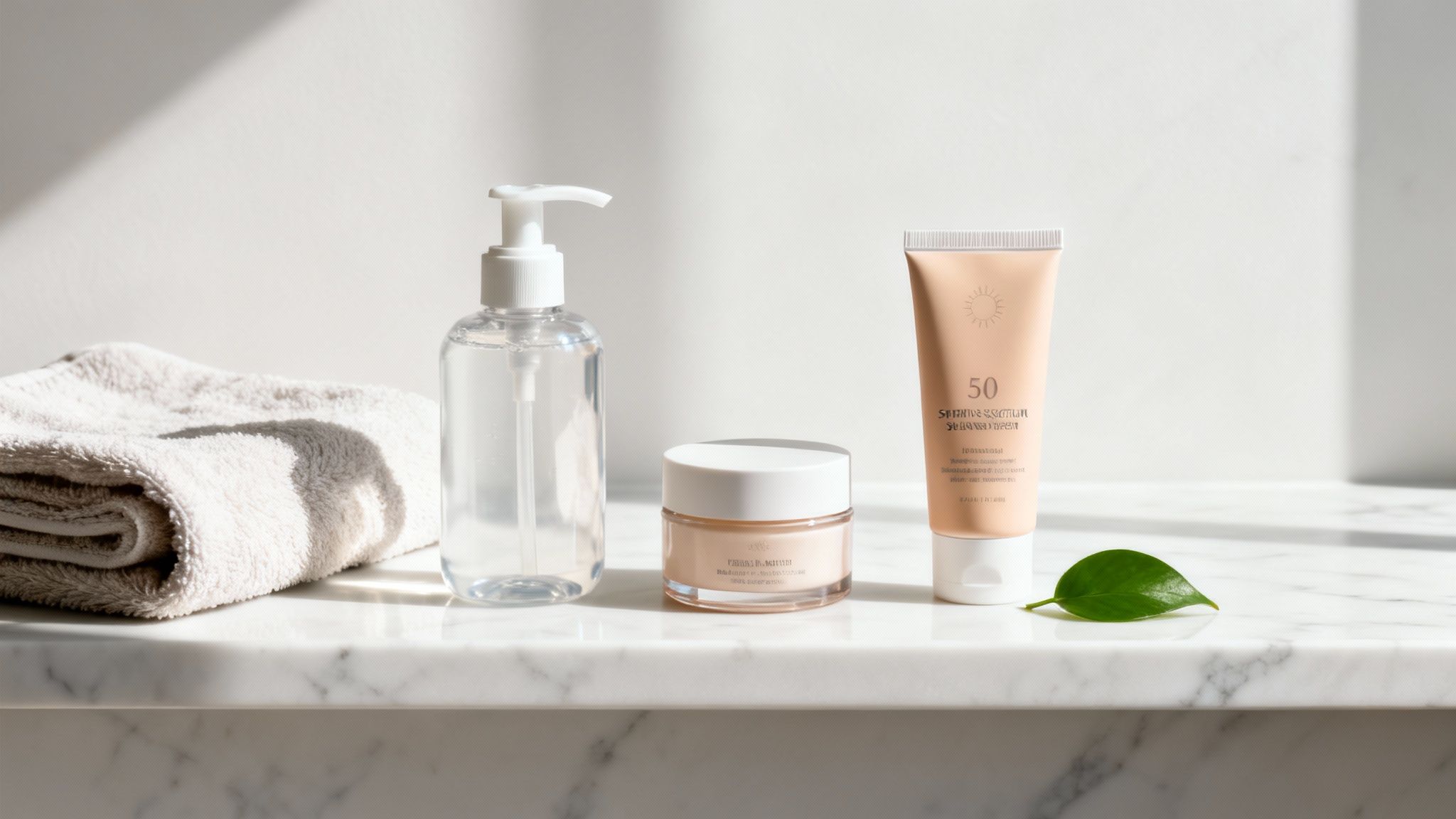
Before you even think about fancy serums or targeted treatments, let's nail the essentials. Think of it like priming a canvas before painting—you need a clean, prepped surface for the best results. The most effective routines aren't the ones with a dozen steps; they're the ones built on a solid, consistent base.
These aren't just steps; they're daily commitments to your skin's long-term health. Mastering them is the most important part of building a routine that actually delivers.
The First Pillar: Cleanse
Cleansing kicks off both your morning and evening routines, but its job changes slightly with the time of day. In the morning, a quick, gentle cleanse is all you need to wash away sweat, oil, and last night's products, creating a fresh slate.
Nighttime, however, is when the real work happens. Your evening cleanse needs to tackle a full day's worth of makeup, sunscreen, pollution, and general grime. This is where a double cleanse is a game-changer for many:
- First Cleanse: Start with an oil-based cleanser, like the BARB N.P. Cleansing Oil. The oil effortlessly dissolves makeup, SPF, and other oil-based impurities.
- Second Cleanse: Follow up with a water-based or gel cleanser to sweep away any remaining residue and give your pores a truly deep clean.
A proper cleanse is one that respects your skin's delicate barrier. Hashing it with harsh, stripping soaps can backfire, leading to irritation, dryness, and even more oil as your skin desperately tries to compensate. To learn more, check out our guide on what are the benefits of using a cleanser.
The Second Pillar: Moisturize
Right after cleansing, it’s time to put moisture back in. This is where people often get confused between hydrating and moisturizing—they work together, but they’re not the same.
- Hydrators use ingredients like hyaluronic acid to draw water into the skin. They boost water content, giving you that plump, bouncy feel. We recommend the BARB N.P. HydraBoost Serum for this step.
- Moisturizers use ingredients like ceramides to create a barrier on top of the skin. They lock all that hydration in and prevent it from escaping.
And yes, every single skin type needs both—even oily skin. Skipping moisturizer can actually trick your skin into producing more oil to overcompensate for the dryness, leading to clogged pores and breakouts.
The Third Pillar: Protect
If you do only one thing for your skin, let it be this: wear sunscreen. Every. Single. Morning. Daily sun protection is hands-down the most powerful anti-aging product you can use. In fact, up to 80% of visible aging—we’re talking fine lines, wrinkles, and dark spots—comes from unprotected sun exposure.
You need a broad-spectrum sunscreen with an SPF of 30 or higher, and it should always be the very last step in your morning routine. A great choice is the BARB N.P. Daily Defense SPF 50, which offers protection without a greasy finish. It’s your daily insurance policy, shielding your skin from UVA (aging) and UVB (burning) rays and protecting all the hard work you’re putting in with your other products.
How To Identify Your Skin Type And Concerns
Building an effective skincare routine is a bit like being a detective for your own face. Before you can grab the right tools (your products), you need to get to the bottom of what your skin is actually doing. This means learning the critical difference between your inherent skin type and your current skin concerns.
Trust me, they are not the same thing.
Your skin type is what you’re genetically born with. It’s the baseline behavior of your skin, generally falling into oily, dry, combination, or normal categories. Think of it as your skin’s default setting.
Skin concerns, on the other hand, are the conditions that pop up along the way. They’re often influenced by your lifestyle, environment, hormones, or even the products you're using. We're talking about things like acne, dark spots, sensitivity, or dehydration.
The At-Home Skin Analysis
You don’t need a fancy lab or expensive gadgets to figure this out. A simple at-home test can reveal a whole lot about your skin's natural state. I have my clients do this all the time.
- Start with a clean slate. Wash your face with a gentle cleanser, pat it completely dry, and then just wait. Don’t apply a single serum or moisturizer for about 30-60 minutes.
-
Time for observation. Grab a mirror and take a close look. How does your skin feel?
- Oily Skin: Is there a noticeable shine on your forehead, nose, and cheeks? Your face will probably feel a little slick to the touch.
- Dry Skin: Does your skin feel tight, maybe even a bit rough or flaky? It will likely look matte, and you might notice fine lines more easily.
- Combination Skin: The classic T-zone dilemma. Is your forehead, nose, and chin shiny, but your cheeks feel tight or totally normal? That's combination skin.
- Normal Skin: Does your skin just feel... comfortable? It’s balanced, not too oily, not too tight. You've basically hit the genetic jackpot.
This simple observation gives you the fundamental roadmap for choosing your core products, like the right cleanser and moisturizer for your skin's foundation.
Distinguishing Concerns From Type
Once you’ve pinned down your baseline type, you can start identifying your specific concerns. This is where true personalization happens, and it’s no surprise that the demand for customized skincare is booming. The global skincare market was valued at approximately USD 115.65 billion in the early 2020s and is projected to grow significantly as more people focus on their individual skin needs.
Your skin type dictates the texture of your products (think gels for oily skin, rich creams for dry skin). Your skin concerns dictate the active ingredients you need to get results.
Here are a few common concerns I see in my practice and how to spot them:
- Acne and Breakouts: This isn't a one-size-fits-all issue. It can range from the occasional pimple to more persistent cystic acne. Pay attention to where you break out—breakouts along the chin and jawline are often hormonal, while little bumps on the forehead can sometimes be linked to hair products.
- Hyperpigmentation: These are the dark spots or patches that linger after a pimple, from sun exposure, or due to hormonal shifts. They’re one of the most common complaints I hear.
- Sensitivity and Redness: Does your skin flush easily or get red and irritated when you try a new product? That's a clear sign of sensitivity. For trickier conditions like rosacea, exploring natural approaches to treating rosacea can offer some really valuable insights.
- Dehydration vs. Dryness: This is a huge one, and people mix them up all the time. Dry skin lacks oil. Dehydrated skin lacks water. Even oily skin can get dehydrated, feeling both greasy and tight simultaneously. If your skin looks dull and shows fine, crepey lines when you gently pinch your cheek, it’s likely thirsty for water.
Getting a handle on these nuances is the single most important step in building a routine that actually works for you. It’ll save you a ton of time, money, and frustration on products that were never going to hit the mark in the first place.
Mastering the Art of Skincare Layering
Knowing what products to use is only half the battle. Knowing how to layer them is where you’ll see real, lasting change in your skin.
Applying your skincare in the wrong order can do more than just waste expensive products—it can make them completely ineffective or even cause irritation. Once you learn the strategy behind layering, your routine stops being a guessing game and becomes a precise, results-driven ritual.
The guiding principle is wonderfully simple: apply your products from the thinnest consistency to the thickest.
Think of it like this: lighter, water-based products need to get to your skin first to deliver their active ingredients where they're needed most. If you slather on a thick, oil-based cream beforehand, it creates a barrier that those powerhouse serums just can't get through.
This visual breaks down the core steps, helping you see where each product fits into the bigger picture.

It’s all about a logical flow—cleanse, treat, and protect. Following this sequence ensures you get the absolute best results from your investment.
Your Morning Layering Sequence
Your morning routine is all about protection. You're getting your skin ready to face environmental stressors like UV rays and pollution, so the layers should be light, effective, and create a smooth canvas for makeup if you wear it.
- Cleanser: Start fresh. Wash your face with a gentle cleanser to whisk away any oil and product residue from the night before.
- Toner or Essence (Optional): If you use a hydrating toner or essence, now is the time. Pat it onto damp skin to give your hydration a head start. We recommend the BARB N.P. Balancing Toner.
- Treatment Serums: This is prime time for your targeted, water-based serums. A Vitamin C serum is a morning superstar for its antioxidant protection against sun-induced free radicals.
- Moisturizer: Lock it all in. Apply your moisturizer to seal in the goodness from your serums and support your skin's protective barrier.
- Sunscreen: The non-negotiable final step. Be generous with a broad-spectrum SPF of 30 or higher. It’s your number one defense against premature aging.
One of the most common questions I get is, "How long should I wait between layers?" Give each product at least 30 to 60 seconds to absorb. This small pause can make a huge difference in preventing that annoying "pilling" effect, where products ball up on your skin.
Your Evening Layering Sequence
At night, your routine shifts its focus to repair and renewal. Your skin enters a regenerative mode while you sleep, making it the perfect time to use potent, corrective ingredients that can work their magic undisturbed.
- Double Cleanse: Start with an oil-based cleanser to melt away makeup, sunscreen, and grime. Follow it with a water-based cleanser to wash everything away completely.
- Exfoliating Acids or Retinoids: This is the spot for your heavy hitters—your most powerful "active" ingredients. Whether it's an AHA/BHA treatment or a retinoid, apply it to clean, dry skin to maximize its impact.
- Hydrating Serums: After your active has had a moment to sink in, follow up with hydrating and repairing serums. Look for ingredients like hyaluronic acid or niacinamide to soothe and plump the skin. For an in-depth guide, you can learn more about how to layer serums effectively in our detailed post.
- Moisturizer or Night Cream: Finish with a richer moisturizer or night cream. This final layer seals everything in and supports your skin's barrier function throughout the night. A great option is the BARB N.P. Renewal Night Cream.
By following this thin-to-thick logic, you ensure that every product you’ve carefully selected can do its job. This strategic application is a fundamental skill in building a routine that consistently delivers the glowing, healthy skin you deserve.
Customizing Your Routine with Active Ingredients
Once you’ve nailed the basics of cleansing, moisturizing, and sun protection, it's time for the fun part: adding the powerhouse ingredients that deliver real, visible change. This is where your routine goes from simply maintaining your skin to actively transforming it. Think of this as the moment you start addressing your specific skin goals head-on, whether that’s stubborn acne, fine lines, or frustrating redness.
This targeted approach is a huge reason why modern skincare feels so effective. It's no surprise that anti-aging products dominate the premium market, making up over 60% of global facial care revenue. As we get older, our needs change, and our routines tend to grow with us to include potent, results-driven actives.
Targeting the Signs of Aging
If you’re focused on softening fine lines, boosting firmness, and getting that youthful glow back, a few key ingredients are simply non-negotiable. The best strategy is a one-two punch: protect your skin during the day and repair it while you sleep.
- Morning Focus (Antioxidants): Vitamin C is your morning MVP. It’s an incredible antioxidant that helps shield your skin from environmental damage (think UV rays and pollution), brightens up a dull complexion, and even supports collagen. A high-quality Vitamin C anti-aging serum is the perfect way to tackle uneven tone and fine lines first thing.
- Evening Focus (Retinoids): At night, it’s all about retinoids like retinol. They are the gold standard for a reason—they speed up cell turnover, which smooths out skin texture, minimizes the look of wrinkles, and kicks collagen production into high gear. The BARB N.P. Retinol Renew Serum is an excellent choice for beginners and experienced users alike.
A friendly piece of advice on retinoids: always start low and go slow. I recommend beginning with a low concentration (like 0.25% retinol) just two or three times a week. This gives your skin time to adjust. A little dryness or flaking can be normal at first, but it's always smart to know the potential side effects of retinol serums.
Addressing Persistent Acne and Breakouts
For those of us fighting a constant battle with breakouts, the goal is to get oil production under control, keep pores clear, and calm inflammation—all without stripping your skin bare.
- Salicylic Acid (BHA): This is a hero ingredient for acne-prone skin. Because it’s oil-soluble, it can get deep into your pores to dissolve the oil and dead skin cells that cause blackheads and pimples. You’ll find it in cleansers, toners, and spot treatments.
- Niacinamide: This form of vitamin B3 is a fantastic multi-tasker. It helps regulate oil, reduces redness, and strengthens the skin barrier, which is often weak and irritated in acneic skin.
A simple but effective routine could be using a salicylic acid cleanser at night, followed by a lightweight serum with niacinamide like the BARB N.P. Niacinamide Clarifying Serum and a non-comedogenic moisturizer.
Soothing Sensitive and Reactive Skin
If your skin gets red and irritated at the drop of a hat, your routine should be all about calming, supporting, and protecting. Think gentle, nourishing ingredients that reinforce your skin's natural defenses.
Look for these calming superstars:
- Centella Asiatica (Cica): Famous for its incredible healing and soothing abilities.
- Ceramides: These are essential lipids that help rebuild your skin barrier and lock in moisture.
- Hyaluronic Acid: Offers a burst of gentle hydration without any risk of irritation.
My best tip? Stick to products with minimal fragrance and simple, clean formulas like the BARB N.P. Soothing Cica Cream.
Supercharge Your Results with At-Home Technology
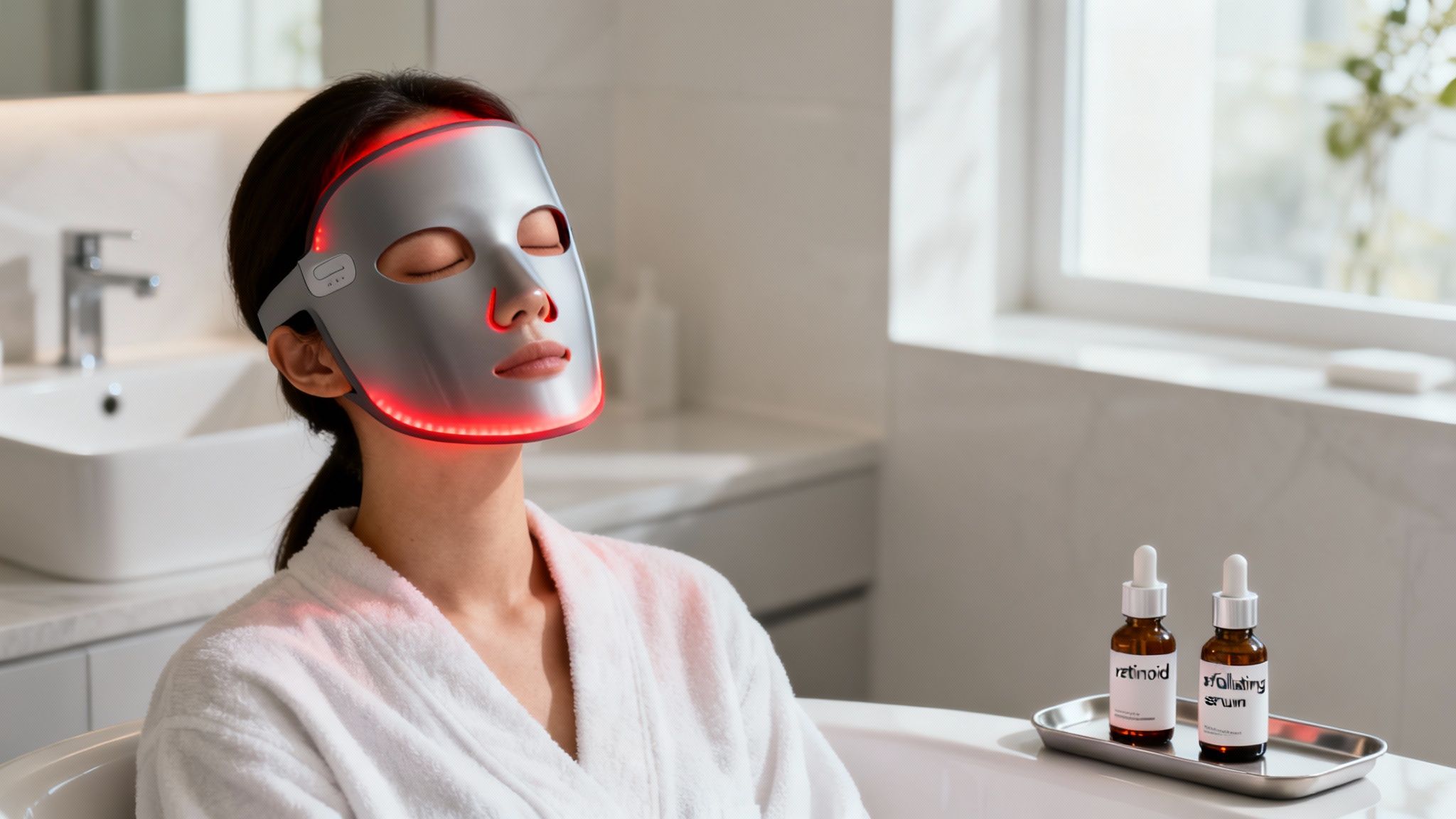
Want to get results that are a little closer to what you’d see in a professional clinic? It's time to bring some tech into your routine. LED light therapy, which used to be an in-office-only treatment, is now widely available for home use and can seriously boost the effects of your skincare products.
The BARB N.P. Facial Mask is a perfect example of how you can bring that professional-level technology home. It’s designed to be comfortable, easy to use, and incredibly effective.
Here’s why it stands out:
- A comfortable, wireless design: No more being stuck next to an outlet. You can wear it while you relax on the couch, fold laundry, or catch up on emails.
-
Three therapeutic light settings: Different colors target different concerns, so you can customize your treatment based on what your skin needs on any given day.
- Red Light: This wavelength goes deeper to stimulate collagen, making it ideal for firming the skin and reducing fine lines.
- Blue Light: This is your go-to for breakouts. It targets and destroys acne-causing bacteria right on the skin’s surface.
- Yellow Light: Perfect for calming things down. It helps reduce redness, soothe inflammation, and improve lymphatic flow—great for sensitive skin or post-treatment recovery.
Adding a device like this into your routine a few times a week gives your skin a concentrated, targeted boost that can accelerate your journey to your ultimate skincare goals.
Knowing When to See a Skincare Professional
A consistent at-home routine is the absolute foundation of healthy skin. It's your daily commitment to maintenance and gradual improvement. But sometimes, even the best efforts hit a wall, and that’s perfectly normal.
Learning to recognize when a concern has moved beyond the scope of over-the-counter products is a crucial part of building a routine that actually works. If you're stuck fighting an issue that just won’t budge, it might be time to call in the experts.
Signs It’s Time for an Expert Opinion
Think of it this way: professional intervention is for targeted, accelerated results. While many common issues respond well to a solid home regimen, certain conditions are notoriously stubborn without a professional game plan.
If you’re experiencing any of the following, it’s probably time to book a consultation with a dermatologist or a licensed aesthetic nurse.
- Cystic or Nodular Acne: This isn't your average pimple. This type of acne forms deep, painful bumps under the skin and carries a high risk of scarring. It rarely responds to topical treatments alone and often needs prescription-strength help.
- Persistent Melasma or Hyperpigmentation: While ingredients like vitamin C can fade minor dark spots, deep-set or widespread melasma often requires a multi-pronged attack. Think prescription topicals combined with in-office treatments like chemical peels to see real, significant improvement.
- Deep-Set Wrinkles and Volume Loss: Serums and creams are fantastic for softening fine lines and boosting skin texture. But for more established wrinkles or a noticeable loss of facial volume, injectable treatments like Botox or dermal fillers deliver results that topical skincare simply can't replicate.
- Unexplained Rashes or Severe Sensitivity: Is your skin suddenly reacting to everything? Have you developed a persistent rash that won't go away? It's crucial to get a proper diagnosis. A professional can determine if you're dealing with a condition like rosacea, eczema, or a specific allergy.
Seeing a professional isn’t a sign that your home routine failed. It's the next logical step—an investment in getting an accurate diagnosis and the most effective treatment plan for your unique skin.
Demystifying Professional Treatments
The world of professional treatments can sound intimidating, but many are straightforward procedures designed to give your skin a powerful reset. A professional will be your guide, steering you toward the right option based on your goals and your skin’s tolerance.
Common treatments you might discuss include:
- Chemical Peels: A specialized solution is applied to the skin to exfoliate the top layers, revealing smoother, more even-toned skin underneath. They are fantastic for tackling sun damage, fine lines, and stubborn acne.
- Microneedling: This procedure uses tiny, sterile needles to create micro-injuries in the skin, kicking your body’s natural collagen and elastin production into high gear. It’s a game-changer for improving acne scars, wrinkles, and overall texture.
The Power of Medical-Grade Skincare
One of the biggest advantages of seeing a pro is gaining access to medical-grade skincare. These products are a world apart from what you find on store shelves.
They’re formulated with higher concentrations of active ingredients and use more advanced delivery systems to penetrate the skin more effectively. This means they can produce more significant and faster results.
For example, a brand like BARB N.P. offers product lines curated for their clinical efficacy and proven results. When you consult with a professional, they remove the guesswork, helping you safely integrate these potent formulas into your routine. They’ll tell you exactly which products to use, how often, and what to pair them with to maximize your benefits while minimizing any potential irritation. It's the key to truly elevating your skincare results.
Your Top Skincare Questions, Answered
Starting a new skincare routine is exciting, but it almost always comes with a few questions. As you get started, it's completely normal to wonder about how long it takes to see changes, when to switch things up, and what’s really going on with your skin.
Let's dive into the questions we hear most often, so you can feel confident in your new routine.
How Long Until I Actually See Results?
This is the big one, and the honest answer is: it depends on what you're trying to achieve. While you might feel the immediate relief of a great moisturizer, the real magic from active ingredients takes time and consistency. Patience is key.
Here’s a realistic timeline of what you can expect:
- 2-4 Weeks: You should start noticing better hydration and maybe a reduction in small, surface-level blemishes. Your skin will likely feel softer and look a bit brighter.
- 6-8 Weeks: This marks a full skin cell turnover cycle. It’s the sweet spot where ingredients like salicylic acid really start to show off, leading to clearer pores and a more even texture.
- 3-6 Months: For deeper concerns like stubborn hyperpigmentation, fine lines, and sun damage, consistency is everything. Ingredients like retinoids and high-potency vitamin C need several months to deliver their most dramatic and lasting results.
Should My Routine Change With the Seasons?
Yes, one hundred percent. Your skin isn't the same in July as it is in January. Its needs shift right along with the humidity, temperature, and sun exposure. Thinking seasonally is one of the smartest things you can do to keep your skin balanced all year.
In the winter, the cold, dry air is notorious for weakening the skin barrier, leaving it feeling tight and irritated. This is your cue to swap a lightweight lotion for a richer, more restorative cream. You might also want to bring in a hydrating serum with hyaluronic acid for an extra layer of moisture.
Then comes summer. The heat and humidity usually mean more sweat, more oil, and a higher risk of clogged pores. This is the perfect time to switch to a lighter gel-based moisturizer and be extra diligent with a clarifying cleanser. Sunscreen is a year-round must, but a lightweight fluid formula often feels much better in the summer heat.
The most important thing is to listen to your skin. If it feels tight, it’s begging for more moisture. If it’s feeling greasy or congested, it might be time to lighten up.
Is This Product Irritating My Skin or Am I Just "Purging"?
When you introduce powerful active ingredients, your skin can react in a few different ways. It’s crucial to understand the difference between a temporary "purge" and a genuine irritation that's a red flag.
Purging is when your skin temporarily breaks out after you start a product that speeds up cell turnover, like a retinoid or an exfoliating acid (AHA/BHA). It’s essentially pushing all the gunk that was already brewing under the surface up and out. It’s annoying, but it’s a sign the product is working, and it should clear up within a few weeks.
Irritation, on the other hand, is your skin telling you to stop. Look out for these signs:
- Widespread redness or persistent flushing that doesn’t go away.
- A stinging, burning, or itching sensation when you apply the product.
- New dry, flaky, or scaly patches.
- A rash or tiny red bumps (not to be confused with pimples).
If you notice any of these, stop using the new product immediately. The best way to avoid this is to always patch-test a new product on a small, discreet area—like behind your ear or on your inner arm—for a few days before putting it all over your face.
At BotoxBarb, we believe your skincare routine should be both powerful and a pleasure to use. It’s all about matching the right medical-grade products and professional guidance to your unique skin goals. Whether you want to perfect your daily regimen or explore advanced treatments, we're here to help you build lasting confidence and incredible skin health.
Discover our curated product selections and book your consultation at https://barbnp.shop.