

Posted by Barb N.P. Team
on November 29, 2025

When your skin feels tight, looks dull, or suddenly shows more fine lines than you remember, the immediate fix is almost always a targeted hyaluronic acid serum for dehydrated skin. This isn't just about surface-level moisture; it's about directly replenishing the water your skin has lost, restoring that plump, smooth texture from within. It’s the single most effective tool for quenching thirsty skin.
Why Your Thirsty Skin Craves Hyaluronic Acid
Have you ever looked in the mirror and felt your skin just looked… flat? Maybe a little crepey or tight? That’s dehydration talking. It’s a super common condition that gets mistaken for dryness all the time, but knowing the difference is the key to fixing it.
Here’s a simple way to think about it: picture a plump, juicy grape versus a shriveled raisin. The raisin is just a dehydrated grape. That’s exactly what happens to our skin cells. Dehydrated skin is screaming for water, not oil. Dry skin, on the other hand, is a skin type that naturally produces less oil.
Dehydrated Skin vs Dry Skin At a Glance
Sometimes it's hard to tell what your skin is really asking for. This quick-reference table breaks down the key differences to help you identify whether your skin is thirsty (lacking water) or truly dry (lacking oil).
| Characteristic | Dehydrated Skin (Lacks Water) | Dry Skin (Lacks Oil) |
|---|---|---|
| Signs | Dullness, fine lines, dark circles, tightness | Flakiness, rough patches, redness, irritation |
| Feeling | Feels tight and uncomfortable, can still be oily | Feels rough, scaly, and consistently dry |
| Cause | Lack of water intake, environment, harsh products | Genetic predisposition, aging, hormonal changes |
Understanding this distinction is crucial because treating dehydration with heavy oils won't solve the underlying water loss. You need a dedicated hydrator.
The Ultimate Hydration Hero
This is where hyaluronic acid (HA) steps in. Your body already makes it—it’s a sugar molecule found in your skin, joints, and connective tissues, working around the clock to keep everything lubricated and moist.
Its superpower is its incredible ability to hold water—up to 1,000 times its own weight. This makes it the ultimate humectant, acting like a tiny sponge that pulls moisture from the air and deeper layers of your skin to drench the surface in hydration.
As we age, our natural HA production drops off, which is a major contributor to volume loss and those fine lines that seem to appear overnight. This is why a topical hyaluronic acid serum for dehydrated skin is such a non-negotiable step in an effective skincare routine.
By reintroducing this vital molecule, you're directly addressing the root cause of dehydration—a lack of water—helping to restore your skin's plump, supple, and healthy bounce.
The industry knows how well it works. The global market for hyaluronic acid products was valued at a massive $11.81 billion, with serums and other cosmetics making up nearly 74.81% of that share. Projections show that number climbing to almost $19.94 billion by 2034, proving just how much consumers trust its results. You can read more about the growth of the HA market at Precedence Research.
While HA is a direct fix for your skin's hydration, it’s also part of the broader concept of cellular health and lasting vitality, which is fundamental to aging gracefully. Giving your skin back what it has lost is the simplest and smartest way to maintain its resilience and glow for the long haul.
Decoding Different Types of Hyaluronic Acid
When you see "hyaluronic acid" on a label, it’s tempting to think it’s all the same stuff. But the real secret to unlocking next-level hydration lies in its molecular weight, or size. Not all HA molecules are created equal, and understanding this key difference is what separates a decent serum from a truly great hyaluronic acid serum for dehydrated skin.
Think of your skin’s layers like a net. Big objects can’t get through, but smaller ones slip in easily. Hyaluronic acid works the same way. Its size dictates how deep it can go and what job it does when it gets there. A serum with only one size of HA is really only doing half the work.
High Molecular Weight: The Surface Protector
High Molecular Weight Hyaluronic Acid (HMW HA) is made of large molecules. Because they’re so big, they can’t sink deep into the skin. Instead, they stay on the surface and create a breathable film that locks in moisture and prevents it from evaporating—a process called transepidermal water loss (TEWL).
This surface action gives you benefits you can see and feel almost instantly:
- Instant Plumping: By pulling moisture to the surface, it temporarily smooths out those pesky fine lines caused by dehydration.
- Surface Hydration: It’s what gives your skin that coveted dewy, smooth-to-the-touch finish.
- Barrier Support: It helps reinforce your skin’s outermost layer, protecting it from environmental irritants.
While HMW HA is fantastic for that immediate glow-up, it doesn’t fix the root cause of dehydration. For that, you need to go smaller.
Low Molecular Weight: The Deep Hydrator
This is where the real magic happens for chronically dehydrated skin. Low Molecular Weight Hyaluronic Acid (LMW HA) is made of tiny molecules—the small fish that swim right through the net. They travel deep into the epidermis to deliver hydration where your skin is thirstiest.
This deep-down hydration is what delivers lasting, restorative results. It works from the inside out to refill your skin's internal water reserves, promoting genuine elasticity and resilience. This is why LMW HA is so critical for truly correcting dehydration, not just masking it.
The image below perfectly illustrates how a lack of deep hydration is at the heart of dehydrated skin, and how HA offers a direct fix.
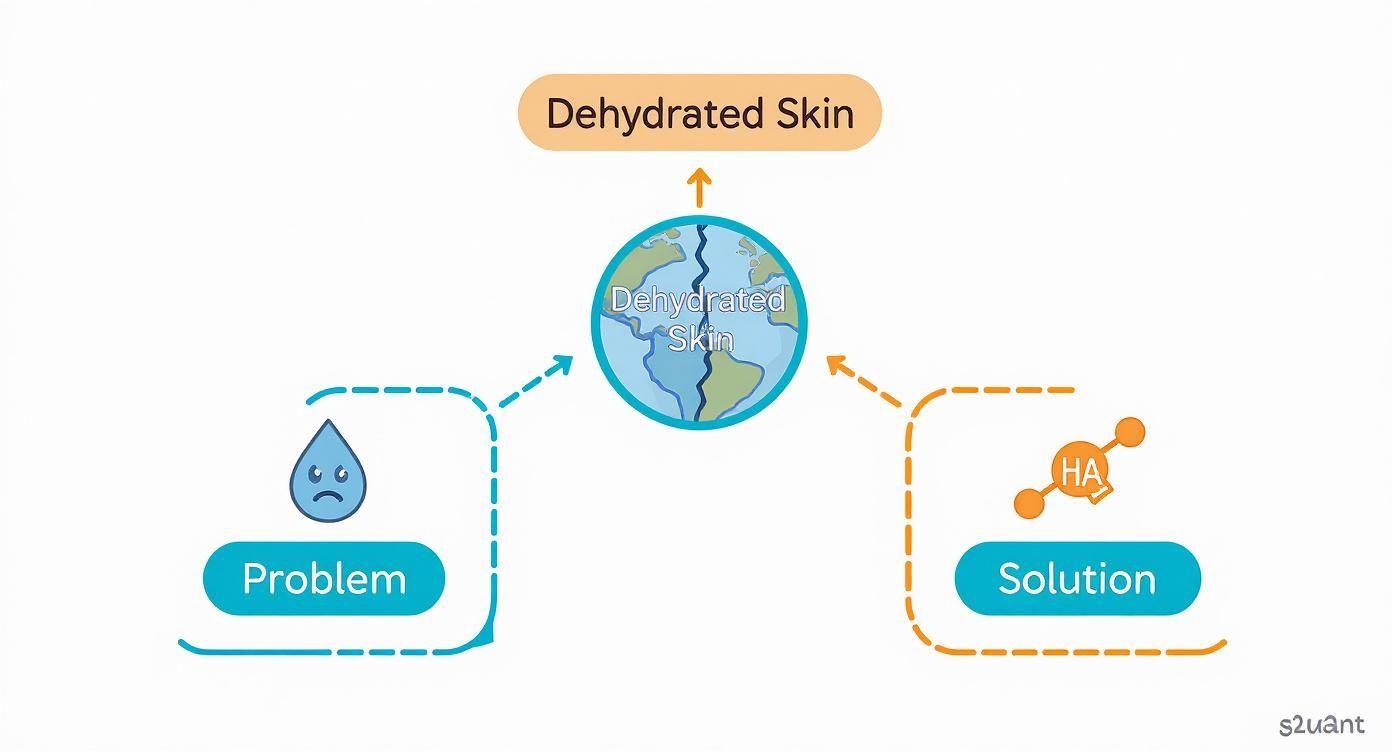
As you can see, the core issue is water escaping. Deep-penetrating HA molecules are the most effective way to restore that balance from within.
Why Multi-Molecular Formulas Are Superior
The best hyaluronic acid serums don’t make you choose. They use a multi-molecular formula that blends different HA sizes to deliver hydration on every level. This approach gives you the best of both worlds: the immediate smoothing effect of large molecules on the surface and the deep, lasting quench from small molecules below.
By targeting the skin at multiple depths, a multi-molecular serum provides a smarter, more complete solution to dehydration. It ensures every layer gets the moisture it needs to function at its best.
This multi-layered strategy is catching on. The HA serum market was valued at $293.4 million and is projected to hit $435.4 million by 2032. While low molecular weight HA currently dominates with over 45% of the market share for its deep-penetrating power, high molecular weight versions are growing faster at a 6.0% rate. This points to a clear demand for comprehensive hydration. Discover more insights about these hyaluronic acid market trends.
Ultimately, looking for a serum with multiple weights of hyaluronic acid is the smartest way to invest in your skin’s health, making sure it stays plump, hydrated, and resilient from the inside out.
How to Choose the Right Hyaluronic Acid Serum
Moving from theory to practice, choosing the right hyaluronic acid serum for dehydrated skin can feel like navigating a crowded, confusing aisle. The secret isn't just grabbing the first bottle that shouts "hyaluronic acid" on the label. It’s about learning to read the entire ingredient list like a pro to make sure the formula is actually built to heal and hydrate.
Your first non-negotiable? It absolutely must be a multi-molecular formula. As we’ve covered, a smart blend of high, medium, and low molecular weights is what ensures every layer of your skin gets the hydration it’s craving. This multi-level approach gives you that instant surface plumpness while also working deeper for long-lasting moisture.
Decoding the Ingredient List
Beyond HA, the supporting cast in a serum is just as critical. A truly well-formulated HA serum will include other powerhouse ingredients that work together to boost hydration, strengthen your skin's delicate barrier, and calm down irritation.
To help you spot the good from the bad, here’s a quick reference guide for your next shopping trip. Think of this as your cheat sheet for scanning ingredient lists and making a confident choice.
Key Ingredients to Look For and Avoid in Your HA Serum
| Ingredient Category | Look For (The Heroes) | Avoid (The Villains) |
|---|---|---|
| Barrier Boosters | Ceramides: These lipids are the "mortar" that holds your skin cells together, preventing water from escaping and keeping irritants out. They're essential for repairing a compromised barrier, which is almost always the case with dehydrated skin. | Drying Alcohols (SD Alcohol, Denatured Alcohol, Isopropyl Alcohol): These are notorious for stripping your skin of its natural oils, which only leads to more dehydration and irritation in the long run. |
| Soothing Agents | Niacinamide (Vitamin B3): A true multi-tasker that calms redness, supports the skin barrier, and helps regulate oil. It plays exceptionally well with hyaluronic acid. | Harsh Fragrances (Parfum): Synthetic fragrances are one of the biggest culprits behind sensitivity and allergic reactions, adding unnecessary stress to already compromised skin. |
| Cell Communicators | Peptides: These are clever little amino acid chains that signal your skin to produce more collagen. This leads to firmer, plumper skin, beautifully complementing the hydrating effects of HA. | Essential Oils (in high concentrations): While some have benefits, many common ones like mint, citrus, and lavender can be highly irritating, especially for sensitive or dehydrated skin. |
Scanning for these heroes and villains will instantly elevate your serum-shopping game, ensuring you pick a product that supports your skin's health instead of undermining it.
The BARB N.P. Clinical-Grade Solution
Finding a serum that ticks all these boxes can be a challenge, which is precisely why we formulated the BARB N.P. Hydra-Plump HA Serum. It was designed from the ground up to meet the clinical needs of our clients struggling with chronic dehydration.
This isn't just another hyaluronic acid serum. It's a targeted, intelligent treatment that combines a sophisticated multi-molecular HA complex with a potent peptide blend. The different weights of hyaluronic acid provide that comprehensive hydration—from the surface right down to the deeper layers—while the peptides get to work fortifying your skin’s structure for better firmness and resilience.
The Hydra-Plump HA Serum is meticulously formulated to be free of drying alcohols, fragrances, and common irritants. It delivers a concentrated dose of what your thirsty skin needs and nothing it doesn't.
Think of it as the ultimate support system for dehydrated skin. The peptides and ceramides work to reinforce your skin's natural defenses, helping it actually hold on to the moisture that the hyaluronic acid so effectively draws in. For those who love digging into the science behind powerful hydrators, our guide on the benefits of another clinical hydration secret, Hydrating B5 Gel, offers even more insight into these crucial barrier-supporting ingredients.
Choosing the right serum means investing in a formula that does more than just temporarily moisturize. It should actively repair, strengthen, and protect your skin barrier. With the right combination of multi-molecular HA and supportive ingredients, you can finally give your dehydrated skin the deep, lasting quench it deserves.
Applying Your Serum for Maximum Hydration
So, you’ve picked out the perfect hyaluronic acid serum for dehydrated skin. That's a huge first step. But the real secret to unlocking its full, thirst-quenching potential lies in how you apply it.
Simply smoothing HA onto dry skin is one of the most common mistakes I see, and surprisingly, it can leave your skin feeling even tighter than before. The method truly matters here. Getting it right is the difference between a lackluster result and a truly dewy, plump complexion.
The single most important rule is to always apply your hyaluronic acid serum to damp skin. Think of your skin like a sponge. A dry, crusty sponge will just let water run right off its surface. But a slightly damp sponge? It eagerly soaks up any liquid it comes into contact with. Your skin works the exact same way.
When you apply HA to damp skin, you’re giving its powerful humectant molecules a reservoir of water to grab onto and pull into your epidermis. If you apply it to bone-dry skin, especially in a low-humidity climate, it can actually start pulling moisture from the deeper layers of your skin just to find water. The result? Even more dehydration.
The Ideal Step-by-Step Layering Routine
To get maximum hydration without any guesswork, follow this simple, effective protocol. This sequence is designed to prep your skin, deliver the HA efficiently, and then lock in all that hard-earned moisture for lasting results.
- Cleanse Thoroughly: Start with a gentle, non-stripping cleanser to get rid of makeup, oil, and grime. Pat your skin mostly dry, but leave it feeling slightly damp to the touch.
- Mist or Tone (Optional but Recommended): This is your chance to really prep the canvas. Spritz a hydrating, alcohol-free toner or a simple facial mist (like rosewater) all over your face. This creates the perfect damp surface for your HA serum to cling to.
- Apply Your HA Serum: While your skin is still visibly damp, dispense 2-3 drops of your serum—like our BARB N.P. Hydra-Plump HA Serum—into your palms. Gently press and pat it into your skin, covering your face and neck. Avoid rubbing; pressing motions encourage better absorption.
- Seal It Immediately: This is critical. Don't wait for the serum to dry. Within about a minute, apply your favorite moisturizer right over the top. This final step creates an occlusive barrier, sealing in the HA and all the water it has attracted, preventing it from just evaporating away.
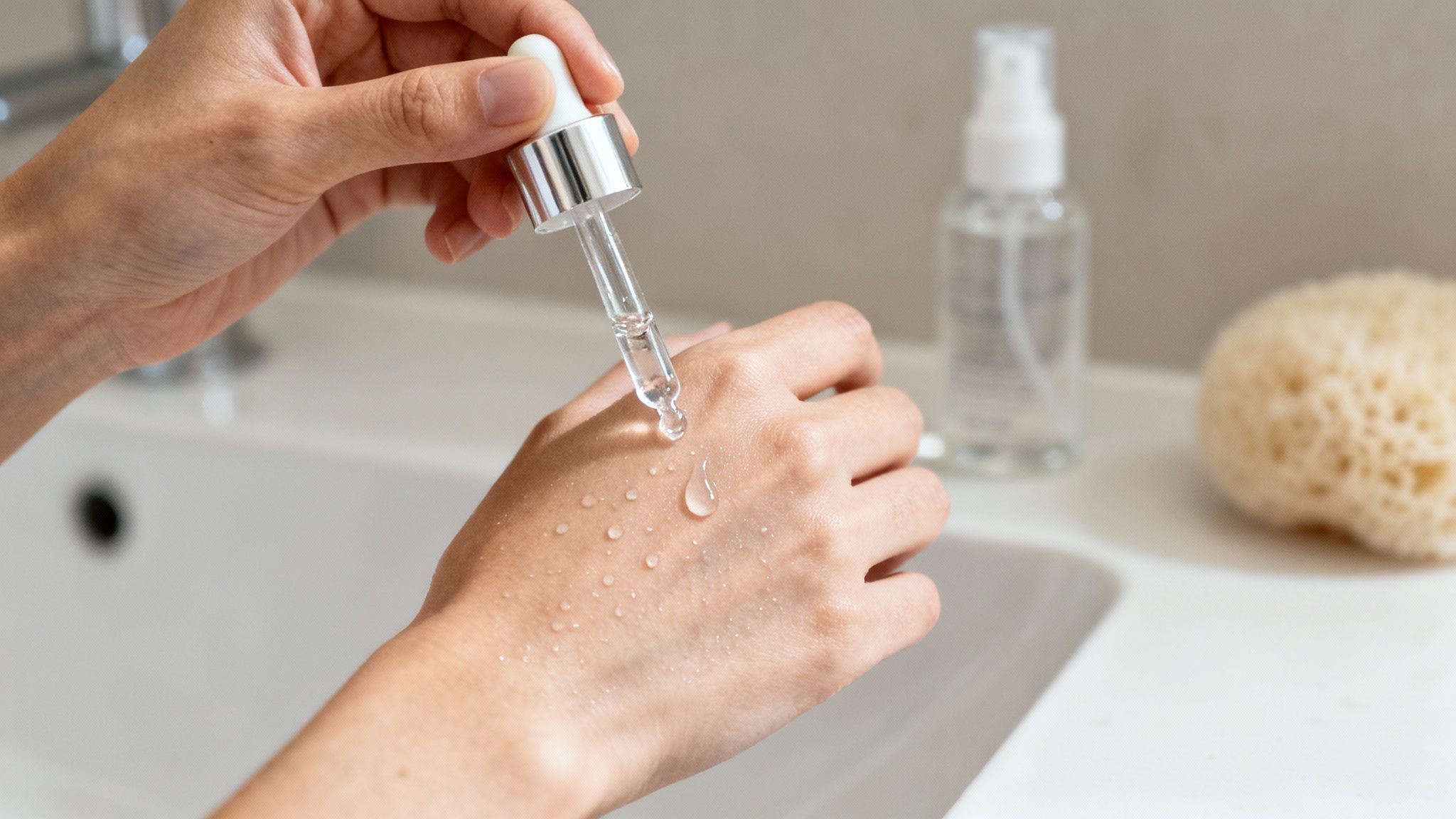
Mastering this sequence ensures your serum works for you, not against you. For a deeper dive into product order, our complete guide on how to layer serums effectively provides even more detail on building the perfect routine.
Post-Procedure Care for Enhanced Recovery
This application method isn't just for your daily routine—it's also a game-changer for post-procedure care. After treatments like microneedling, chemical peels, or even injectables, your skin's barrier is temporarily compromised and healing. During this time, it loses water much more rapidly, making it intensely dehydrated.
Applying a pure, gentle hyaluronic acid serum to damp skin post-treatment provides immense soothing relief. It floods the healing tissues with the exact hydration needed for optimal recovery, helping to calm redness, reduce discomfort, and accelerate the whole repair process.
By supporting your skin with this targeted hydration, you not only improve your comfort but also enhance the results of your professional treatment. It ensures your skin heals beautifully, emerging smoother, calmer, and more resilient. Following this precise application method turns your HA serum into a powerful tool for both daily maintenance and advanced recovery.
Boosting Your Results with Skincare Technology
Once you've nailed down how to apply your hyaluronic acid serum for dehydrated skin, you can take your hydration game to a whole new level. Pairing your serum with the right at-home technology creates a powerful synergy, helping the active ingredients penetrate more deeply and amplifying their benefits.
It’s like giving your skincare a supercharged boost. By using technologies like LED light therapy, you're stimulating cellular activity that complements the hydrating and plumping action of your HA serum, ensuring you get the absolute most out of every single drop.
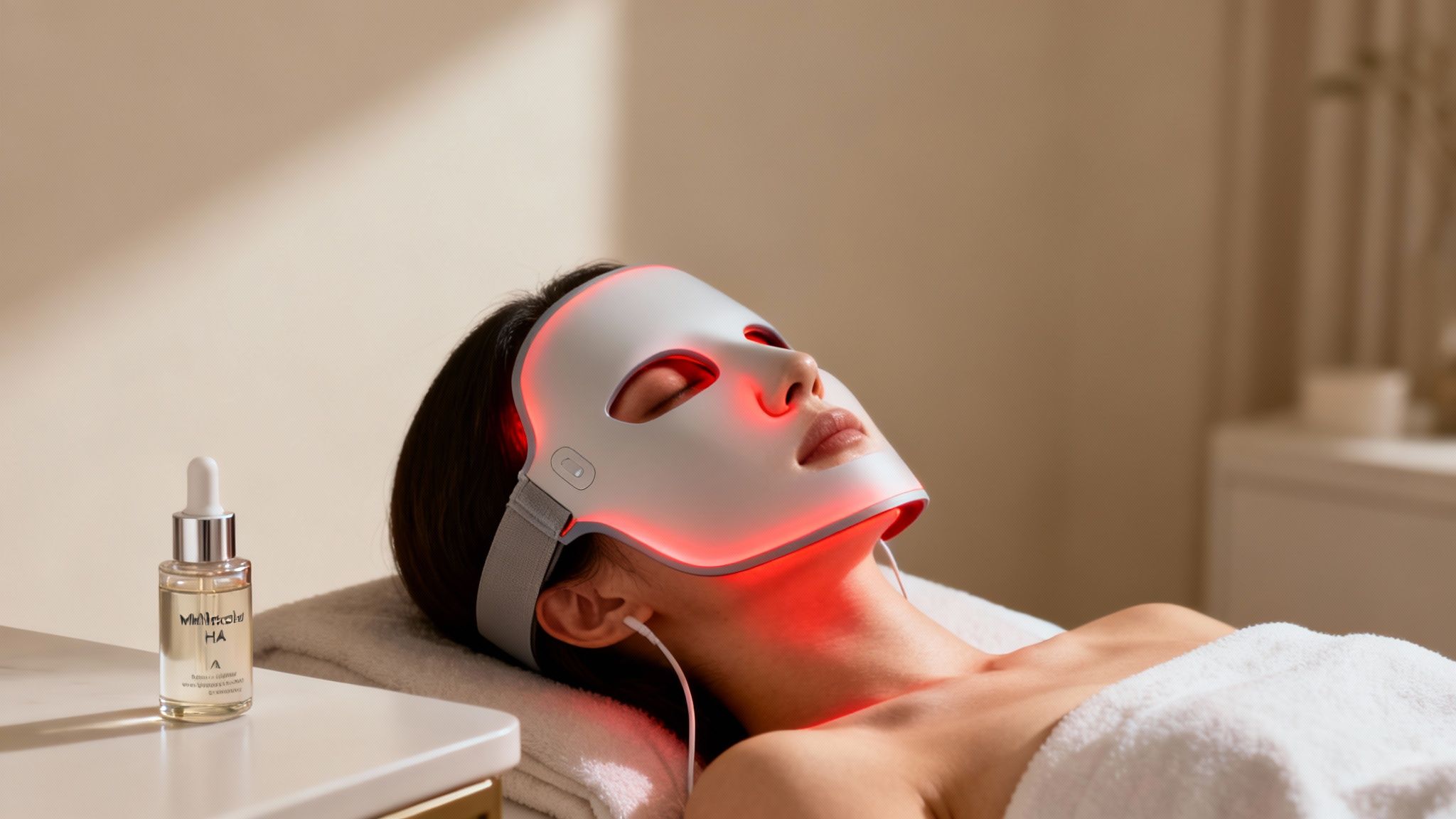
Amplify Hydration with LED Light Therapy
One of the most effective tools I recommend for this is an LED (Light Emitting Diode) facial mask. Different colors of light penetrate the skin at varying depths, triggering specific biological responses. This non-invasive therapy works beautifully with hyaluronic acid to tackle the core concerns of dehydrated skin.
For a truly exceptional at-home experience, we love the BARB N.P. LED Facial Mask. It’s a smart investment for anyone serious about elevating their skincare results. Its thoughtful design and versatile settings make it the perfect partner for your HA serum.
This device is more than just a gadget; it's a strategic tool. By integrating light therapy into your routine, you are actively supporting your skin’s foundational health, making your topical products work that much harder for you.
The BARB N.P. mask was designed with your real life in mind. It's completely wireless, so you aren't stuck next to a wall outlet. You can relax or move around freely during your treatment. It's also engineered for comfort, fitting securely on your face so your self-care session feels like a true indulgence, not a chore.
How Different Light Settings Enhance Your Serum
The real power of the BARB N.P. mask lies in its three distinct light settings, each targeting different concerns that often go hand-in-hand with dehydration. This lets you customize your treatment to work in harmony with your hyaluronic acid serum.
Here’s how the different settings complement your routine:
-
Red Light: This wavelength is famous for its ability to stimulate collagen production. When you use it with your HA serum, the red light helps firm the skin and soften the appearance of fine lines caused by dehydration. The serum provides the plumping hydration, while the light works on strengthening the skin's structural support from within.
-
Blue Light: This is ideal for those whose dehydrated skin is also prone to blemishes. Blue light targets and neutralizes acne-causing bacteria. Using it after your HA serum ensures your skin stays hydrated and balanced—not stripped—which helps prevent future breakouts.
-
Amber Light: This setting is perfect for calming sensitivity and reducing redness. For dehydrated skin that gets easily irritated, the amber light provides a soothing effect, helping to create a more resilient and even-toned complexion.
Pairing a high-quality hyaluronic acid serum, like our Hydra-Plump HA Serum, with the BARB N.P. LED Facial Mask creates a multi-pronged approach to skin health. You’re not just hydrating your skin—you’re actively repairing, rejuvenating, and fortifying it for visible, long-lasting radiance.
Troubleshooting Common Hyaluronic Acid Problems
Even a superstar ingredient like hyaluronic acid can have a bit of a learning curve. If you've started using a hyaluronic acid serum for dehydrated skin only to end up with stickiness, pilling, or even more dryness, don't throw in the towel. These are classic signs of small, easily fixable application mistakes—not a problem with the ingredient itself.
Most of the time, getting your routine back on track comes down to a few simple tweaks. Once you understand why these things happen, you can make those adjustments and finally get the deep, lasting hydration you were looking for.
Why Does My Serum Feel Sticky?
A tacky or sticky finish is probably the number one complaint I hear. This is a dead giveaway that you're using too much product. Hyaluronic acid serums are incredibly concentrated, so a little truly goes a long, long way.
Instead of a full dropper, scale it back to just 2-3 drops for your entire face and neck. Gently press the serum into your skin instead of rubbing it around. This tiny change helps the product absorb completely, leaving your skin feeling plump and dewy, not like a sticky mess.
Why Is My Skincare Pilling?
Pilling—when your products roll up into annoying little balls—is beyond frustrating. It's usually a sign that you're layering products too quickly or in the wrong order. It can also happen when a water-based HA serum clashes with a heavy, oil-based moisturizer or a primer loaded with silicones.
To stop the pilling:
- Apply to Damp Skin: This is non-negotiable. HA serums need water to work, and applying to damp skin helps them absorb instantly.
- Pat, Don’t Rub: Gently pat your products into the skin. This minimizes friction and helps each layer meld together.
- Give It a Minute: Wait about 60 seconds after applying your HA serum before you move on to your moisturizer. That brief pause gives it time to fully sink in.
Why Does My Skin Feel Drier?
This is the most confusing problem of all, but there's a simple scientific reason for it. Hyaluronic acid is a humectant, which means it grabs moisture from its surroundings. If you apply it to dry skin in a dry environment (think of an air-conditioned office or an arid climate), it has no moisture to pull from the air.
So, where does it get the water? It pulls it from the deeper layers of your own skin up to the surface, where it then evaporates into the air. This process can leave your skin feeling even more parched than when you started.
This is exactly why the two golden rules of HA are so critical: always apply to damp skin, and always seal it in with a moisturizer. The damp skin gives the HA an immediate water source to grab onto, and the moisturizer creates a barrier that locks all that hydration in.
If you're still feeling dry, it might also point to a compromised skin barrier that just can't hold onto moisture. For a complete game plan on that front, you can learn more about how to repair a damaged skin barrier to get your skin back to a place where it can retain hydration effectively. By fixing these simple application issues, you’ll solve these common problems and let your serum do its job right.
Still Have Questions? Let's Clear Them Up.
Even after you understand the science, a few practical questions always come up. Here are the quick answers I give my clients to help them get the absolute best results from their hydration routine.
Can I Use Hyaluronic Acid Serum Every Day?
Yes, you absolutely should. Hyaluronic acid is incredibly gentle and designed for daily use. For the best, most consistent results, I recommend applying it twice a day, every day—once in the morning and once at night.
Think of it like drinking water for your skin. Consistent application to damp, freshly cleansed skin is what keeps that plump, hydrated look going and stops dehydration in its tracks.
Will Hyaluronic Acid Clog My Pores?
This is a huge concern, especially if you have combination or acne-prone skin. The great news is that pure hyaluronic acid is non-comedogenic, meaning it won't clog your pores.
In fact, it can be a game-changer for breakout-prone skin. When your skin is dehydrated, it often overproduces oil to compensate, which does lead to clogged pores. By restoring the skin's water balance with an HA serum, you can actually help regulate oil production and promote clearer skin.
Quick tip: While HA itself is safe, other ingredients in a serum could be comedogenic. Always choose a well-formulated product that isn’t loaded with heavy, pore-clogging oils.
How Long Does It Take to See Results?
One of the best things about a high-quality HA serum is the instant gratification. You will feel and see a difference after the very first use—your skin should feel smoother, softer, and look immediately more plump.
For the more significant, lasting improvements—like a visible reduction in fine dehydration lines and that sustained dewy glow—give it 2 to 4 weeks of consistent, twice-daily use. This gives your skin enough time to fully replenish its hydration reservoirs.
What Is the Difference Between a Serum and a Moisturizer with HA?
This is a fantastic question, and it gets right to the heart of smart skincare layering. A serum and a moisturizer with HA serve two totally different—but complementary—jobs.
-
A Hyaluronic Acid Serum: This is your concentrated hydration treatment. It's lightweight and formulated with smaller HA molecules designed to sink deeper into the skin and deliver a powerful dose of water from within. Its main job is to add water.
-
A Moisturizer with HA: This product is thicker and works on the skin's surface. Its job is to create a protective barrier that seals in all the hydration from your serum and prevents it from evaporating away.
That's why you always apply a dedicated hyaluronic acid serum for dehydrated skin first, like our BARB N.P. Hydra-Plump HA Serum. Following it immediately with a good moisturizer locks it all in. It’s the ultimate one-two punch against dehydration.
Ready to give your thirsty skin the clinical-grade hydration it’s been missing? The BARB N.P. Hydra-Plump HA Serum is expertly formulated with a multi-molecular complex to quench skin on every level.
Discover the BARB N.P. Hydra-Plump HA Serum and restore your skin's bounce today